





東南亞的跨境詐騙集團利用地方治理鬆散與政治真空之隙,建立起橫跨賭博、人口販賣和電信詐騙的犯罪王國。儘管中國及區域夥伴已展開強勢執法、並多次高調引渡嫌犯,詐騙集團卻「道高一尺,魔高一丈」,屢屢將業務轉移至新的司法盲區。
2026年2月初,中國對緬甸北部白氏詐騙集團的四名成員執行死刑後,與詐騙相關的犯罪活動已轉移至老撾金三角經濟特區。緬甸和老撾,這些地區長期存在中央政府有效管控之外,這也突顯了跨境警務合作打擊詐騙犯罪的必要性。
不出所料,電信詐騙往往伴隨網絡作弊、綁架、人口販賣、敲詐勒索、洗錢和有組織賣淫。白氏家族的非法活動金額超過290億元人民幣,導致六名中國公民死亡,其奢華生活方式在中國大陸微信視頻中被廣泛傳播。
緬北四大家族惡名昭彰 要犯在華已伏法
除強勢的白氏家族外,緬北果敢另有明氏、魏氏、劉氏三大華人家族,長期盤踞當地,深度參與緬北跨境詐騙產業運作。
自敏昂萊軍政府驅逐緬甸民族民主同盟軍、掌控邊境區域後,當地一度出現權力真空。四大華人家族趁勢填補治理空白,逐步坐大。緬甸中央軍政府初期對此默許和放任,未及時整頓邊境亂局,無意間助長了當地一連串跨境非法產業的野蠻生長。
這類由家族勢力把持的地下產業和灰色經濟,受害者不再局限於中國內地民眾,更擴散至東南亞各國,形成跨國性的跨境犯罪禍源,危害層面廣泛且影響深遠。
這些不法華人家族有幾個共同特點:第一,他們經營非法活動,並以高調炫富;第二,部分家族成員與地方乃至中央級官員(包括一些軍官)建立私人關係,以便相對安全地運作;第三,他們配備武器組建自己的私人軍隊,行事如同小軍閥。
第四,他們最終被打擊和逮捕,一方面歸因於中國外交遊說緬甸政府,另一方面歸因於中國與緬甸民族民主同盟軍臨時結盟,以鏟除這些中國家族的據點;第五,關鍵主謀被引渡至中國受審和懲處,但部分家族成員逃脫並藏匿;第六,這些家族經營的詐騙集團以中國境內的中國人為目標;第七,這些中國家族的非法犯罪活動說明了一種現象:他們抓住緬甸撣邦等弱地方國家的機遇,在地方當局的默許下,如同一個獨立小王國般經營非法活動。
泰軍方摧毀KK園區 佘智江被引渡返華
緬北詐騙活動被揭露和摧毀後,其殘餘勢力迅速轉移至其他地區,如泰緬邊境地區、柬埔寨、老撾和金三角經濟特區。
泰緬邊境臭名昭著的KK園區和水溝谷(Shwe Kokko)地區就是很好的例子,這需要泰國和緬甸警方及執法當局合作。2025年10月,軍方轟炸了設有詐騙園區的據點後,200名中國公民從KK園區逃至泰國。KK園區位於克倫邦苗瓦迪鎮,已成為流動犯罪分子的網絡犯罪中心。由於來自其他國家的壓力,緬甸軍方最終摧毀了KK園區的詐騙設施。
2025年11月,在水溝谷經營詐騙集團的中國商人佘智江從泰國被引渡至中國。他的亞太國際集團在香港注冊、總部設在泰國,將水溝谷的一個村莊改造成集賭博、販毒、賣淫和詐騙活動於一體的巢穴。佘智江早在2015年就在柬埔寨起步,通過非法活動積累財富,隨後在菲律賓有投資。
為保護自己,佘智江向柬埔寨當局捐款並獲得柬埔寨國籍。2020年,他試圖將非法業務滲透至克倫邦,其保安甚至因開發項目與緬甸軍方發生衝突。佘氏業務的擴張顯示了他如何將非法與合法業務混合,可能迷惑了柬埔寨和緬甸的執政當局。
陳志遭美英制裁 主腦胡小偉在日被捕
2025年10月,美國和英國政府宣布對與柬埔寨一個網絡犯罪組織有關聯的中國公民陳志實施制裁。經柬埔寨和中國聯合調查,38歲的陳志在柬埔寨被捕,並於2026年1月被引渡至中國。陳志的柬埔寨國籍被撤銷,但有報道稱他與柬埔寨一些高層當局關係密切,這些當局擁有部分詐騙運營組織的多數股權。
陳志於2026年7月初被中國正式逮捕,其太子集團據報道參與了網絡詐騙網絡。中國政府當局以侵犯著作權罪和故意傷害罪對其提起公訴。其同夥包括劉忍,於2026年1月被引渡至中國,他創立了金貝集團(Jinbei),運營在線賭博平台。另一名主腦胡小偉於2026年6月在日本因偽造文件被捕。
所有這些被捕的中國個人在境外似乎都表現得像合法商人,活躍於柬埔寨,從事網絡詐騙和賭博集團,並涉嫌參與跨境犯罪。太子集團據稱在柬埔寨境外設立子公司,投資房地產市場、銀行和金融服務──這些活動與新加坡、香港和泰國等多個國家和地區的洗錢有關。在投資和洗錢過程中使用了加密貨幣。
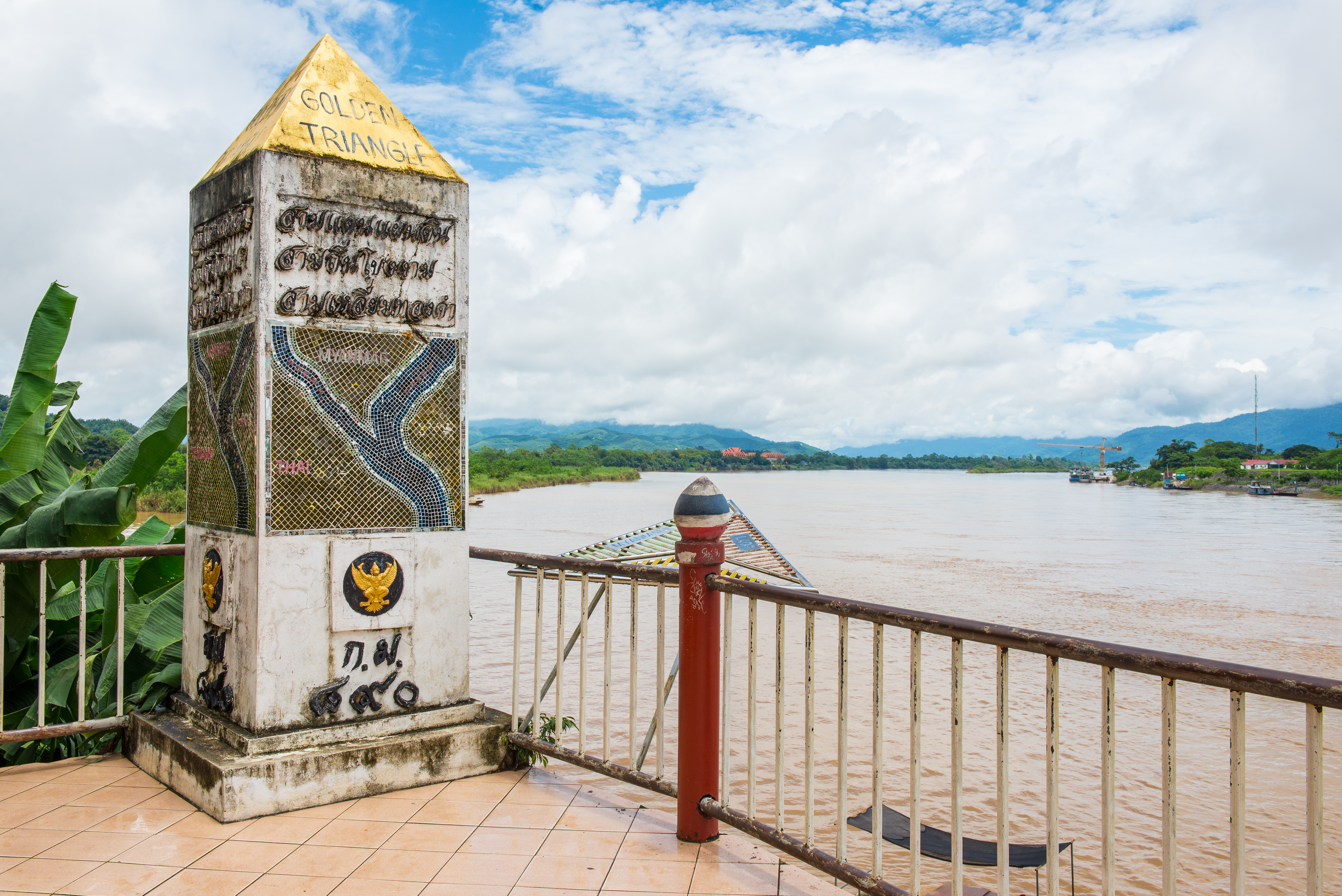
老撾金三角經濟特區於2007年設立以吸引外國投資,據報道已成為詐騙集團經營活動的另一個地區,同時伴隨販毒、人口走私、賣淫和洗錢。一名叫趙偉的中國公民被指名為領導和經營這些非法活動的人物。
趙偉的金木棉集團(Kings Romans Group) 將該經濟特區經營得如此繁榮,以至於老撾瑯南塔省省長向他頒發了國家發展勳章。其業務據報道以合法與非法混合的方式進行,一方面獲得老撾一個省份的官方認可,另一方面卻在2018年受到美國政府的官方制裁。
詐騙集團採游擊戰術 受害者遍及亞太
跨境詐騙運作的最新發展是詐騙集團已蔓延至馬來西亞。調查發現,詐騙集團的受害者來自緬甸、柬埔寨、印尼、馬來西亞,甚至非洲國家。詐騙集團狡兔三窟,一有風吹草動便四處流竄,每建立臨時據點即重施網絡欺詐故技,受害者不僅遍及亞太,更遠及非洲。
這些跨境詐騙集團最初還以中國大陸的華人為目標。後來,其目標擴展至亞太地區的其他受害者和國民。這些不法中國商人利用其個人關係與東南亞地方國家官員建立密切關係,尤其是那些中央當局和軍方薄弱的國家,如緬北的情況。
一些不法中國商人利用家族紐帶建立所謂的家族帝國,經營非法與合法業務,擁有私人保安,並偽裝是成功的商業典範。在其他案例中,他們利用地方國家的發展動力設立詐騙集團和賭場,吸引了販毒、人口走私、敲詐勒索、綁架和網絡欺詐等一系列有組織犯罪活動。結果是,來自不同國家的受害者在詐騙園區工作,遭受最大限度的剝削。這些不法商人還通過各種工具投資合法業務,包括可掩蓋其非法交易和收入的加密貨幣。
從政治學角度看,一些受詐騙集團影響的東南亞國家,如緬甸、柬埔寨和老撾,是相對威權的政權,擁有相對強大的中央政府。然而,這種傳統認知可能需要稍作修正;它們的一些地方國家顯然很薄弱,被尋求通過賄賂和非法手段致富的詐騙集團和不法商人滲透和腐蝕。
打擊跨國和國內有組織犯罪是中國政策議程的首要任務,中國將保護人身安全和財產視為國家安全不可或缺的組成部分。因此,其外交人員和警察一直在與東南亞同行通力合作,打擊詐騙集團。
Scam syndicates in Southeast Asia: Weak local states and cross-border implications
After China executed four members of the Bai family’s scam syndicate in northern Myanmar in early February 2026, scam-related criminal activities have already shifted to the Golden Triangle’s special economic zone in Laos. While Myanmar and Laos have been characterised by the existence of some weak local states beyond the effective control of the central authorities, cross-border scam syndicates have kept seizing the opportunities of the weak local states, getting rich quickly through illicit operations and leading to the necessity of cross-border police cooperation in combating scam crime.
In early February 2026, a Shenzhen court implemented the executions of Bai Yingcang, Yang Liqiang, Hu Xiaojiang, and Chan Guangyi (Xinhua, 2 February 2026). The four persons appealed to the High People’s Court after the verdict in the lower court, but the High People’s Court upheld the judgment and submitted the sentencing to the Supreme People’s Court for final approval. The Supreme People’s Court confirmed the finding that the Bai family, led by Bai Yingcang, established criminal organisations in the Kokang region in Myanmar, where his family members and accomplices engaged in illegal gambling activities, fraud, the manufacturing of drugs like methamphetamine, and the operation of telecommunication fraud. As expected, telecom fraud was accompanied by online cheating, kidnapping, human trafficking, extortion, money laundering, and organised prostitution. The illicit activities of the Bai family, whose flamboyant lifestyle was covered quite extensively by mainland WeChat videos, exceeded 29 billion yuan, resulting in the deaths of six Chinese citizens.
Rise and fall of northern Myanmar’s criminal families
Apart from the involvement of the Bai family, three other Chinese families were involved in the operation of scam syndicates in Northern Myanmar: the Ming, Wei, and Liu families. They dominated the remote border town of Laukkaing in the impoverished Shan region in Myanmar (BBC News, 30 January 2026). In a sense, they grasped the opportunity of a political vacuum in the region after the military government led by General Min Aung Hlaing drove out the Myanmar National Democratic Alliance Army (MNDAA), an ethnic Chinese group of about 8,000 to 10,000 members. At one time, the Myanmar military at the central government appeared to tolerate these Chinese families filling in the political vacuum, but the unintended consequence was to foster a whole range of illegal activities whose victims included not only the Chinese in the Chinese Mainland, but also other nationals from different Asian countries. It was reported that Liu Zhengxiang, the leader of the Liu family, was even awarded the title of making “extraordinary contributions to state development” in northern Myanmar (BBC News, 30 January 2026).
Similarly, the Ming family emerged in Laukkaing by establishing the Crouching Tiger Villa (BBC News, 30 January 2026). However, China supported the MNDAA after the Ming family’s security guards had killed several Chinese nationals. The MNDAA attacked the Ming family’s stronghold, forcing the family patriarch, Ming Xuechang, to commit suicide.
In May 2026, it was reported that the Wei family, led by Wei Huaren, faced charges from the Chinese government for his illicit activities like fraud, extortion, human smuggling, and murder (South China Morning Post, 22 May 2026). From 2019 onwards, Wei’s family-based syndicate was involved in scam operations that cheated Chinese citizens of 24 billion yuan and led to the death of two Chinese citizens.
Shared traits of syndicate operations
The unethical Chinese families in Northern Myanmar had several characteristics in common. First, they operated illegal activities and showed off their wealth in a flamboyant manner. Second, some of their family members cultivated personal connections with local and even central-level officials, including some military officers, so that they could operate relatively safely. Third, they set up their own security guards equipped with weapons – a private army protective of their compound and acting like small warlords. Fourth, their eventual crackdown and arrests were attributable to China’s diplomatic efforts at lobbying the Myanmar government on the one hand, and its temporary alliance with the MNDAA to eliminate the compounds of these Chinese families on the other. Fifth, the key masterminds were extradited to China for trial and punishment, but some of the family members have escaped and are hiding. Sixth, the scam syndicates operated by the families targeted the Chinese inside China. Seventh, these illicit criminal operations by the Chinese families illustrated a phenomenon wherein they grasped the opportunity of having weak local states, like the Shan State, in Myanmar and operated illegal activities like a small independent kingdom, with tacit support from local authorities.
Displacement and expansion along border hubs
After the scam activities were uncovered and destroyed in Northern Myanmar, their remnants moved to other areas quickly, like Thai-Myanmar border regions, Cambodia, Laos, and the Golden Triangle’s special economic zone.
The notorious KK Park and Shwe Kokko region along the border between Thailand and Myanmar were good examples that necessitated the cooperation of police and law-enforcement authorities of Thailand and Myanmar. In October 2025, 200 Chinese nationals escaped from KK Park to Thailand after the military bombed the compound where scam farms were established (South China Morning Post, 27 October 2025). KK Park is located in Kayin State’s Myawaddy Township, and it became a cybercrime hub for mobile criminal elements. Due to pressure from other countries, especially China, whose nationals were the victims of scam syndicates, the military in Myanmar eventually destroyed KK Park’s scam establishments.
In November 2025, a Chinese businessman named She Zhijiang, who operated a scam syndicate in Shwe Kokko, was extradited from Thailand to China (Hong Kong Free Press, 12 November 2025). His Yatai Group, which was registered in Hong Kong and had its headquarters in Thailand, transformed a village in Shwe Kokko into a gambling den combined with drug trafficking, prostitution, and scam-related activities. She started his business in Cambodia as early as 2015, accumulating his wealth through illicit activities and then making investments in the Philippines.
To protect himself, She made donations to the Cambodian authorities and obtained Cambodian citizenship. In 2020, he attempted to penetrate his illicit businesses into Kayin State, whose security guards even clashed with the Myanmar military over his developmental project (Frontier Myanmar, 30 December 2020). The expansion of She’s businesses showed how he mixed illicit with legitimate businesses and might have confused the ruling authorities of Cambodia and Myanmar.
Regional enforcement and high-profile extraditions
Between June 2025 and June 2026, Cambodian police raided 737 online scam centres and illegal casinos throughout the entire nation (Khmer Times, 27 July 2026). As of 30 June 2026, more than 21,100 foreigners of 38 nationalities were deported, with 268 cases including 2,773 suspects being referred to the courts (Khmer Times, 27 July 2026). This unprecedented crackdown aimed at maintaining public safety and restoring the “international image” of Cambodia. In May, a monk faced prosecution for allegedly renting his villa out to suspected online scammers (Khmer Times, 20 May 2026). In June 2026, the Cambodian authorities formulated legislation on the combat against technology-based fraud.
In October 2025, the US and UK governments announced their sanctions against Chen Zhi, a Chinese citizen who was linked with a cybercriminal organisation in Cambodia. After a joint investigation by Cambodia and China, the 38-year-old Chen Zhi was arrested in Cambodia and extradited to China in January 2026 (CNN News, 9 January 2026). Chen’s Cambodian citizenship was revoked, but reports said that he had cultivated close relations with some high-level Cambodian authorities, who possessed the majority ownership of some of the scam-operated organisations (Bastille Post, 14 July 2026). No matter whether these rumours were accurate, the Chinese government requested that its Cambodian counterpart act against scam syndicates – a request accepted by Cambodia, whose image was undermined by the proliferation of scam operations.
Chen was formally arrested by China in early July 2026, and his conglomerate, Prince Group, was reportedly involved in online scam networks. The Chinese government authorities charged him with copyright infringement and intentional injury (South China Morning Post, 27 July 2026). His accomplices included Liu Ren, who was extradited to China in January 2026 and who had founded a group named Jinbei operating online gambling platforms. Another accomplice, Hu Shi, was arrested in Japan in June 2026 for falsifying documents. Hu was reportedly the second-in-command at the Prince Group.
Financial laundering and the Golden Triangle zone
All these arrested Chinese individuals appeared to act like “legitimate” businessmen outside China and were active in Cambodia, engaging in online scam and gambling syndicates and allegedly being involved in cross-border crime. The Prince Group reportedly set up subsidiaries outside Cambodia and invested in real estate markets, banking, and financial services – activities that were connected with money laundering in various countries and places, including Singapore, Hong Kong, and Thailand. Cryptocurrencies were used in the process of investment and money laundering (Hong Kong Free Press, 10 January 2026).
Laos’s Golden Triangle Special Economic Zone, which was set up in 2007 to attract foreign investment, has reportedly become another area where scam syndicates operate their activities alongside drug trafficking, human smuggling, prostitution, and money laundering. A Chinese national named Zhao Wei was named as a person allegedly leading and operating the illicit activities.
Zhao’s Kings Romans Group has operated the special economic zone in such a “prosperous” way that the Lao governor of Luang Namtha province presented him with a developmental “medal” (The Diplomat, 10 December 2024). His businesses have reportedly been conducted in a mix of legitimate and illegitimate manners, leading to official recognition by a province of Laos on the one hand, yet official sanctions by the US government in 2018 on the other.
In July 2026, the Lao authorities launched a crackdown on organised crime activities, including the arrest of 4,500 people in the first half of the year (UCA News, 15 July 2026). The Vientiane police arrested 122 people on 11 July during their raids on seven houses, discovering a large number of detained nationals from China, Myanmar, Pakistan, Malaysia, and Brazil. It remains to be seen whether Laos will crack down on suspected scam operations in the Golden Triangle’s special economic zone in the future.
Guerrilla tactics and victim demographics
The latest development in cross-border scam operations is that scam syndicates have been spreading to Malaysia (The New Straits Times, 2 June 2026). It was found that the victims of scam syndicates came from Myanmar, Cambodia, Indonesia, Malaysia, and even countries in Africa. It appears that scam syndicates act like illicit and mobile organisations running from one place to another, adopting guerrilla tactics of online cheating, and establishing temporary bases that victimise nationals not only from the Asia-Pacific region, but also Africa.
The political implications of cross-border scam syndicates are obvious. Some ethnic Chinese went to Northern Myanmar, Cambodia, Laos, and the Golden Triangle’s special economic zone to set up scam syndicates that originally targeted ethnic Chinese in the Chinese Mainland. Later, their targets spread to other victims and nationals across the Asia-Pacific region. These unethical Chinese businesspeople have utilised their personal connections (guanxi) to cultivate close relations with officials of local states in Southeast Asia, especially those states where the central authorities and military are weak, as in the case of Northern Myanmar.
Some unethical Chinese businesspeople have used their family ties to build up their so-called family “empires”, running illegitimate and legitimate businesses, possessing private security guards, and masquerading as successful business “models”. In other cases, they have made use of the developmental drive of local states to set up scam syndicates and casinos, which have attracted a whole range of organised crime activities like drug trafficking, human smuggling, extortion, kidnapping, and online cheating. The result was that victims coming from different countries were working in scam compounds like “modern slaves”, exploited to the maximum extent. The unethical businesspeople also invest in legitimate businesses through a variety of instruments, including cryptocurrencies that could camouflage their illicit transactions and revenues.
Political science implications of central-local dynamics
From a political science perspective, some of the Southeast Asian states affected by scam syndicates, such as Myanmar, Cambodia, and Laos, are relatively authoritarian regimes that have a relatively strong central government. Nevertheless, this conventional perception may have to be slightly modified; some of their local states are obviously weak, being infiltrated and corrupted by scam syndicates and unethical businesspeople who seek to get rich through bribery and illegal means.
Although the central state eventually intervened and cracked down on local scam syndicates through police or military actions, the loose alliance between unethical businesspeople and some local states was testimony to the complex dynamics of central-local relations in Myanmar, Cambodia, Laos, and the Golden Triangle. It is through the paradoxical relationship between the central government and local states that some unethical businesspeople and family-based syndicates grasped golden opportunities to enrich themselves by illegal and legal means.
Fortunately, partly due to international pressure from different countries whose citizens were victims of scam operations, and partly because of cross-border policing cooperation, scam syndicates have been destroyed one after another, though they continue shifting their operations to other places. The guerrilla and mobile tactics deployed by scam syndicates will likely persist, but they cannot and will not succeed, as police from different countries and places in the Asia-Pacific region exchange intelligence on criminal activities. As such, extradition and police collaboration between countries and territories stand out as effective checks and balances against the spread of cross-boundary scam syndicates.
Security priorities and regional counter-measures
The combat against transnational and domestic organised crime is top of the policy agenda for China, which sees the protection of personal safety and property as an indispensable element of national security. As such, its diplomats and police have been making strenuous efforts in working with their counterparts in Southeast Asia, particularly China’s neighbouring countries, to crack down on scam syndicates. The recent executions of some unethical businesspeople served as a powerful warning to their associates and followers, acting as an effective deterrent against transnational organised crime. Still, more educational and mobilisational efforts will have to be made incessantly so that the number of unethical businesspeople will be curbed, and scam syndicates will be brought under tighter control through police intelligence-sharing and cooperation in the Asia-Pacific region.
原刊於澳門新聞通訊社(MNA)網站,本社獲作者授權轉載。(原文按此)