
如果將統戰工作定義為爭取民心的努力,那麼近期在香港、澳門以及兩岸發生的事件就值得我們密切關注。
首先,在即將舉行的香港立法會選舉共有161名候選人登記參選。其中,51名候選人將角逐20個地區直選議席;60名候選人將競爭30個功能界別的議席;另有50名候選人將爭奪40個由選舉委員會產生的議席。而在一眾候選人裏,有107名是首次參選的政治素人。
港府將面臨動員市民參與選舉壓力
由於2025年9月14日舉行的澳門立法會選舉取得53.35%的高投票率,令香港政府面臨動員更多市民參與12月7日立法會選舉的壓力。目前香港公務員、親建制團體、商業機構已開始動員起來,呼籲和鼓勵其成員和僱員在選舉日投票。候選人已走上街頭,升旗、發放傳單,營造出緊張的選舉氛圍。

政府尚未公布預期投票率的具體目標百分比。然而,即將舉行的立法會選舉對統戰的意義非常重大。所謂投票率愈高,選舉愈成功。鑑於2021年立法會選舉的投票率僅為30%,2025年12月的立法會選舉將可能輕鬆取得巨大成功。
鑑於在2019年之前,親政府和親北京勢力通常在直接選舉中能獲得約45%的選票,目前香港的選舉動員力度預計能使投票率達到35%至38%。如果投票率能達到40%,將是香港政府統戰策略的一大成功,該策略旨在贏得更多選民的支持,促使他們在12月7日前往投票站投票。
根據候選人的背景分析,他們大多來自愛國陣營。下表顯示大多數參加直接選舉的候選人擁有區議會、三會(地區撲滅罪行委員會、地區防火委員會和分區委員會)和關愛隊背景。
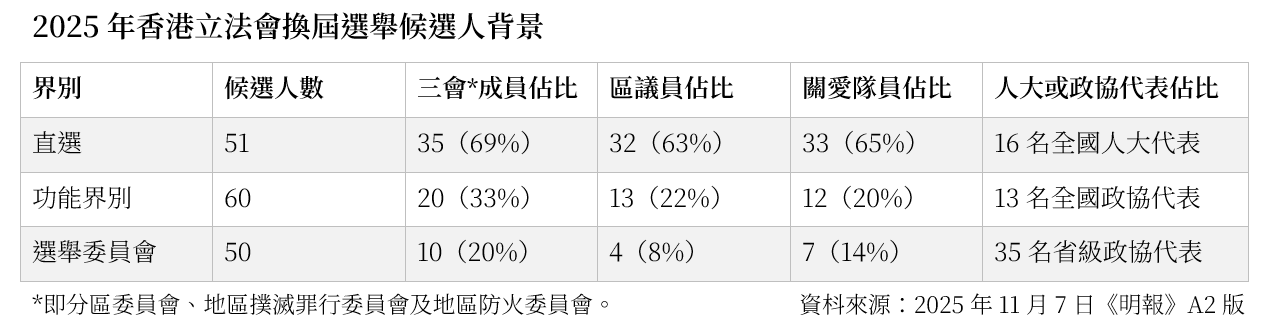
初步統計,51名候選人中有16名是港區全國人大代表。在競逐功能界別的候選人中,約五分之一是政協委員,三分之一來自三會成員,近五分之一是區議會議員及關愛隊成員。
鑑於2020年6月中旬《國安法》頒布後,三會(現有份投票選選委、繼而代表選立法會議員)、區議會的改組以及關愛隊的擴充,其目的都是為了加強和鞏固香港的愛國精英,因此,來自這些機構的立法會候選人數量相對較多,也證明了中國內地在香港的統戰工作取得了成功。全國人大和政協已經吸收了許多來自香港的愛國精英,其中不少人已報名參加立法會選舉。
粵港澳首次合辦第15屆全運會
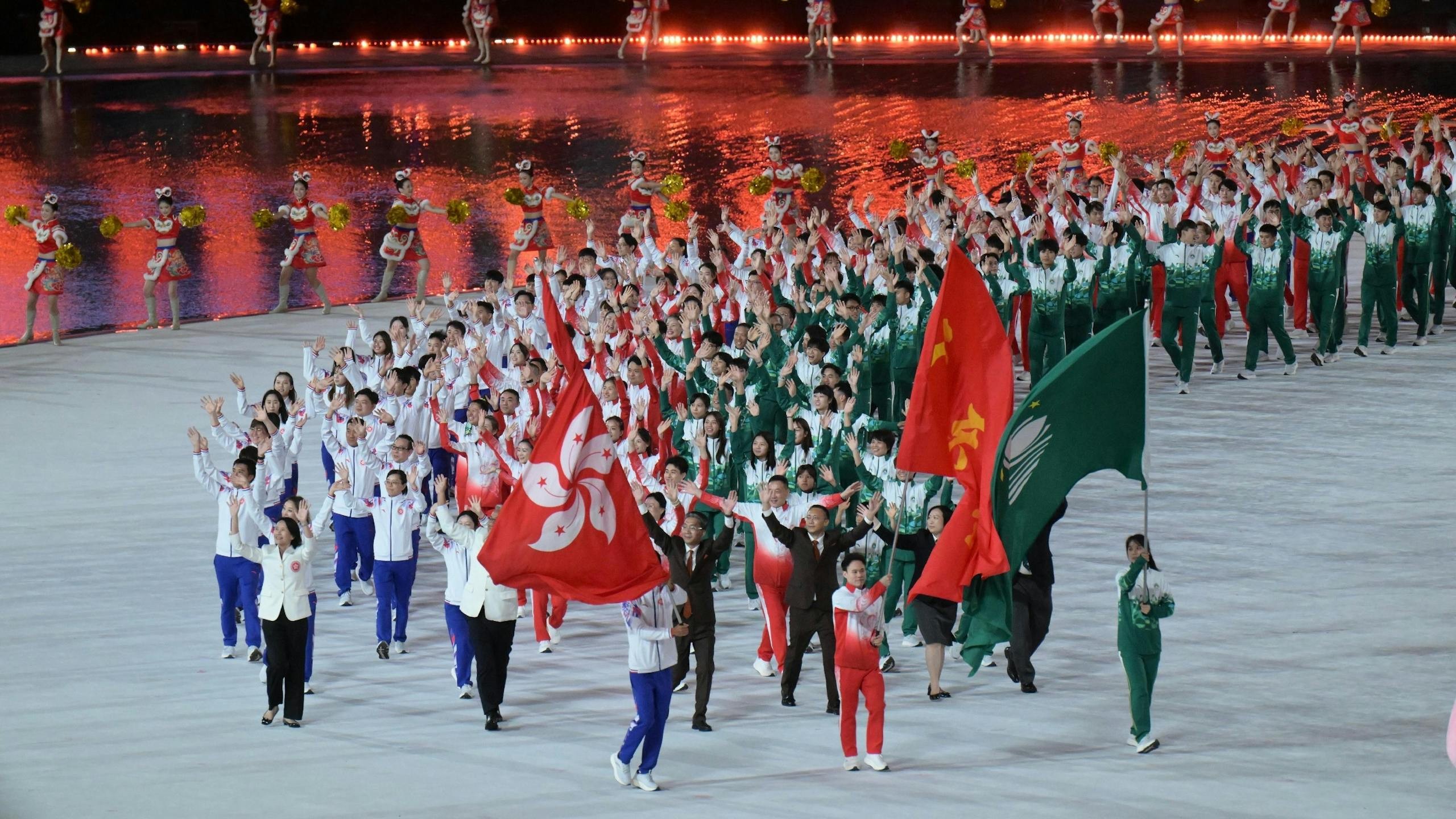
另一項在香港取得顯著進展的統戰工作是於11月9日至21日在粵港澳三地舉辦第15屆全國運動會。這是香港和澳門歷史上首次與廣東省共同舉辦這項重要的全國性體育賽事。
從統戰工作的角度來看,體育活動能促進中華民族主義的發展,同時又能與香港和澳門的本土文化認同和諧共存,這必將成為第15屆全國運動會的一大亮點。港澳兩地市民不僅會為代表他們參賽的運動員加油助威,也會為來自中國內地其他省份的運動員的精彩表現感到自豪。
11月8日,習近平主席在訪問廣東期間發表講話,強調了進一步發展粵港澳大灣區、以及香港和澳門融入大灣區的重要性。從統戰角度來看,香港和澳門能夠也必將為大灣區的社會經濟發展作出巨大貢獻,充分利用廣東省先進的科技發展優勢,積極參與全運會,並在推動中華文化復興方面發揮,比以往任何時候都更加重要的作用。
第三個值得關注的進展是近期持續進行的兩岸互動。近幾個月來,大陸和台灣民眾的互動日益密切,其中包括8月19日至20日在福建省舉行的第七屆兩岸融合與發展論壇。內地官員、與來自內地和台灣的90名代表一起出席了論壇,就產業合作、政策落實、青年交流、文化認同、數位經濟以及兩岸合作等一系列議題展開了討論。
新華社連發三文 籲台灣民眾擁抱統一
近期大陸與台灣民眾的兩岸接觸,以及新華社於10月下旬連發三篇呼籲台灣民眾擁抱統一的文章,都顯示中國內地統戰工作正在全面展開。
新華社所發表三篇「鍾台文」的署名文章,呼籲台灣人民支持統一。第一篇文章〈台灣問題的由來和性質〉強調中國大陸對台灣的主權,第三篇文章〈祖國必然統一勢不可擋〉強調統一的必然性,但就內容而言,第二篇〈兩岸關係發展和統一利好〉的文章最受關注。
文章呼籲台灣人民加入中國大陸,讓台灣的經濟和民生得到極大益處,而統一後台灣的國際空間也將擴大。文章也指出,統一後,經中央政府批准,外國可以在台灣設立領事館,國際組織也可以在台灣設立辦事處,這項表述與2022年台灣問題白皮書的內容類似。
然而,這篇文章並未提及體育參與的問題,故此體育議題在兩岸交往和發展中尚未得到充分探討。不過,如果香港和澳門積極參與全運會,那麼我們可以預見,一旦台灣的統治精英接受九二共識,台灣也將迎來參與體育活動的良機。
既保留本土特色 也認同中華民族
總之,近期粵港澳和兩岸關係的發展趨勢突顯了一個引人注目的現象,即統戰工作及其在香港和澳門取得的巨大成功。兩地積極參與全運會,與粵港澳大灣區緊密融合,既保留了地方特色,又擁抱了中華民族國家認同,為中國文化復興作出了巨大貢獻。
展望未來,這些發展的結果很可能塑造大中華區區域合作和認同的未來模式。體育賽事、政治機構和兩岸論壇的融合,體現了在尊重地方特色的同時,加強兩岸聯繫的多方面舉措。
這些統戰舉措的後續發展將受到密切關注,因為它們可能影響香港、澳門和台灣的民意和政策走向。此外,近期大陸與台灣民眾的兩岸接觸,以及新華社三篇呼籲台灣民眾擁抱統一的文章,都顯示中國的統戰工作正在全面展開。
United Front through electoral mobilization, sports and Cross-Strait contacts
If United Front work is defined as attempts at winning the hearts and minds of the people, then the recent and ongoing events in Hong Kong, Macau, and in cross-strait relations deserve our close attention.
First and foremost, the upcoming Legislative Council (LegCo) elections in the Hong Kong Special Administrative Region (HKSAR) witness 161 candidates who register to participate in the competition for the 90 seats in the legislature. Of the 161 candidates, 107 are non-incumbents seeking to be elected to the LegCo for the first time. The 90-member LegCo is composed of three sectors: 20 members will be directly elected through geographical constituencies; 30 will be elected from functional constituencies; and 40 will be elected from the Election Committee. Fifty-one candidates will compete for 20 directly elected seats; sixty will contest the functional constituency seats; and fifty will try to capture the forty seats coming from the Election Committee.
Since the Macau Legislative Council elections on 14 September 2025 envisaged 53.35 per cent of the voter turnout, the HKSAR government is under pressure to mobilise more citizens to participate in the LegCo elections that will be held on 7 December. It was reported that the HKSAR authorities went to Macau to learn from their Macau counterpart on how to mobilise voters to cast their ballots. Hong Kong’s civil servants are now mobilised to vote on election day, while pro-government groups and private-sector companies and organisations are also mobilised to appeal and encourage their members and employees, respectively, to cast their ballots on election day. Candidates have already come out on the streets to raise their flags, distribute their leaflets to voters, and to create a tense atmosphere of electoral competition.
Electoral participation and United Front significance
The government has not yet mentioned any targeted percentage of its expected voter turnout. Yet, the upcoming LegCo elections will have huge political significance from the United Front perspective. The more the voters cast their ballots, the more successful the elections will be. Given that the last LegCo elections in 2021 only attracted 30 per cent of the voter turnout, it can be anticipated that the December 2025 LegCo elections will easily be hailed as a great success.
Given that traditionally the pro-government and pro-Beijing forces could garner about 45 per cent of the votes in direct elections before 2019, the current thrust of electoral mobilisation in the HKSAR will likely achieve a range of 35 to 38 per cent of the voter turnout. If 40 per cent of the voter turnout can be reached, it will definitely be a huge success in the Hong Kong government’s United Front strategy of winning the hearts and minds of more voters to go to the polls on 7 December.
A closer look at the statistical data of the candidates shows that they are coming from the solidly “patriotic” camp. Table 1 below demonstrates that most candidates running for direct election come from the District Councils, members of the three Committees (Fire Crime, Fire Prevention and Area Committees), and Care Teams (which emerged in Covid-19, and which have been expanding since then at the district level).
Sixteen of the 51 candidates are Hong Kong members of the National People’s Congress (NPC). For candidates running for functional constituencies, about one-fifth are members of the Chinese People’s Political Consultative Conference (CPPCC). One-third are members of the three Committees and almost one-fifth are members of District Councils and Care Teams.

Given the fact that the enhanced role of the three Committees (which can now elect LegCo members), the revamp of the District Councils and the expansion of Care Teams after the promulgation of the national security law in mid-June 2020 have aimed at increasing and consolidating the patriotic elites governing the HKSAR, the relatively large number of LegCo candidates coming from these institutions is a testimony to the success of the Chinese Mainland’s United Front work in Hong Kong. NPC and CPPCC have already co-opted many patriotic elites from the HKSAR and quite a lot of them are now participating in the LegCo elections.
Another United Front work that has made significant inroads in the HKSAR is the holding of the 15th National Games in Guangdong, Hong Kong and Macau from 9 November to 21 November. For the first time in the history of the HKSAR and the Macau Special Administrative Region (MSAR), the two cities have the great honour to co-host this important national sports event with the Guangdong province.
From the perspective of United Front work, sports can and will stimulate the development of Chinese nationalism while at the same time co-existing with the local Hong Kong and local Macau identities. The nice mixture of the local identities in Hong Kong and Macau with the national Chinese identities will certainly become a hallmark of the 15th National Games in Guangdong, HKSAR and MSAR. Citizens in the two cities will not only cheer for their athletes representing their cities but also feel proud of the performance of athletes from other provinces in the Chinese Mainland.
National Games, GBA integration and Cultural Renaissance
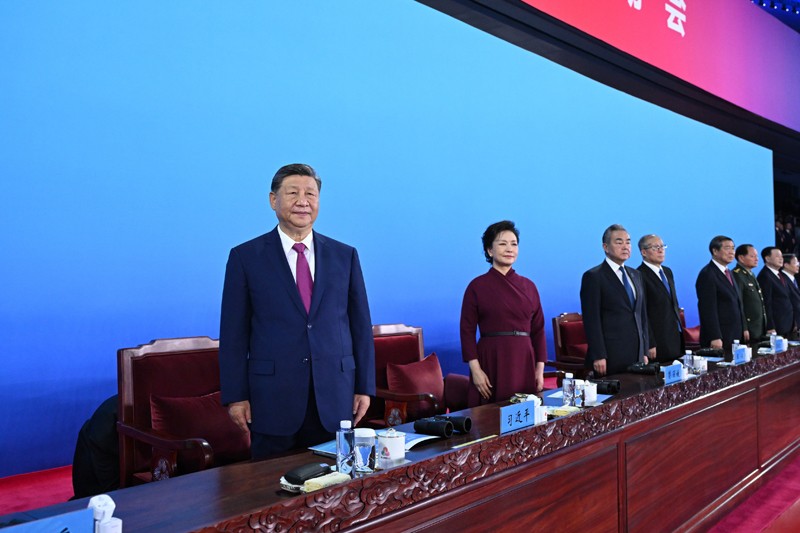
The opening ceremony is presided over by President Xi Jinping on 9 November, and he delivered a speech during his visit to Guangdong on 8 November, when he emphasised the importance of the further development of the Greater Bay Area (GBA) and the integration of both Hong Kong and Macau into the GBA. From a United Front perspective, Hong Kong and Macau can and will contribute immensely to the socio-economic development of the GBA, capitalising on the advanced technological development of the Guangdong province, participating actively in the National Games, and playing a much greater role in the advancement of the Chinese cultural renaissance than ever before.
The third interesting development is the recent and ongoing cross-strait interaction. Both the mainland Chinese and the Taiwan people have been interacting quite closely in recent months, including the Seventh Cross-Strait Integration and Development Forum in Fujian province from 19 August to 20 August. Mainland Chinese officials in Fujian attended the forum together with ninety participants from the mainland and Taiwan to discuss a whole array of issues, ranging from industrial cooperation to policy implementation, from youth exchange to cultural identity, and from digital economy to cross-strait cooperation.
The recent cross-strait contacts between the mainland Chinese and the Taiwan people, and the appeal of three Xinhua articles to the Taiwanese to embrace reunification, are testimony to the operation of the Chinese Mainland’s United Front work in full swing
The chairman of the All-China Taiwan Federation, Zheng Jianmin, remarked that the “comrades on both sides of the strait belong to the same family” and that they “cannot stop the tide of the historical reunification of the motherland” (Jornal San Wa Ou, 8 November 2025). Obviously, he was appealing to the comrades in Taiwan for the reunification drive.
Cross-Strait appeals and the prospective Taiwan model
In late October, interestingly, a series of three commentaries were published by Xinhua to appeal to the Taiwan people for reunification. While the first article emphasised the Chinese Mainland’s sovereignty over Taiwan and the third article stressed the inevitability of reunification, the second article was the most interesting one in terms of its content.
It appeals to the Taiwan people to join the Chinese Mainland so that Taiwan’s economy and livelihood will benefit tremendously, and that Taiwan’s international space will be expanded further after reunification (see: 鍾台文署名文章:兩岸關係發展和統一利好 (hk01.com)). The article also said that, after reunification and with the approval of the central government, foreign countries can set up their consuls in Taiwan and international organizations can also establish their offices there – a statement similar to the 2022 White Paper on Taiwan (see: China releases white paper on Taiwan question, reunification in new era (www.gov.cn)). In brief, the article advocates a Taiwan model of “one country, two systems” to the people of Taiwan along the same line of the 2022 White Paper.
However, the article did not mention the question of sports participation, which has not been fully explored and discussed in the cross-strait contacts and development. Yet, if Hong Kong and Macau actively participate in the National Games, then we can anticipate that Taiwan would also have such a golden opportunity once the island’s ruling elites accept the 1992 consensus, especially as the appeal to Taiwan to accept the 1992 consensus was also mentioned in the second article published by Xinhua in late October 2025.
Conclusion: United Front Work in full operation
In conclusion, the recent and ongoing events in Guangdong, Hong Kong, Macau and cross-strait relations have pointed to a fascinating phenomenon, namely United Front work and its tremendous success in both the HKSAR and MSAR. Both cities are participating actively in the National Games, integrating with the GBA closely, retaining their local identities and embracing the national Chinese identity, and contributing immensely to China’s cultural renaissance.
The Chinese Mainland’s United Front work in the HKSAR after the promulgation of the national security law in mid-2020 has seen its fruitful and positive result, namely entrenching the patriotic rule in Hong Kong and stimulating their electoral participation in the December 2025 LegCo elections. The current efforts of the HKSAR government at mobilising the citizens to vote on election day on 7 December are not only a natural response to imitate the success of electoral mobilization in the Macau Legislative Council elections on 14 September, but also a concomitant of United Front work to win the hearts and minds of more citizens to exercise their civic duty to vote.
Looking ahead, the outcomes of these developments will likely shape the future landscape of regional cooperation and identity formation in the Greater China area. The integration of sporting events, political institutions, and cross-strait forums demonstrates a multifaceted approach to strengthening ties while respecting local distinctions.
The continued evolution of these United Front initiatives will be closely watched, as they may further influence public sentiment and policy directions in Hong Kong, Macau, and Taiwan. Finally, the recent cross-strait contacts between the mainland Chinese and the Taiwan people, and the appeal of three Xinhua articles to the Taiwanese to embrace reunification, are testimony to the operation of the Chinese Mainland’s United Front work in full swing. In short, United Front work can be seen to operate successfully in Hong Kong and Macau and actively in its efforts targeted at the Taiwan people.
原刊於澳門新聞通訊社(MNA)網站,本社獲作者授權轉載。(原文按此)