
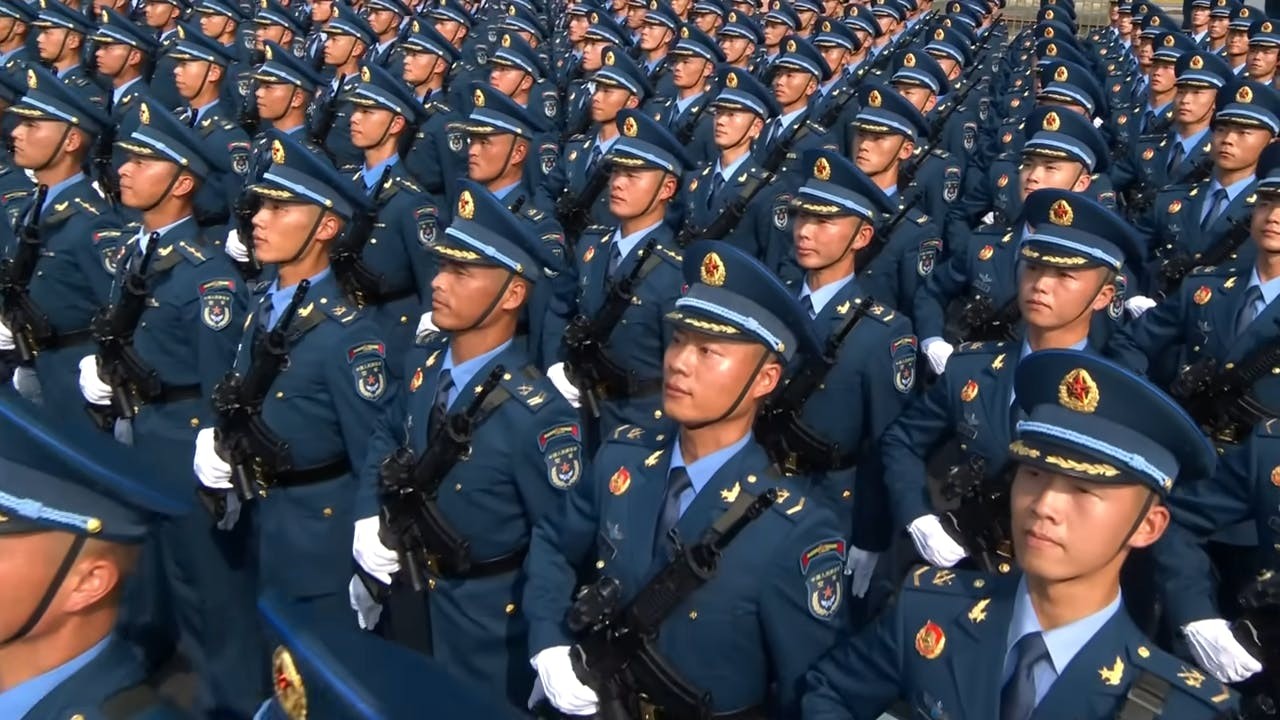

2025年9月3日在北京舉行的大規模閱兵,不僅標誌着中國與世界友好國家的密切關係,也標誌着中國軍事現代化的快速發展,具有重要的國內外意義。
首先,包括俄羅斯總統普京和北韓領導人金正恩在內的26位外國領導人出席了閱兵式。值得注意的是,巴基斯坦總理沙赫巴茲·謝里夫也出席了閱兵式,而此前出席了在天津舉行的上海合作組織峰會的印度總理莫迪,卻在閱兵式開始前已離開了中國。據報道,莫迪為了避免惹怒日本,沒有參加遊行。
無論莫迪缺席的原因是什麼,此次閱兵式上都有金正恩、古巴國家主席卡內爾、越南國家主席梁強和緬甸代理總統敏昂來等四位社會主義國家領導人的出席,這充分表明了包括中國在內的五個社會主義主要國家在意識形態和政治體制上的團結一致。另方面,沒有一個親美的西方國家領導人參加閱兵式,這反映出這些國家仍抱持濃厚的新冷戰思維。
特朗普批中俄朝密謀反美
美國總統特朗普將這次閱兵稱為中國、俄羅斯與朝鮮密謀反美的標誌。儘管中國堅持睦鄰友好政策而傾向俄羅斯和朝鮮,但密謀一詞指的是同盟,從政治上講,是指在軍事和經濟方面建立的牢固聯盟。然而,中俄朝三國之間並沒有這樣的經濟聯盟,難怪普京稱特朗普所謂的陰謀論十分可笑。
其次,仔細研讀習近平的講話,可以發現一些突出特點:他避免提及二戰期間日本、德國等國家,也避免讚揚包括美國在內的國民黨中國的盟友。按照特朗普的說法,習近平的演講應該提到美國,因為美國在二戰期間的中國抗戰中發揮了至關重要的作用。
誠然,美國對中國抗戰的貢獻在政治和軍事上意義重大,但習近平的講話避而不談美國,卻暗示中國及其友好國家如俄羅斯、朝鮮所對抗的是世界霸權國家。然而,習近平的演講措詞相當溫和,也經過精心設計,試圖避免激怒日美兩國。習在演講中表示,中國永遠不會忘記那些在反法西斯戰爭中援助中國的國家,這番話雖然沒有點名,卻暗示了美國在1931至1945年中國抗日戰爭中發揮的作用。

展示軍武 強調和平發展
整個演講經過精心構思,一方面強調中國走和平發展道路,另一方面強調中國渴望在世界上實現正義。在儀式結束時放飛8萬隻和平鴿,在展示中國現代化武器裝備的同時,更將和平作為主要訊息推向高潮。
第三,從閱兵式上展示的新武器來看,與十年前的勝利日閱兵相比,它們有很大不同,也先進得多,包括無人機、飛彈和第三代戰鬥機等高科技武器。然而,在2025年的閱兵式上,解放軍的現代化建設取得了令人刮目的進步,包括首款空射核飛彈巨浪-1、巨浪-3潛射洲際彈道飛彈、東風-61、東風-31BJ、東風-5C,以及陸、海、空三級戰略核力量的展示。
其他令人印象深刻的武器還包括鷹擊-20高超音速反艦彈道飛彈、鷹擊-19超燃沖壓發動機驅動的高超音速反艦巡航飛彈、99B型和100型新型戰車、殲-15和殲-35系列艦載戰機、自動機器狼和洪都航空生產的GJ-11號攻擊無人航機。閱兵內容不僅展示了中國對任何衝突和戰爭的準備,包括南海等地發生衝突的可能性,也展示了中國渴望加強與世界友善國家軍事武器的銷售和貿易。
軍售規模位列美法俄三國
根據斯德哥爾摩國際和平研究所的數據,從2020到2024年,中國在全球武器出口中排名第四,僅次於美國、法國和俄羅斯。可以預見,在9月3日閱兵式上展示軍事實力後,中國對其他國家的武器出口可能會增加。此外,鑑於大量無人機武器的存在,解放軍似乎已經提高了對台灣敵方目標發動有效打擊的能力。
第四,中國政要的出席引人注目。中央軍委副主席張又俠坐在前排,與前副總理張高麗並肩而立,這可能表明他在中國政治領導層中的地位日益重要。值得關注的是,閱兵式由中部戰區司令韓勝延中將擔任指揮,這一點值得關注。韓勝延來自中部戰區,但中部戰區司令王強將軍卻並未出席,這引發了海外華文和英文媒體猜測他缺席的原因。鑑於持續的反腐敗運動導致許多將領落馬,一位中將為何被任命為閱兵式指揮官尚不明確。
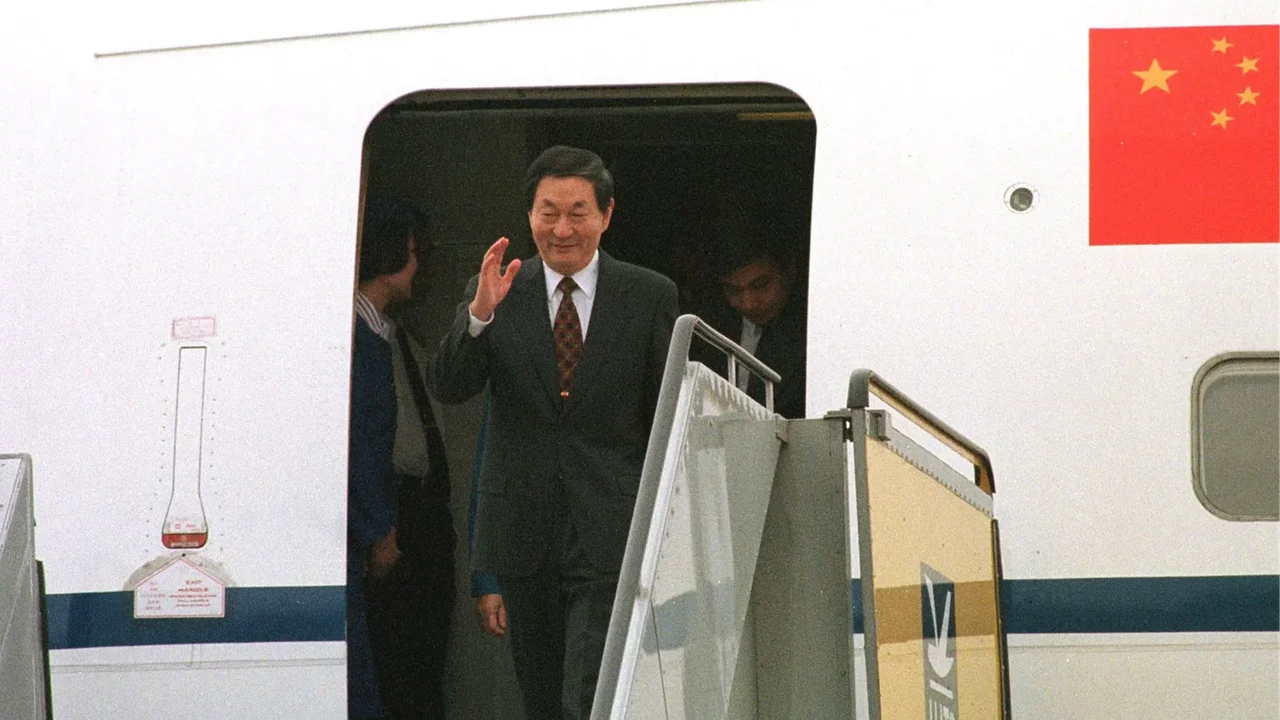
這次閱兵式另一個引人注目的亮點是黨內元老的出席,包括前總理溫家寶、前政治局常委汪洋和李瑞環,以及前國家副主席曾慶紅。他們的出席彰顯了中共年長和退休領導人持續的重要性、地位和影響力。83歲的前國家主席胡錦濤和97歲的前總理朱鎔基缺席閱兵式,據悉他們分別因健康狀況和年齡原因缺席。
鑑於中國共產黨第四次全體會議即將於10月召開,並將討論下一個五年規劃,外界觀察家將對中央委員會的任何新面孔感興趣。目前,中央委員會由205名委員和171名候補委員組成。外界觀察家也非常關注四中全會是否會在人事問題上透露端倪,讓外界更清晰了解中國領導層的繼任安排,而這個問題可能會受到黨內元老所影響。

怯美威攝 拉美領導人全缺席
第五,中國閱兵成功邀請了26位友好國家的領導人出席,彰顯了中國外交政策在贏得友邦民心方面的成功。值得注意的是,拉丁美洲國家缺席,這或許表明它們處於美國的地緣政治和經濟影響範圍之內,擔心特朗普領導下的美國可能會用關稅來懲罰那些參加中國閱兵式的國家。
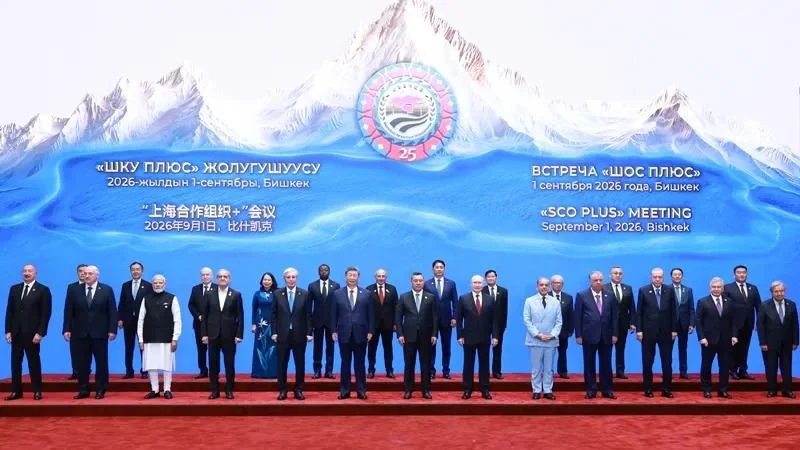
九三閱兵適逢上海合作組織天津峰會後不久,這讓大多數上合組織成員國能夠方便地參加北京的閱兵式。習近平主席也在北京會見了26個國家的領導人和代表,強調了中國的全球安全、全球發展和全球文明倡議,試圖加強非美國和歐盟主導的聯盟國家的團結紐帶。顯然,意識形態仍然是國際政治中最重要的分歧。
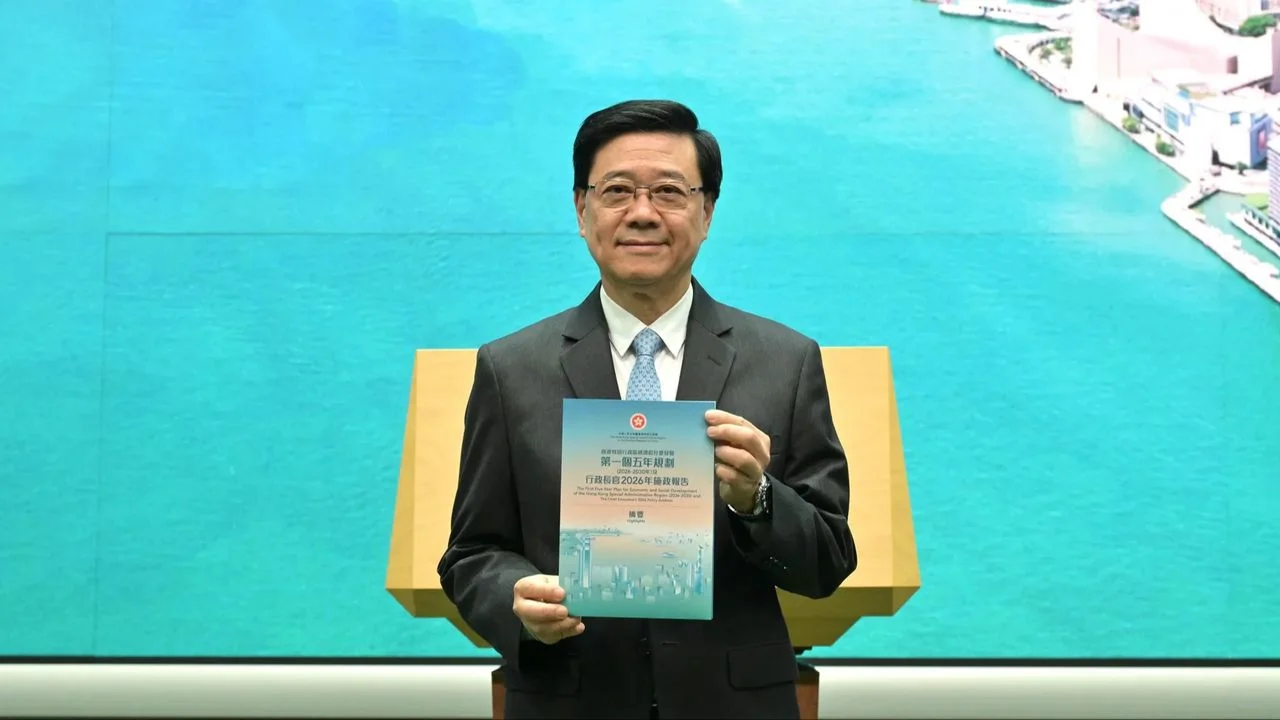
總而言之,中國九三大閱兵對內對外都意義重大。對內,中國政治領導層成功地展現了強大的內部團結形象,利用閱兵式激發了中國民眾濃厚的中華民族主義和愛國情緒,他們派出由政治精英率領的代表團前往北京。
黨內元老發揮關鍵影響力
此外,許多黨內元老出席閱兵式具有重要的政治意義,顯示他們在塑造中國國家發展政策以及未來數月乃至數年領導層繼任方面發揮著不可或缺的影響力。
對外,閱兵式不僅獲得了中國親密盟友和友好鄰邦如俄羅斯和朝鮮的加持,也得到了亞洲和非洲其他友好國家的支持,並利用在天津舉行的上合組織會議作為動員機制,促進友好國家順利參與閱兵式。
最重要的是,中國的軍事現代化進程如此迅速和令人印象深刻,解放軍已做好捍衛國家主權和領土完整的軍事準備,這向任何對北京進行軍事挑釁的地區勢力發出警告。同時,中國的軍事現代化是防禦性的而非進攻性的,是和平的而非侵略性的。最後的是,中國軍事武器現代化快速發展,為其於國際軍工市場帶來更多的商機。
China’s Military Parade and its political implications
The large-scale military parade in Beijing on 3 September 2025, marked not only the close relationship between China and its friendly countries in the world, but also its rapid military modernisation, with important internal and external implications.
First and foremost, twenty-six leaders of foreign countries participated in the observation of the military parade, including Russian President Vladimir Putin and North Korean President Kim Jong Un (see Table below). It was noteworthy that Pakistan Prime Minister Shahbaz Sharif attended, while the Indian Prime Minister Narendra Modi had attended the Shanghai Cooperation Organization Summit in Tianjin but left China shortly before the military parade began. It was reported that Modi did not participate in the military parade to avoid making Japan unhappy.
Another possibility was that Modi might avoid seeing his Pakistani counterpart, given the recent Indo-Pakistani four-day conflict in May 2025. Whatever the reason behind Modi’s absence, the military parade witnessed the participation of four top leaders of socialist states, including North Korean President Kim Jong Un, Cuban President Miguel Díaz-Canel, Vietnamese President Lương Cường, and Myanmar Acting President Min Aung Hliang – a clear sign of ideological and socialist solidarity among the five key socialist states including China. None of the pro-US and Western countries sent its leaders to attend the military parade – a reflection of a strong new Cold War mentality lingering in the minds of the pro-US and Western developed states.
US President Donald Trump referred to the military parade as a sign of China “conspiring against the US with Putin and Kim.” Although China’s close friends embrace Russia and North Korea due to the persistence of its good-neighbouring policy, the word “conspiring” pointed to an alliance, which is, politically speaking, a solid coalition in military and economic terms. However, there is no such economic alliance between the three countries – China, Russia and North Korea.
The three states have their cordial bilateral relations, especially between North Korea and Russia, as the former sent troops to fight for the latter in the Russo-Ukrainian war. While China’s relations with North Korea remain historically harmonious and strong, as Kim Jong Un’s visit this time was warmly welcomed by President Xi Jinping and greeted by Xi’s protégé Cai Qi, there is no sign that a solid economic–military triple alliance between China, North Korea and Russia exists. No wonder Russian President Putin referred to Trump’s “conspiring” comment as “humorous.” However, it can be said that China, Russia and North Korea constitute a loose coalition of non-Western and anti-hegemonic forces, seeing the US as the common foe and the most formidable enemy in the Western world.
Second, a closer look at President Xi Jinping’s speech shows some prominent features, avoiding any reference to countries like Japan and Germany during the Second World War, and shunning any attempt to praise Nationalist China’s allies, including the US. US President Trump commented that the US should have been mentioned in Xi’s speech, as his country played a crucial role in the battle of China during World War Two.
Indeed, the contributions of the US to the battle of China were politically and militarily significant, but the avoidance of mentioning the US in Xi’s speech implied that China and its friendly countries, such as Russia and North Korea, are against hegemonic countries in the world without naming the US and its allies. As such, President Xi’s speech was quite moderate and a skilfully crafted one, trying to avoid antagonising Japan and the US. President Xi said in his speech that China will never forget those countries assisting China in the anti-fascist war, thereby implying, without naming, the US’s role in its war of resistance against the Japanese aggressor from 1931 to 1945.
Another prominent feature of Xi’s speech was his frequency of using the word “peace” five times and the word “peaceful” twice, while the word “justice” or “right” or “righteous” appeared four times. The whole speech was drafted carefully to emphasise that China follows the path of peaceful development on the one hand, and that China is eager to envisage justice in the world on the other. The release of 80,000 peaceful doves at the end of the ceremony was an apex showing that peace was the main message amid the show of modern Chinese weaponry and military hardware.
Third, judging from the new weapons shown in the military parade, they were very different and far more advanced than the last Victory Day parade 10 years ago, with the presence of hi-tech weaponry such as drones, missiles, and third-generation fighting jets. It can be recalled that during the 2008 Sichuan earthquake in China, the People’s Liberation Army (PLA) even lacked drones and used bulky helicopters. In the 2025 military parade, however, the PLA modernisation has shown impressive progress, including the first air-launched nuclear missile JL-1, JL-3 submarine-launched intercontinental ballistic missile, DF-61, DF-31BJ, DF-5C; and the showcase of the land, sea, and air categories of strategic nuclear forces.
Other impressive weapons embraced the YJ-20 hypersonic anti-ship ballistic missile, the YJ-19 scramjet-powered hypersonic anti-ship cruise missile, the new tanks of Type 99B and Type 100, the carrier-based fighter jets like the J-15 and J-35 series, the robot wolves and Hongdu GJ-11 aerial combat stealth drones, uncrewed submersibles, and the unmanned artillery systems, as well as high-energy lasers and high-power microwave weapons. The militia force composed of female soldiers was a sharp one, illustrating the preparedness of the Chinese war machine. The content of the military parade demonstrated not only China’s preparedness for any conflict and war, including the possibility of conflict in the South China Sea and other places, but also its eagerness to enhance the sale and business transactions of military weapons to its friendly countries in the world.
From 2020 to 2024, China ranked fourth in global arms exports, according to the Stockholm International Peace Research, following the US, France, and Russia (South China Morning Post, 5 September 2025). It can be anticipated that Chinese arms exports to other countries will likely increase after it flexed military muscles during the 3 September parade. Furthermore, given the presence of many unmanned aerial weapons, the PLA appears to have increased its capability to launch an effective strike on Taiwan’s enemy targets in case any radicals in Taiwan may do anything to provoke the mainland political and military leaders. Although Taiwan was not mentioned in President Xi’s speech, the impressive arrays of weapons may alarm the Taiwan military leaders. No wonder that a Taiwan security official met the US defence official Jed Royal at Anchorage a week before Mainland China’s military parade (Reuters, 5 September 2025).
Fourth, the presence of the Chinese political leaders was noteworthy. The vice-chairman of the Central Military Commission (CMC), Zhang Youxia, sat in the front row beside former vice premier Zhang Gaoli, indicating possibly his increasingly important role in the Chinese political leadership. Interestingly, the selection of Lieutenant General Han Shengyan as the commander of the military parade deserved our attention. Han came from the Central Theatre Command. Yet, commander General Wang Qiang of the Central Theatre Command did not appear, fuelling speculations in the overseas Chinese and English media on why he was absent. Given the fact that many military generals were purged due to the persistent anti-corruption campaign, it was still unclear why a Lieutenant General was chosen as the commander of the military parade – perhaps a choice made by the increasingly important CMC vice-chair Zhang Youxia, according to some overseas Chinese YouTubers. In the 2015 military parade, the commander was General Song Puxuan from the Beijing Military Command. In the 2019 military parade, the commander was General Yi Xiaoguang from the Central Theatre Command.
Another noteworthy presence in the military parade was the attendance of party elders, including the former Premier Wen Jiabao and former Politburo Standing Committee members Wang Yang and Li Ruihuan, and former Vice President Zeng Qinghong. Their presence indicated the persistent importance, status, and influence of the elderly and retired leaders of the Chinese Communist Party. Former president 83-year-old Hu Jintao and former premier 97-year-old Zhu Rongji were absent, reportedly because of their health and age, respectively.
Given the fact that the Fourth Plenary Session of the Chinese Communist Party will be held soon in October, and that it will discuss the five-year plan, outside observers will be interested in any new faces of the Central Committee, which is now composed of 205 members and 171 alternate members. Given the fact that the overseas Chinese social media have many speculations on the developments of the Beidaihe summer resort meeting that took place in August, when party elders were invited to share their insights on the national and Party’s development, outside observers are deeply interested in whether the Fourth Plenary Session will perhaps show any directions on personnel matters – a topic that may be influenced by some influential party elders and that will likely point to China’s leadership succession planning in the coming years.
Fifth and finally, China’s military parade succeeded in inviting twenty-six leaders of its friendly countries to attend, demonstrating the success of Chinese foreign policy to win the hearts and minds of its friends. From the perspective of united front foreign policy, China’s military parade garnered the support of many friends in the developing countries, including those in Asia and Africa. Interestingly, Latin American countries were absent, perhaps pointing to the fact that they are under the US sphere of geopolitical and economic influence and that they are concerned about whether the US, under the Trump leadership, may use tariffs to “punish” those countries which attended the Chinese military parade.
The 3 September parade was timed skilfully shortly after the Shanghai Cooperation Organization (SCO) summit in Tianjin, making it easier for most participants of the SCO to attend the Beijing military parade. President Xi also met the leaders and representatives of the twenty-six countries in Beijing, emphasising China’s global security, global development, and global civilisation initiatives, trying to strengthen the bonds of solidarity among the countries that are not part of the US-led and EU-led alliance. From the united front perspective, the SCO meeting in Tianjin and the military parade in Beijing were tactfully timed to garner the closer support of China’s ideological friends in the developed and developing world vis-à-vis the US-led and EU-led Western world. Clearly, ideologies remain the most important divide in international politics.
In conclusion, China’s military parade was internally and externally significant. Internally, the Chinese political leaders succeeded in projecting a strong image of internal unity, using the military parade to stimulate a high degree of patriotism and Chinese nationalism among the psyche of the Chinese peoples, including the Chinese elites in Hong Kong and Macau, which sent their delegations led by the governing elites to Beijing. The presence of many party elders in their observation of the military parade was politically significant, indicating their indispensable and influential role in shaping China’s national development policies and perhaps leadership succession in the coming months and years. Externally, the military parade garnered the support of not only China’s close friends and good neighbours, notably Russia and North Korea, but also other friendly countries in Asia and Africa, utilising the SCO meeting in Tianjin as a mobilising agent to enhance the easy participation of friendly countries in the military parade.
The presence of many Asian and African countries in the Chinese military parade showed to the US-led and EU-led alliance that the non-Western world has totally different ideologies, notably anti-hegemonism and socio-economic and political development without dependence on the US and its allies. Most importantly, China’s military modernisation has proceeded so rapidly and impressively that the PLA is militarily prepared to protect its national sovereignty and territorial integrity, sending a warning signal to any countries and places that continue or seek to provoke Beijing militarily. At the same time, the main thrust of President Xi’s speech was to emphasise China’s path of peaceful development; the Chinese military modernisation is defensive rather than offensive, and it is peaceful instead of aggressive, as portrayed biasedly by some Western media and politicians. Last but not least, the modernisation of Chinese military weapons went by leaps and bounds, leading to numerous opportunities for further business transactions.
原刊於澳門新聞通訊社(MNA)網站,本社獲作者授權轉載。(原文按此)