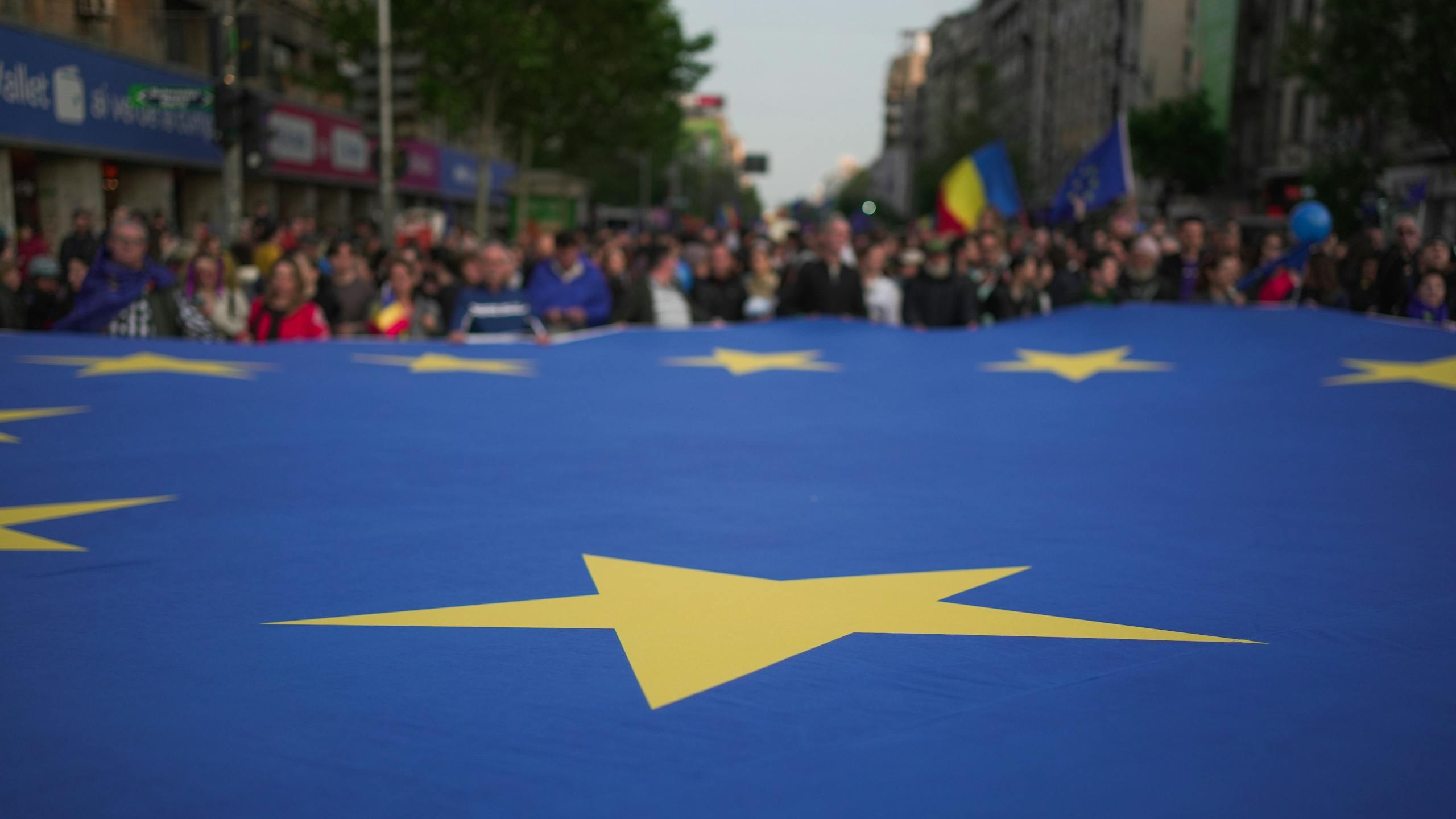

2025年7月24日,歐盟領導人在北京與中國領導人會面,會後雙方都強調合作而非對抗的重要性。
然而,由於歐盟深受以美國為首的舊單極和以歐洲為中心的世界觀所羈絆,未能適應朝向多極世界快速而動蕩的轉型,導致中歐長達25年談判難有寸進。
歐盟新聞稿強調,歐洲理事會主席科斯塔(Antonio Costa)、歐盟委員會主席馮德萊恩(Ursula von der Leyen)和歐盟外交與安全政策高級代表卡拉斯(Kaja Kallas)與中國國家主席習近平舉行了富有成效的會晤。

歐盟致力深化與中國關係
新聞稿提出了多個值得關注的觀點。首先,歐盟和中國應共同承擔維護基於規則的國際秩序的責任,共同應對全球挑戰,維護多邊主義。而歐盟將持續致力於深化與中國的關係,尤其是在應對氣候變遷領域。
其次,歐盟與中國領導人討論了俄烏戰爭,歐盟認為戰爭對烏克蘭構成生存威脅。中國作為聯合國安理會常任理事國,應負有維護基於規則的國際秩序的特殊責任,不應該支援俄羅斯軍工系統的運作。
第三,歐盟希望中國投資歐洲時,必須有助當地的長期競爭力和帶動技術進步,並創造高質量的就業機會。中國並應該讓歐盟企業進入內地肉類、化妝品和藥品的市場,終止所謂的「針對歐盟白蘭地、豬肉和乳製品出口的不合理和報復性貿易保護措施」。此外,歐盟也敦促中國取消稀土和永久磁鐵的出口管制。
第四,歐盟與中國達成最具突破性的協議是引領全球減少溫室氣體排放的努力,包括實現《聯合國氣候變遷綱要公約》第30次締約國會議的目標。中國承諾2035年實現減排目標,並加大國際資金投入。
重申「一中」 唯關注台海局勢
第五,儘管歐盟重申其一中政策,並對台海緊張局勢表示擔憂,但它也對新疆和西藏的人權狀況以及香港的自由狀況表示擔憂,這些擔憂自然也引起中國的關注。
第六,關於南海領土爭端,歐盟反對任何單方面以武力或脅迫改變現狀的企圖,堅持根據《聯合國海洋法公約》和平解決。
第七,歐盟與中國就關鍵的稀土出口達成了初步協議,稀土的控制已經威脅到國防、能源和汽車等戰略產業的發展。
第八,歐盟呼籲在解決中歐貿易關係所謂不平衡問題上取得更多進展,2024年中歐商品貿易逆差將超過300億歐元。
2024年夏天,歐盟聲稱中國利用補貼來提振國內生產,以至於其產品和中國製造的電動車充斥歐盟市場,中國存在工業產能過剩問題。中國則提高白蘭地、豬肉和乳製品的進口稅作為報復手段,被歐盟譴責這些舉措不公平和不合理。
近年Shein、Temu、AliExpress等電商平台的中國小包裹轉攻進入歐盟市場,引發歐盟製造業的擔憂。歐盟已威脅對中國小包裹徵收2歐元的管理費,而這筆費用將由中國電商企業負擔。
放寬稀土管制 前提是允許投資歐洲
另一方面,中國雖然放寬了對稀土出口的管制,但這種放寬並非無條件的,中方要求歐盟允許中國投資進入歐洲。
中歐關係問題的癥結在於,歐盟深受其意識形態取向的影響。歐盟指責中國工業產能過剩、國家補貼電動車生產,這本身就存在問題。
首先,作為社會主義國家,中國必須對包括汽車工業在內的戰略產業提供補貼。換言之,歐盟對中國補貼電動車產業的批評,要麼體現了對社會主義經濟實踐的無知,要麼體現了冷戰時期針對社會主義國家的意識形態偏見。
其次,如果歐盟呼籲中國遵守基於規則的國際秩序,那麼就應該採取堅持自由主義的世界貿易市場原則,而不是對中國電動車實施任何經濟限制。
一方面,歐盟呼籲遵守基於規則的國際秩序,另方面卻對中國電動車進口採取歧視性做法,這恰恰表明其在國際貿易中奉行雙重標準,反映出歐盟領導人深受美國主導的單極世界歐盟,但這種世界觀已經過時。

美國向歐盟進口貨徵15%關稅
根據最新報道,美國將考慮對歐盟進口產品徵收15%的關稅,而不是計劃中的30%,這再次顯示歐盟仍深受美國交易外交的影響。諷刺的是,歐盟對中國的影響力正比以往任何時候都要小,但無論如何,很難指望歐盟對華的政策短期內出現劇變。
歐盟與中國打交道所面臨的挑戰在於,如何在其對自由民主價值觀和市場開放的基本承諾取得現實的平衡。對中國而言,當務之急是駕馭碎片化的歐盟實體,同時爭取在歐盟市場獲得更大的准入和公平待遇。
未來幾年,各領域談判和臨時協議(尤其是在國家層級)可能會更加密集,因為雙方都在努力維護各自最核心的利益,同時又維持戰略夥伴關係的幌子。這在很大程度上取決於歐盟領導人能否根據全球力量格局的變化調整其策略,以及中國領導人和政策制定者是否願意在利益一致的情況下做出有意義的戰略性讓步。
在這些不確定性之中,有一點是明確的:中歐關係將成為全球從舊單極秩序向更複雜、更混亂、衝突更激烈的多極格局更廣泛轉型的風向標。隨着美國軟實力的不斷下降和中國等許多新興大國的迅速崛起,歐盟領導層將如何以創新、創造性、獨立性和建設性的方式適應新的多極世界,還有待觀察。
A Critique of EU Policy Toward China
Judging from the minimal progress between the European Union (EU) and China during their 25th Summit in Beijing on July 24, 2025, the EU is still hamstrung by an old US-led unipolar and Euro-centric worldview rather than adapting to the rapid but turbulent transition from unipolarity to a multipolar world where EU is expected to play a more sophisticated, independent and constructive policy toward China.
The EU press release emphasized that the president of the European Council, Antonio Costa, and the president of the European Commission, Ursula von der Leyen, had a productive meeting with the Chinese President Xi Jinping, together with the High Representative of the EU for Foreign and Security policy, Kaja Kallas.
The press release raised several noteworthy points.
First, the EU continues its commitment to deepening relations with China, especially in tackling climate change. On the other hand, EU and China have the “shared responsibility to uphold the international rules-based order,” to tackle global challenges, and to safeguard multilateralism.
Second, the EU and Chinese leaders discussed the Russo-Ukrainian war in which the EU perceives as “an existential threat to Ukraine.” The EU, according to its press release, reiterated that China as a permanent member of the UN Security Council should have a “special responsibility” to uphold the rules-based international order, and that China should not “provide any material support which sustains Russia’s military-industrial base” (EU Press release, July 24, 2025). The EU “encouraged China to use its influence to support a just and lasting peace in Ukraine, based on the principles of the UN Charter.”
Third, the EU hopes that China’s investments in Europe “must contribute to the EU’s long-term competitiveness, technological progress and quality job creation.” Specifically, China should act on EU firms’ access to the Chinese market in the areas of meat, cosmetics, and pharmaceuticals. The EU asks China to end the so-called “unjustified and retaliatory trade defence cases and measures on EU exports of brandy, pork and dairy.” The EU also stresses the “negative impact of export controls on rare earths and permanent magnets introduced by China” and it urges China to “lift these restrictions.”
Fourth, the most productive area of breakthrough reached by EU and China is to lead global efforts at reducing greenhouse gas emissions including the targets at COP30. China promises to reduce its emissions up to 2035 and to step up its international financial contributions.
Fifth, although EU reaffirms its consistent one-China policy and expresses concern about the tensions in the Taiwan Strait, it also raised concerns about human rights condition in Xinjiang and Tibet and also about the freedom situation in Hong Kong – an area of concern that has naturally raised the eyebrows of China.
Sixth, on South China Sea’s territorial dispute, the EU opposed any unilateral attempt to change the status quo by force or coercion and it insists on peaceful resolution in accordance with the UN Convention on the Law of the Sea.
Seventh, the EU reached a tentative agreement with China on the critical exports of rare earth, whose control has threatened the development of strategic industries in the defence, energy, and automotive sectors.
Eighth, the EU calls for more progress to address the so-called imbalance in EU-China trade relations, which saw in 2024 a deficit of goods over Euro 300 pounds.
In the summer of 2024, the EU asserted that China had a problem of industrial “overcapacity,” meaning that China used subsidies to boost its domestic producers to the extent that its goods and Chinese-made electric vehicles were regarded as “flooding” the EU market. China responded to EU levies of duties on the Chinese-made electric vehicles by increasing tax on the imports of brandy, pork, and dairy – actions that were denounced by the EU as “unfair” and “unjustified.”
In recent years, the small Chinese parcels from e-commerce entities such as Shein, Temu and AliExpress have penetrated the EU market, raising the concerns of EU manufacturing sector which complains about “unfair competition.” The EU has threatened to increase a management fee of Euro 2 pounds per parcel—an amount that will be borne by the e-commerce companies in China.
After the recent summit, both EU and China have been emphasizing the importance of cooperation rather than confrontation.
China has adopted a diplomatic approach to dealing with EU concerns. President Xi Jinping urged the EU to make appropriate “strategic choice,” implying that the EU should adopt a much wiser approach to coping with the profound international transformations. Xi said” “Amid the accelerating transformation unseen in century and an international landscape fraught with turbulence and transformation, China and Europe must once again demonstrate vision and responsibility by making right strategic choices that meet people’s expectations and stand the test of history” (South China Morning Post, July 25, 2025).
President Xi stated that mutual dependency is not a risk or a sign of reduced cooperation; rather, China and the EU should leverage their respective strengths, with the EU offering a supportive environment for Chinese investment in Europe.
Xihua reported that Ursula von der Leyen said EU is keen to look forward to seeing positive results from a balanced, equal, and mutually beneficial relations between EU and China. She also added that EU does not seek to de-link or de-couple with China. She appealed to the Chinese side to relax its control over the export of rare earth.
Chinese Premier Li Qiang told the EU leaders that China promises the stability of Sino-EU logistical supply chains, while hoping that the EU adheres to the principle of free market by allowing a fair and non-discriminatory environment for Chinese enterprises that invest in Europe. Li Qiang also stressed the importance of deepening the Sino-EU relations in the areas of trade, investment, artificial intelligence, digital economy, and green economy.
From a critical perspective, the most recent EU-China Summit has achieved minimal progress in the sense that both sides stress the aspect of cooperation as a positive outcome. While China relaxes its control over the export of rare earth, such relaxation of course is not without any condition. The condition was laid out by President Xi and Premier Li Qiang, namely EU should adhere to the market principle by allowing the entry of Chinese investment in Europe.
The crux of the problem of EU-China relations is that the EU is still heavily influenced by its ideological orientation of clinging onto the US-led and Euro-centric worldview that existed from the 1950s to the present. The accusation that China has “industrial overcapacity” with the production of its electric vehicles being subsidized by the state is a problematic one. First, China as a socialist state must provide subsidies to its strategic industries including the automobile industry. As such, the EU criticism of China subsidizing the electric vehicle industry reflects either a sheer ignorance of socialist economic practices or an ideological bias reminiscent of the Cold War mentality against socialist states.
Second, if the EU appeals to China to stick to the rules-based international order, then the market principle of adhering to liberalism in world trade should be adopted rather than implementing any economic restrictions on the Chinese electric vehicles. That the EU appeals to the rules-based international order on the one hand and that it has adopted a discriminatory practice against the import of Chinese electric vehicles are a testimony to its double standard in dealing with international trade – a reflection of how EU leaders have been deeply influenced by the US-led unipolar world in which Europe remains the centre of international relations. Such a worldview is outdated because of the current transition from the US-led unipolarity to a current multipolar world in which some former developing countries in the 1980s, including China, are becoming the middle powers and developed states.
As such, it would be naïve to believe that China is going to fully relax its control over the export of rare earth to EU countries. After all, EU is politically and ideologically fragmented. Some countries in the EU tend to be more friendly toward China, including Hungary, Serbia, and France – three countries that President Xi visited in his 2024 tour in Europe. Even when the US under the second Trump administration appealed to each of the NATO countries to contribute five percent of its GDP to support Ukraine militarily, Spain has refused to do so.
As such, EU policy toward China reflects its action under the heavy influence of the US – an outdated attempt at clinging onto the old unipolar world. Heavily influenced by Trump’s transactional diplomacy and his usage of tariffs as a bargaining chip, the ways in which the EU dealt with China during the recent summit are showing these US influences on EU policy. It is reported that the US would consider fifteen percent tariffs on EU imports rather than the planned thirty percent – another evidence showing that EU is still deeply shaped by US transactional diplomacy. If China as a “sleeping lion” would rise and “tremble,” as what Xi Jinping said in France in March 2014, the EU is arguably having difficulties in adapting to the rapid rise of China because it is under the US perception that China remains a threat and a “rival.”
It may be unrealistic for the EU to expect significant action from China regarding the Russo-Ukrainian war. The accusation that China has been providing support to Russia’s military-industrial complex is a serious one, even though some mainland Chinese companies might have produced software and spare parts useful for drones, which are now very easily exported to different countries in the world and which can be commonly utilized as deadly weapons. The fact that China and Brazil produced a peace proposal for the Russo-Ukrainian war has been ignored by EU leaders, who should explore how the elements of the Sino-Brazilian proposal can be extracted for European states to mediate between Russia and Ukraine. Sanctions on Russia have limited effect because Moscow has multiple economic partners, including but not limited to China.
In the short run, it is difficult to expect EU to adopt a drastically different policy toward China. Heavily shaped by the US foreign policy, under the US military sphere of influence, and shaped by an ideology of maintaining the old US-led Euro-centric worldview, the EU is ironically exercising less influence on China than ever before. Although China is dealing with EU diplomatically by stressing the paramount importance of cooperation and mutual benefits, the EU’s ideological tendency of adhering to the old US-led Euro-centric perspective reflects its difficulties as a regional organization to adapt to the increasingly multipolar and turbulent world.
Looking ahead, the trajectory of EU-China relations will likely continue to be shaped by the interplay of economic pragmatism and ideological divergences. On one hand, both sides recognize the immense economic benefits that cooperation can bring, especially in fields like technology, green energy, and advanced manufacturing. Both sides will keep their dialogue on practical issues that can be easily discussed. On the other, entrenched suspicions and conflicting worldviews persist beneath the surface, threatening to undermine substantive progress.
The challenge for the EU lies in balancing its foundational commitment to liberal democratic values and market openness with the practical realities of engaging a increasingly powerful, state-driven economy like China’s. For China, the imperative is to navigate the fragmented EU entity, while pushing for greater access and fair treatment in the bloc’s markets. Mutual dependency – particularly in critical sectors such as renewable energy, supply chain logistics, and digital infrastructure – means that neither side can afford a total rupture, even amid periodic flare-ups and arguments over trade or technology transfer.
The coming years may well see an intensification of sectoral negotiations and ad hoc agreements, especially at the state-to-state level, as both sides seek to insulate their most vital interests while maintaining the veneer of strategic partnership. Much will depend on the ability of EU leaders to recalibrate their approach in response to shifting global power dynamics and the willingness of Chinese leaders and policymakers to offer meaningful and strategic concessions where interests align.
Amid these uncertainties, what remains clear is that the EU-China relationship will be a bellwether for the broader global transition from the old order of unipolarity to a more complex, more chaotic, and more conflict-ridden multipolar landscape. As economic and geopolitical rivalries evolve, both parties will face constant tests of flexibility, pragmatism, and resolve – qualities that will determine whether cooperation can trump confrontation in the years to come.
If the market principle of adhering to a liberal international trade order is really adopted, the emergence of the Chinese electric vehicles and their exports to EU countries can be seen more as a win-win scenario in which European automobile industries can consider possible joint ventures and stronger partnerships with Chinese automobile sector rather than a zero-sum game as perceived by EU leaders. The real world of liberal international market is to stimulate and consider cooperative joint ventures. As such, the most recent EU-China Summit in Beijing reflects the outdated ideology of EU leadership with its traditional dependency on the US amid an old US-led Euro-centric world. It remains to be seen how the EU leadership will adapt more innovatively, creatively, independently and constructively to the new world of multipolarity with the continuous decline of US soft power and the rapid rise of many new powers, such as China.
原刊於澳門新聞通訊社(MNA)網站,本社獲作者授權轉載。(原文按此)