



中國外交部長王毅近期訪問東盟,緊接着中國國務院副總理何立峰訪問大阪,從這一連串訪問來看,中國對周邊的外交及其特徵已初露端倪。
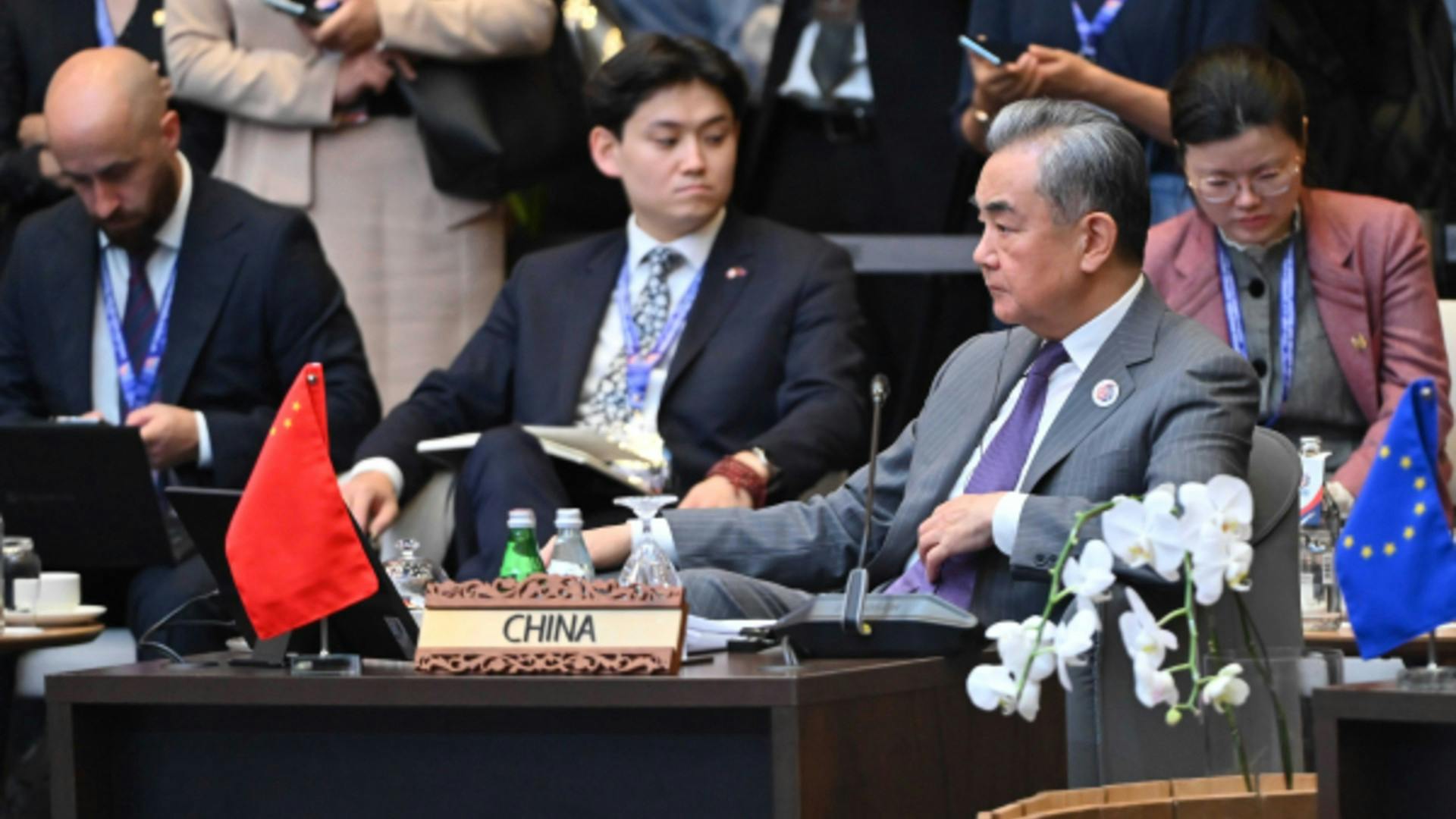
根據新華社7月11日報道,王毅出席中國─東盟外長會期間強調了幾點重要內容,首先,他呼籲加強建構周邊命運共同體。其次,中國─東盟自貿區3.0版談判已經完成,這份加強跨區域合作協定將於2025年內簽署。第三,中國與東盟將加強安全事務的合作,特別是在打擊跨境犯罪、網路賭博和電訊詐騙等領域。第四,隨着人員、公民和外交交流活動不斷增加,民間關係的增進也必能促進和平、包容和全球南方團結等共同價值觀。
7月10日,王毅在東盟的外長會後,發表了幾項值得關注的講話。首先,他呼籲東盟各國共同維護和平,防止地緣政治集團將對抗帶入亞洲國家。
王毅籲勿讓外國勢力介入區內事務
這番言論暗指,在中菲南海爭議島礁爭端中,美國等外國支持了菲方,意味地緣政治集團正介入亞洲地區事務。其次,中國渴望簽署東南亞國家的核不擴散協議。這與中國自1992年以來在核不擴散問題上的固有立場一致,也體現在中國對東北亞、烏克蘭戰爭以及最近以伊衝突的外交政策立場。第三,中國渴望與東盟國家共同促進海上航空安全和執行工作。
具體而言,王毅闡述了中方對南海仲裁案的立場,並表示菲律賓單方面提起的仲裁案缺乏事先磋商的必要前提、也沒取得涉事國家的同意,違反了仲裁的基本原則。因此,中國認為該仲裁自始至終缺乏法律基礎。
中菲圍繞着南沙群島(即中國對九段線的主張)的爭端,導致菲律賓於2016年主動將此問題提交位於海牙的常設仲裁法院。儘管法院裁定中國侵犯了菲律賓主權,但中國並未承認該裁決。與對華更友善、疏遠美國的杜特爾特政府不同,菲律賓現任小馬可斯政府轉向親美反華,導致中菲外交關係惡化。南海島礁領土爭端仍然是中菲關係的一個難題,這個問題需要小馬可斯政府採取更多外交手段,以令雙方在海上保持克制。

外國與北京打交道 忽略面子重要性
近年不少國家在與北京打交道時,似乎忽略了給中國面子的重要性,例如第二任特朗普政府最初對中國徵收了不合理的高額對等關稅。反過來,中國則利用稀土出口管制作為應對美國的手段。
2016年,菲律賓將九段線問題提交國際仲裁,與中國的關係已達到難以治癒的永久創傷,除非持續控制中菲關係的損害。菲律賓最近採取的行動,尤其是其相對鷹派的軍事和國防領導層,試圖從美國和日本獲得更多軍事支持和物資,這對中菲關係來說不是好兆頭。
數十萬菲傭在香港和澳門工作,並將收入匯回菲律賓,經濟實用主義在中菲關係佔據主導地位。因此,圍繞南海爭議島礁的爭端,菲律賓鷹派的國防機構過度敵視中國的立場可謂極不明智。中國認為,領土問題超出了《聯合國海洋法公約》的管轄範圍,因為中國在2006年的聲明中已將海洋劃界排除在強制仲裁之外。
王毅在吉隆坡表示,中國渴望與東盟合作制定《南海共同行為準則》,努力在該地區展開和平、合作與友誼的新篇章。《南海共同行為準則》或許能改善中菲兩國在南海爭端上的關係。
7月10日,王毅在吉隆坡會見日本外相岩屋毅。在特朗普對等關稅導緻美日關係驟然惡化,王毅此時與岩屋毅的會晤具有重要的外交意義。王毅呼籲日方正確看待歷史,岩屋毅則表示日方將認真對待歷史。岩屋毅也表示,日中雙方有必要加強溝通,減少分歧,擴大合作。他重申了日方在1972年《中日聯合聲明》中關於台灣問題的立場。

兩項解禁 標誌日中關係改善
事實上,中國不僅在2025年7月恢復了日本牛肉的進口,還於今年5月取消了日本水產的進口禁令,前者禁令是2001年因日本瘋牛病爆發後頒布,後者的則是2023年福島第一核電廠核廢水排入大海引發各方爭議後發布的。兩項進口的解禁正值中國國務院副總理何立峰訪問大阪出席世博會之際,顯示中日關係的改善。
總而言之,中國的周邊外交呈現出一些突出特點。它一直強調多邊主義、反霸權主義以及維護世界自由貿易秩序的重要。從某種意義上說,北京顯然已經欣然接受全球化和國際秩序自由化帶來的社會經濟效益,有趣的是,巧合的是,這與特朗普第二任政府引發和釋放的反全球化和反自由化勢頭截然相反。
中國也一直強調加強與所有鄰國合作的重要,在「中國威脅論」的普遍認知中塑造中國和平崛起的形象,秉持人類命運共同體的平等主義和社會主義原則,加強人文交流,促進全球南方國家的可持續發展。
如果不了解中國崇尚低調和閉門對話、而非採取咪高峰外交結合任何國際仲裁的外交文化,那些與北京存在領土爭端的亞洲國家可能需要在中國基本上和平、睦鄰外交的背景下採取更多的外交技巧,這種外交政策擁抱全球化、多邊主義和國際貿易的持續自由化。
China’s Neighbourhood Diplomacy and its features
Judging from the most recent visits of Chinese Foreign Ministry Wang Yi to ASEAN and Chinese Vice Premier He Lifeng to Osaka, China’s neighbourhood diplomacy and its features can be seen and decoded.
According to Xinhua on July 11, Wang Yi made several important points in his attendance at the China-ASEAN Foreign Ministers’ Meeting. First, he appealed to the need for enhancing the “bond of the community with a shared future with neighbouring countries” (Xinhua July 11, 2025). Second, the negotiations on the version 3.0 China-ASEAN Free Trade Area had been completed and its protocol is going to be signed within 2025, thereby strengthening cross-regional collaboration. Third, security cooperation between China and ASEAN is going to be consolidated, especially in combatting cross-border crime, online gambling and telecom fraud. Fourth, personnel, citizen and diplomatic exchanges have been increasing – a process of increasing people-to-people relationship that can and will promote the common values of peace, inclusiveness and the solidarity of the Global South.
Wang grasped the opportunity of his visit to Kuala Lumpur and met Russian Foreign Minister Sergei Lavrov [Chinese Foreign Ministry’s website: Wang Yi Meets with Russian Foreign Minister Sergei Lavrov_Ministry of Foreign Affairs of the People’s Republic of China (fmprc.gov.cn), July 10, 2025]. He referred to Chinese President Xi Jinping’s recent visit to Moscow in May to celebrate the 80th anniversary of the victory of the Great Patriotic War of the Soviet Union. Wang added that China is ready to work closely with Russia in the development and rejuvenation of the two countries, while reiterating the concept of “shared neighbourhood.” The concept, according to Wang, refers to the need for China and Russia to support ASEAN and its regional forum and to develop consensus for East Asian development.
At a time when North Korea has shifted to support Russia militarily in the Russo-Ukrainian war, China is steering a mid-way direction between North Korea and Russia, maintaining good neighbourly relations with the two countries. China is also using the Shanghai Cooperation Organization (SCO) as an international platform to secure the economic and political support of Central Asian countries on the one hand and to enhance bilateral and regional trade relations on the other hand.
During the ASEAN Post-Ministerial Conference with China on July 10, Wang Yi made several remarks that deserve our attention. First, he appealed to all countries of ASEAN to protect and maintain peace and to prevent geopolitical bloc from bringing confrontation into Asian states – a remark implying that foreign countries (like the US) have supported the Philippines in the Sino-Filipino dispute over the controversial reefs in South China Sea. Second, he stressed that China is eager to sign a non-proliferation agreement on nuclear weapons for countries in Southeast Asia – a position consistent with China historically on the question of non-proliferation in nuclear weapons since 1992 and a stance that can be found in the Chinese foreign policy stance on Northeast Asia, the Ukraine war and the most recent Israel-Iraqi conflicts. Third, China is eager to work with ASEAN countries to promote aviation safety and implementation in maritime areas.
Specifically, Wang expounded China’s position on the South China Sea arbitration case, saying that the arbitration case that had been unilaterally initiated by the Philippines “lacked the necessary precondition of prior consultations and failed to meet the principle of state consent, which is fundamental to arbitration” [CGTN, July 12, 2025: Wang Yi expounds China’s position on South China Sea arbitration case – CGTN]. As such, China believes that the arbitration did not have “the legal basis to proceed from the outset.” Wang added that such a move “violated” the Declaration on the Conduct of Parties in the South China Sea, which stipulates that disputes should be resolved peacefully through friendly consultations by parties directly concerned.
The disputes between China and the Philippines over the Nansha Islands, or the Chinese claims on “nine-dash line,” led to the latter’s initiative to bring the issue to the Permanent Court of Arbitration in Hague in 2016. Although the court ruled that China had “violated” the “sovereign” rights of the Philippines, China did not recognize such ruling. Unlike the Rodrigo Duterte administration that was more friendly toward China and more distanced from the US, the current Marcos government in the Philippines shifts to a pro-US and more anti-China stance, thereby worsening the diplomatic relations between the Philippines and China. The territorial disputes over the reefs in the South China Sea remain a baffling problem in Sino-Philippines relations – an issue that demands more diplomatic finesse from the Marcos government and maritime restraints from both sides.
In recent years, many countries have appeared to ignore the importance of giving “face” to China when they deal with Beijing, like the current and second Trump administration which originally put an unreasonably high reciprocal tariffs on China. In turn, China has utilized the control of exporting rare earth as a means to tackle the US unilateral measures.
Wang Yi also met US Secretary of State Marco Rubio in Kuala Lumpur, with the latter acting in a softer way and discussing the likelihood of the visit of US President Donald Trump to China later this year. Traditionally, the People’s Republic of China has been seeing megaphone diplomacy without closed-door dialogue and negotiation quite negatively. By taking the “nine-dash line” to international arbitration in 2016, the Philippines alienated China to such an extent that a permanent “harm” and “wound” cannot be easily healed except for continuous damage control in Manila-Beijing relations. The recent moves of the Philippines, especially its relatively “hawkish” military and defense leadership, in securing more military support and supplies from US and Japan do not bode well for Manila-Beijing relations.
With hundreds of thousands of Filippino domestic helpers working in China’s Hong Kong and Macau and remitting their earnings back to the Philippines, economic pragmatism ideally prevails in the relations between Philippines and China. As such, it is arguably unwise for Manila’s “hawkish” defence establishment to adopt an overly hostile position toward China over the disputed reefs in the South China Sea. China has argued that territorial issues are beyond the scope of the UN Convention on the Law of the Sea because it has excluded maritime delimitation from compulsory arbitration in a declaration made in 2006. Wang Yi said in Kuala Lumpur that China is keen to work with ASEAN on a Code of Conduct in South China Sea, trying to establish “a new narrative of peace, cooperation and friendship in the region.” A Code of Conduct may improve Manila-Beijing relations regarding their South China Sea disputes.
On July 10, Wang Yi met with Japanese Foreign Minister Takeshi Iwaya in Kuala Lumpur. At a time when US relations with Japan are suddenly worsening due to Trump’s reciprocal tariffs, Wang’s meeting with Iwaya was diplomatically significant. Wang appealed to the Japanese side to “correctly” see history, while Iwaya diplomatically said that the Japanese side would take history “seriously.” Iwaya added that it was necessary for Japan and China to enhance communication, reduce differences, and expand cooperation. He reiterated Japan’s stance on the Taiwan question as stated in the 1972 Sino-Japanese Joint Statement. Under the circumstances that US relations with Japan have become tense and that the Chinese and Japanese Foreign Ministers are both pragmatic and diplomatic, Sino-Japanese relations are now having more room to move forward positively and constructively.
In fact, China has resumed the import of not only the Japanese beef after the outbreak of the Japanese mad cow disease in 2001, but also the Japanese seafood after their row over the release of “radioactive” wastewater from the Fukushima Daiichi nuclear power plant into the sea in 2023. These two moves are signalling an improvement in Sino-Japanese relations at a time when Chinese Vice Premier He Lifeng was visiting Osaka to attend the World Exposition. It was reported that Hiroshi Moriyama, the secretary general of the Liberal Democratic Party, talked to He Lifeng about the possibility of China to lease more giant pandas to Japan, where four pandas based in Wakayama prefecture returned to China in June. Pandas constitute an important symbol of Sino-Japanese friendship, and as such, when He Lifeng was quoted by the Japanese media as saying that pandas “are important for exchanges among the public,” it will perhaps be a matter of time that China will dispatch pandas as diplomatic ambassadors to Japan again (Japan Today, July 12, 2025).
In conclusion, China’s neighbourhood diplomacy has displayed some prominent features. It has been emphasizing the importance of multilateralism, anti-hegemonism, and the maintenance of the liberal trade order in the world. In a sense, Beijing has already clearly been embracing the socio-economic benefits of globalization and liberalization in the international order, interestingly and coincidentally quite contrary to the anti-globalization and anti-liberalization thrust that has been triggered and unleashed by the second Donald Trump administration.
China has also been championing the significance of enhancing cooperation with all its neighbours, creating an image of its peaceful rise amid the common perception of “the China threat,” upholding the egalitarian and socialist principle of the “common destiny for the humankind,” enhancing people-to-people exchange, and promoting sustainable development in the Global South. Wang Yi’s visit to meet his counterparts in the ASEAN ministerial conference in Kuala Lumpur is a testimony to the revelation of the previously mentioned features of the Chinese neighbourhood diplomacy. China’s improving relations with Japan is also a good and healthy sign to the development of peace in East Asia. Nevertheless, China’s territorial disputes with the Philippines over the “nine-dash line” in South China Sea remain a sensitive issue that, if mishandled, would perhaps erupt into a sudden but an unnecessary maritime accident or military skirmishes.
Without understanding China’s diplomatic culture which cherishes low-key and closed-door dialogue rather than the adoption of a megaphone diplomacy combined with any international arbitration, those Asian countries that have territorial disputes with Beijing may need more diplomatic finesse under the context of China’s basically “peaceful” and “good” neighbourly diplomacy that embraces globalization, multilateralism and continuous liberalization in international trade.
原刊於澳門新聞通訊社(MNA)網站,本社獲作者授權轉載。(原文按此)