




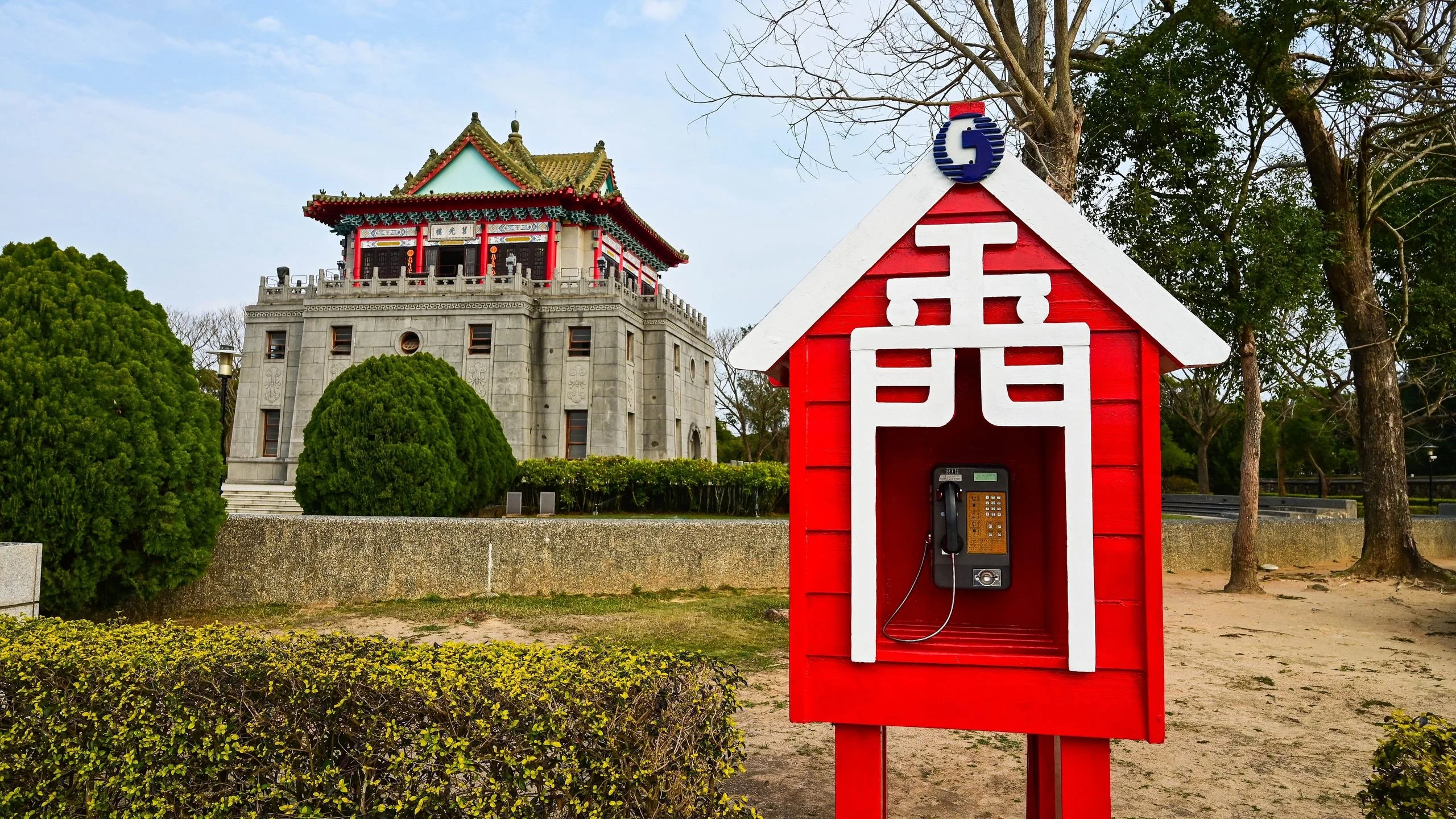

近期各類有關「金門模式」的解讀紛紛出爐,引出一個核心命題:未來兩岸關係應該或能夠以何種方式相處。客觀而言,假如有一套可行的「金門模式」能夠彌合兩岸溝通隔閡與政治分歧,它就有望成為兩岸共贏的示範樣板,短期實現和平共處,長期或許能為台灣前途問題找到妥善解決方案。
金門坐落於福建對岸,全域面積152平方公里,居住台灣居民14.5萬人。從地緣軍事角度看,金門是台灣直接面向大陸的前沿陣地,1958年國共兩軍在此爆發持續44天的八二三炮戰,炮火一度席卷全島。
2001年1月2日,大陸與當時台灣執政的國民黨迎來短暫緩和期,雙方達成海峽兩岸「三通」(直接雙向通商、通郵、通航)協議,自此金門成為維繫兩岸民間往來不可或缺的紐帶。
兩岸關係緊張 唯務實往來未停
事實上,自2001年初「三通」開通以來,兩岸經金門海空航線往返人次累計超2600萬。即使賴清德當選台灣地區領導人後,兩岸局勢愈趨緊張,但2025年仍有143萬台灣民眾經由金門往返兩岸。
2026年5月有報道指出,金門三通客人數激增,隨之而滋生的貨物走私、毒品販運等跨境犯罪問題,為此台灣海巡、海關、移民署及地方執法機關增派人手駐守金門,嚴查往返閩金兩地旅客的攜帶貨品。
隨着跨境犯罪與安全隱患持續浮現,一場圍繞兩岸「金門模式」的討論由台灣成功大學政治學教授梁文韜引發。梁文韜生於香港,來台任教已約25年,他本人已取得台灣戶籍,計劃以無黨籍身份2026年底參選金門縣長,將與國民黨候選人陳玉珍、金門前副縣長李文良同台競爭。
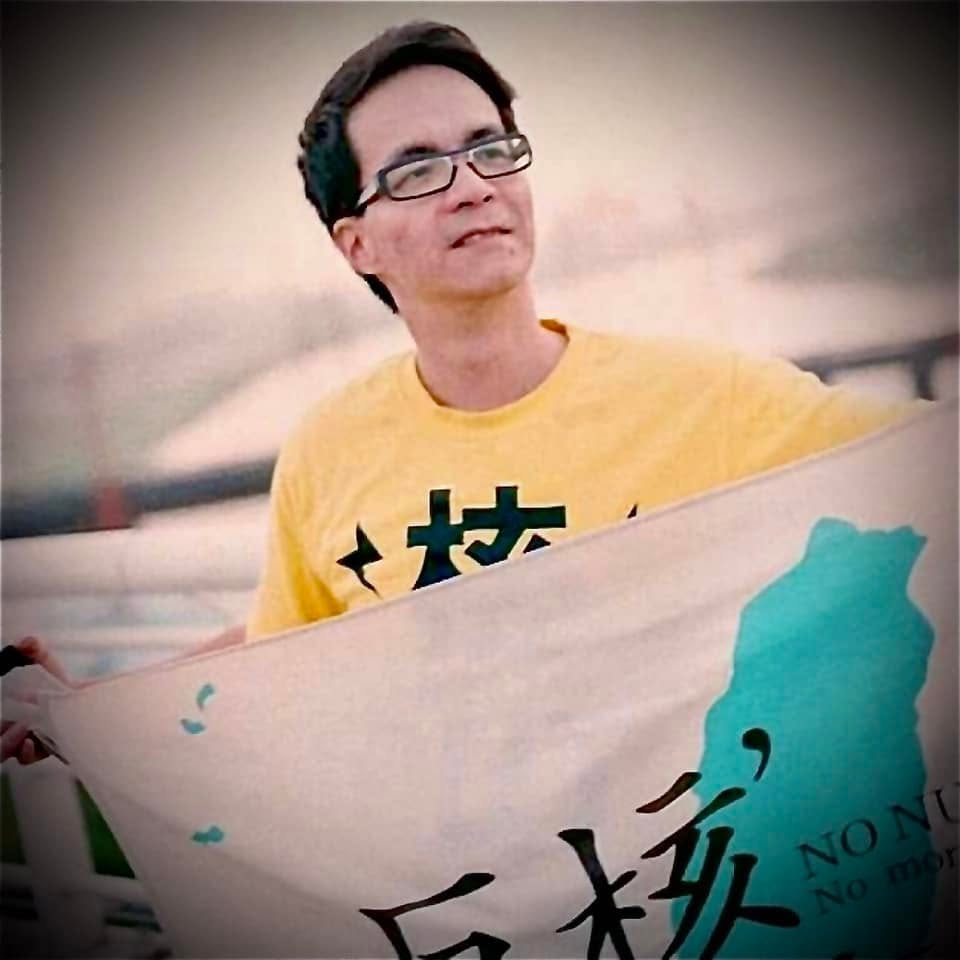
其競選政見頗具討論價值,核心四點主張如下:
第一,金門是二戰後國共內戰遺留產物,福建方面應終止所有針對金門的軍事對峙,推動金門非軍事化,並設立專屬自治區域;
第二,賦予金門自主協商權限,可與福建省簽署停戰、終止對峙相關協議;
第三,金門與福建達成的和平協議須經金門民眾公投表決通過,公投生效後台灣軍方撤出金門;
第四,民眾表決認可協議後,福建不再開展任何針對金門的軍事行動,金門轉型為自治開放區域,吸納國際資本、海外人才、華僑與青年落戶,帶動經濟繁榮。
簡言之,梁文韜主張把金門打造為兩岸尋求和平方案的試驗場,建設無衝突自治特區。他坦言自己心繫金門,擔憂海島淪為兩岸對峙衝突的前線。
美智庫稱金門模式為灰色博弈手段
不過,美國保守派智庫詹姆斯敦基金會此前刊發台灣國防大學教授陳育誠的研究報告,這份報告提出一套完全相反的解讀:就是大陸正復刻「金門模式」這套海上灰色地帶博弈手段,將其複製應用於東沙、太平島海域。
陳育誠將「金門模式」拆解為四步策略:大陸主動製造海上觸發事件、開展常態化海上執法、配套輿論宣傳造勢、逐步實現海上力量常態化存在。
這套地緣政治視角的解讀基調偏負面,和梁文韜着眼和平、以解決分歧為導向的建設性構想形成鮮明對比。
與之形成對照的是國民黨立委陳玉珍2026年6月推出的《離島建設條例》修正草案,草案覆蓋金門等外島,提議在金門設立國際醫療專區,開放大陸民眾赴金門就醫。該提案遭到民進黨猛烈抨擊,被貼上親中賣台的標簽。這套把金門打造為國際醫療特區的設想頗具新意,卻引發大量質疑,批評者稱此舉會掏空台灣本土醫療產業。
綜上所述,台灣各界對「金門模式」分歧巨大:包括台灣當局、無黨籍參選人梁文韜、學者陳育誠、國民黨立委陳玉珍在內,各方都提出了完全不同的詮釋。
大陸籲維護金門海域中國主權
此外,廈門大學台灣研究院李非教授提出的「金廈同城」構想,與《中國日報》官方論述的「金廈同城生活圈」完全呼應。大陸官方定義的「金門模式」包含兩大核心支柱:保障兩岸漁民生命安全、維護金門周邊海域中國主權。
2024年台海多起海上漁船事故發生後,大陸官方派遣海警常態化巡航金門周邊海域,首要目標是保障兩岸漁民生命財產安全。《中國日報》明確闡述大陸執法邏輯:「相關海上行動切實保護兩岸漁民生命財產,同時明確大陸對金門周邊海域擁有管轄權。凡航行於金門周邊水域的台灣商船、民用船舶、軍用補給船,均納入中國海警執法巡查範圍。大陸與台灣同屬一個中國,金門周邊水域是中國領海,北京中央人民政府是全中國唯一合法代表,對該海域擁有無可爭辯的管轄權與執法權。」
由此可見,大陸視角下的金門模式具備雙重核心:依託海警巡航,一方面守護漁民安全,另一方面宣示國家主權;長遠來看,推動金廈社會、經濟全方位融合,有望為台灣前途問題找到和平解決方案。
多元政治立場下尋求共識
拋開台灣內部緊繃對立的政治氛圍與意識形態紛爭,大陸提出的金門模式包含兩大核心議題;若能妥善處理這兩項議題,即使無法一次性解決台灣長遠定位問題,也能持續維系兩岸和平共處局面。
第一,兩岸執法機關協作打擊跨境犯罪,包含緝毒、打擊走私等領域。兩岸海警互通犯罪情報,深化實務層面聯合辦案,能夠在實操層面維繫兩岸良性互動。
第二,探索以金門為突破口搭建兩岸溝通新平台。客觀來看,陳玉珍打造國際醫療專區、梁文韜建設無衝突自治島的構想雖大膽,卻具備落地可能性。但核心癥結在於:台灣島內但凡主張深化兩岸民間交流的方案,都會被貼上「國安威脅」標籤。這種對立思維嚴重阻礙兩岸深度往來、良性溝通,也不利於探索任何解決台灣政治定位的可行模式。
區域協作未來發展路徑
近期全社會掀起的「金門模式」大討論,在兩岸政治、社會、經濟層面均具備重大意義。政治層面,清晰展現大陸與台灣對金門戰略定位、發展功能的認知鴻溝:大陸核心考量主權完整與兩岸融合,台灣主流政壇卻普遍排斥這兩大核心方向。
拋開各類深化兩岸往來的金門構想不談,兩岸執法機關務實合作、聯手打擊跨境犯罪,或許是當下最直接可行的路徑,能夠引領兩岸關係持續走和平發展正軌。
Emerging interpretations of the Kinmen model for Cross-Strait Relations
Recently, different interpretations of ‘the Kinmen model’ have suddenly emerged, raising a critical issue of how cross-strait relations should be, can be, and will be handled. Arguably, if a particular Kinmen model can and will bridge the communication and political gap between the Chinese Mainland and Taiwan, such a model will likely become a demonstration platform for both sides to achieve a win-win situation, leading to peaceful coexistence in the short run and perhaps to a successful resolution of Taiwan’s future in the long run.
Being a 152-square-kilometre archipelago just opposite the province of Fujian, Kinmen has a population of 145,000 Taiwan people. Militarily speaking, Kinmen is located at the frontline of Taiwan facing the Chinese Mainland, and it was the target of gunfire in 1958 when the militaries of the Communist Party of China (CPC) and the Kuomintang (KMT) engaged in a fierce artillery war in August for forty-four days.
Since 2 January 2001, when the CPC and the ruling KMT on Taiwan had a short honeymoon period and reached an agreement on the three links (direct two-way trade, postal, and transport) between the two sides of the Taiwan Strait, Kinmen has been playing an indispensable role in maintaining cross-strait contacts.
Pragmatism amid rising security concerns
In fact, since early 2001, more than twenty-six million passenger trips have been recorded through the maritime and air routes of the three links (CGTN News, 2 January 2026). Even when the relations between the two sides have deteriorated since the Democratic Progressive Party (DPP) under the leadership of Tsai Ing-wen returned to power in Taiwan in May 2016, and especially after the presidential election victory of DPP leader William Lai, Kinmen in 2025 witnessed 1.43 million Taiwan people who used Kinmen to travel between the two sides. As such, pragmatism has prevailed over ideological differences and political deadlock between the Chinese Mainland and Taiwan.
In May 2026, it was reported that the rapid increase in passengers through the three links in Kinmen envisaged the smuggling of goods and drug trafficking. As a result, Taiwan’s maritime police, customs and immigration, and local law enforcement authorities had to be sent to Kinmen to check the goods carried by passengers from Kinmen to the Chinese Mainland and those returning from Fujian (Liberty Times, 19 May 2026).
In mid-July 2026, an officer working for the Taiwan Coast Guard Administration in Kinmen was prosecuted for leaking confidential information to a former classmate who passed such materials to the mainland Chinese coast guard from 2017 to 2021 (Taipei Times, 17 July 2026). The officer leaked the details of radar tracking paths, radar intelligence, fishing vessel inspection records and security inspection records in Kinmen between 2017 and 2021 – a serious violation of the security on the Kinmen side that would very likely lead to his imprisonment (Taipei Times, 17 July 2026).
Divergent political visions for the archipelago
While cross-border crime and its related security issues have loomed in Kinmen, the talks about ‘the Kinmen model’ for cross-strait relations have recently been triggered by a Hong Kong-born political science professor, Leung Man-to, who is affiliated with Cheng Kung University and who has decided to run for the Kinmen County Commissioner position in the local elections in Kinmen by the end of 2026 (Taipei Times, 17 July 2026). Leung has become a Taiwan citizen. As an independent candidate, he is going to compete with the KMT candidate Jessica Chen Yu-jen and former Kinmen deputy commissioner Lee Wen-liang (Liberty Times, 16 July 2026).
Leung’s campaign platform deserves our attention as he is advocating several issues. First, according to Leung, as a legacy of the civil war between the CPC and KMT shortly after the Second World War, Fujian province will have to stop any military conflicts, including that with Kinmen which can be demilitarised, and which can set up its own ‘autonomous region’ (Liberty Times, 16 July 2026). Second, Kinmen will have to be empowered to discuss an agreement to terminate any war or conflicts with Fujian province.
Third, according to Leung, the Kinmen agreement will have to be voted on by the people in Kinmen through a referendum so that the Taipei government will withdraw its Taiwan military from the archipelago. Fourth, after the agreement is approved by the people, Fujian province will no longer have any military activities against Kinmen, which will then be an autonomous place to attract international investment, outside talent, overseas Chinese and young people to contribute to its economic prosperity. In other words, what Leung argues is that Kinmen can and should be a place for both sides of the Taiwan Strait to seek a peaceful resolution, and to reshape it to be an autonomous region free from any conflicts. Leung explicitly said that he loves Kinmen and that he worries Kinmen will become a place for mutual conflicts between the two sides of the Taiwan Strait.
Geopolitical perspectives and sovereignty claims
Several days before Leung revealed his idea of ‘the Kinmen model’ for cross-strait relations, a politically conservative think tank, the Jamestown Foundation, in the US published a report written by Taiwan professor, Chen Yu-cheng of the National Defence University, who argued that China is replicating ‘the Kinmen model’ of maritime ‘gray zone’ tactics against the Pratas Islands (Dongsha Islands) and Itu Aba Island (Taiping Island) (Taipei Times, 12 July 2026). Chen portrayed ‘the Kinmen model’ as having four steps, namely the Chinese Mainland’s strategy of creating a ‘trigger’ event, carrying out law-enforcement operations, launching a propaganda campaign, and normalising the mainland Chinese presence around the Kinmen areas.
Chen’s interpretations of ‘the Kinmen model’ tend to be quite geopolitically negative, unlike Leung whose interpretations of ‘the Kinmen model’ tend to be forward-looking, resolutions-based and an experiment that would hopefully lead to a breakthrough in cross-strait relations.
Analytically speaking, Chen’s interpretation of ‘the Kinmen model’ was similar to researcher Erik Green, who argued in July 2025 that in the early half of 2025 the mainland Chinese coast guard vessels entered the Kinmen waters on various occasions to isolate Kinmen from mainland Taiwan, to combine coercive measures with socio-integrative policies, to attract the visits from Kinmen residents, and to win the hearts and minds of some Taiwan politicians (Erik Green, ‘China learns from the Kinmen model to adapt its strategy for a naval campaign against Taiwan’, IISS, 11 July 2025). Both Chen and Green have appeared to see the mainland Chinese maritime patrols as a means to achieve politico-military ends.
Mainland integration and the same-city living circle
To ‘internationalise’ and ‘politicise’ the status of Kinmen, the Taiwan authorities on 9 July took a very small group of foreign legislators from Britain, the Czech Republic, New Zealand and Ukraine to visit Kinmen (Taipei Times, 10 July 2026). They went onto a patrol boat and toured in the waters around Kinmen for ninety minutes with DPP legislator Fan Yun and People’s Party legislator Chen Gau-tzu. The foreign lawmakers were members of the Inter-Parliamentary Alliance on China, an organisation that is critical of the Chinese Mainland. The trip appeared to be a propaganda one, showing to some anti-China foreign legislators that ‘the Kinmen model’ stands on the frontline of cross-strait relations and that, implicitly, its status quo should be preserved.
Interestingly, in June 2026, KMT legislator Jessica Chen advocated a new bill on ‘the construction of outlying islands’, including Kinmen, and she proposed that Kinmen should set up an international medical service centre in which mainland Chinese will be welcome to visit Kinmen for medical treatment. Her bill was severely criticised by DPP politicians as pro-Beijing and ‘selling out’ the interests of Taiwan (SETN News, 19 June 2026). Chen’s idea of reshaping Kinmen as ‘an international medical special region’ was new and provocative, triggering severe criticisms that such a move would ‘hollow out’ Taiwan’s medical services. As early as January 2026, when Chen initiated the bill on the construction of outlying islands, she had already been criticised by DPP legislator Puma Shen as attempting to utilise ‘the local regions to encircle the central government’ in Taiwan (RTI News, 5 January 2026).
As such, the Taiwan people, including the ruling authorities, independent candidate Leung Man-to, researcher Chen Yu-cheng, and KMT legislator Jessica Chen have put forward their different interpretations of ‘the Kinmen model.’
From the mainland side, ‘the Kinmen model’ has different meanings. Professor Li Fei of the Xiamen University’s Taiwan Research Centre has advanced his perception of the model, saying that the word ‘men’ (door) means mutual communication and mutual contacts (Ta Kung Pao, 12 January 2026). Specifically, Xiamen provides a backyard of ecological protection and industrial promotion for Kinmen, which altogether can and will form ‘a life circle in the same city’ with more Taiwan people having the Xiamen citizenship to buy apartments in the mainland, and with a mutual integrative process that will reposition Kinmen as a place for leisure. As such, the Xiamen-Kinmen integration will realise the peaceful development of two sides of the Taiwan Strait.
The jurisdiction and law enforcement framework
Li Fei’s idea of making Xiamen and Kinmen ‘a life circle in the same city’ was the same as the official China Daily’s discussion of the term ‘same-city living circle’ between Xiamen and Kinmen (China Daily, ‘Kinmen Model can be expanded to Taiwan Strait’, 14 May 2024). The meanings of ‘the Kinmen model’ of the mainland Chinese side, officially, were composed of two elements: the protection of the lives of fishermen and the assertion of the Chinese sovereignty over the waters surrounding Kinmen.
Due to some maritime accidents involving fishermen from both sides of the Taiwan Strait, the official Chinese side sent coast guard vessels to patrol around the waters of Kinmen for the sake of protecting the lives of fishermen in 2024. As China Daily said: ‘These moves effectively protect the lives and property of fishermen on both sides of the Taiwan Strait. They also assert the Chinese mainland’s jurisdiction over the waters around Kinmen. Whether they are Taiwan’s merchant ships, or civilian ships, or Taiwan’s military supply ships sailing from Kinmen to other nearby islets, they will be included in the scope of law enforcement inspections carried out by the China Coast Guard. The mainland and Taiwan both belong to one China. The waters around Kinmen are China’s territorial waters. The central government in Beijing is the only legal representative of the country. Thus, Beijing has indisputable jurisdiction and law enforcement rights in the waters’ (China Daily, 14 May 2024).
Therefore, from the mainland Chinese side, ‘the Kinmen model’ is composed of the twin ingredients of utilising coastguard vessels to patrol around the Kinmen waters to protect the lives of fishermen on the one hand and to assert the Chinese sovereignty over these areas on the other hand. Furthermore, if the Kinmen model is adopted, Xiamen-Kinmen integration, socially and economically, will hopefully bring about a peaceful settlement of Taiwan’s future in the long run.
Seeking consensus amidst political pluralism
The Taiwan side’s reactions to the aforesaid mainland interpretations of ‘the Kinmen model’ have become more complicated, ranging from purely negative responses to the more pro-mainland ones, like Jessica Chen’s proposal of the construction of outlying islands bill that is now still stuck in the Legislative Assembly. If Taiwan remains a politically pluralistic but ideologically fractious society, it seems that there is practically no consensus on what constitutes ‘the Kinmen model.’
Stepping back from Taiwan’s highly charged political atmosphere and ideologically disputed arena, the Kinmen model as interpreted from the mainland side has two main issues that, if resolved, can and will bring about continuous peaceful coexistence between the two Straits, if not necessarily a long-term settlement for the future of Taiwan.
The first issue is the cooperation between the law enforcement agencies of the two sides to combat cross-border or cross-boundary crimes, like the fight against drug trafficking, and the smuggling of goods. If the coastguard authorities from both sides can exchange intelligence on criminal activities, the practical level of operation in the fight against cross-border crime can and will maintain cordial relations between the Chinese Mainland and Taiwan.
The second issue is to explore how to use Kinmen as a platform for a possible breakthrough in cross-strait contacts. Objectively speaking, the ideas proposed by Jessica Chen and Leung Man-to, ranging from the establishment of an international medical service centre for mainlanders and the idea of making Kinmen a conflict-free autonomous region, are bold but perhaps feasible. The crux of the problem is that, within Taiwan, any idea proposing closer human interactions between the Chinese Mainland and Taiwan, is seen as a threat to its ‘national security.’ Such a mentality is by no means conducive to closer cross-strait contacts, better mutual communications and the explorations of any model to resolve Taiwan’s political future.
Future paths for regional collaboration
Optimistically speaking, recently a group of DPP youth visited Shanghai for four days – an unprecedented visit from a segment of the DPP (Jornal San Wa Ou, 17 July 2026). If the young people from Taiwan can perhaps minimise their ideological bias and ponder how both sides of the Strait can improve further through the crucial platform of Kinmen, a breakthrough in cross-strait relations will not be impossible albeit the process of forging mutual understanding takes time.
In conclusion, the recent emergence of the discussions of what constitutes ‘the Kinmen model’ is politically, socially and economically significant for cross-strait relations. Politically, it shows how the mainland side and the Taiwan side view the status, position, and developmental roles of Kinmen. While the mainland side attaches importance to the twin issues of sovereignty and integration, the Taiwan side tends to reject the two issues right away. Yet, Jessica Chen’s bold view of remaking Kinmen as a front garden for attracting more mainland customers in Taiwan’s medical services was bold and thought-provoking, while Leung’s idea of making Kinmen a conflict-free zone is also a potentially path-breaking solution.
Stepping back from these ideas of making Kinmen a place for closer contacts between the two sides of the Taiwan Strait, the practical collaboration between the law enforcement authorities from both sides to fight cross-border or cross-boundary crimes is perhaps the best and the most immediate approach to steering cross-strait relations toward a right direction amid a path of peaceful development.
原刊於澳門新聞通訊社(MNA)網站,本社獲作者授權轉載。(原文按此)