
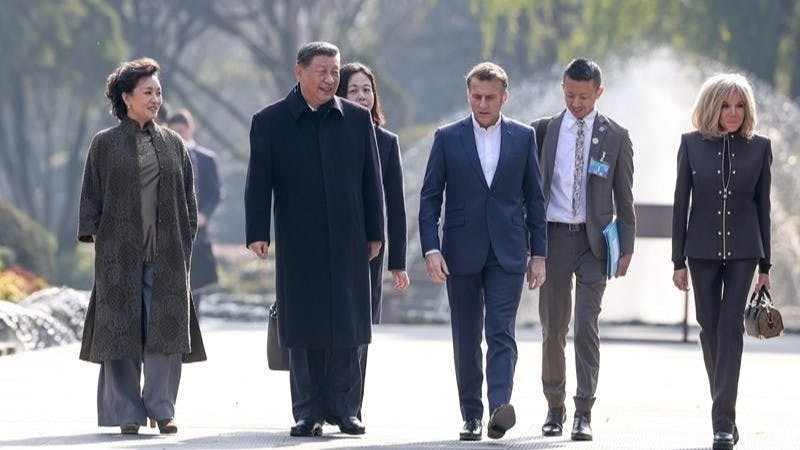

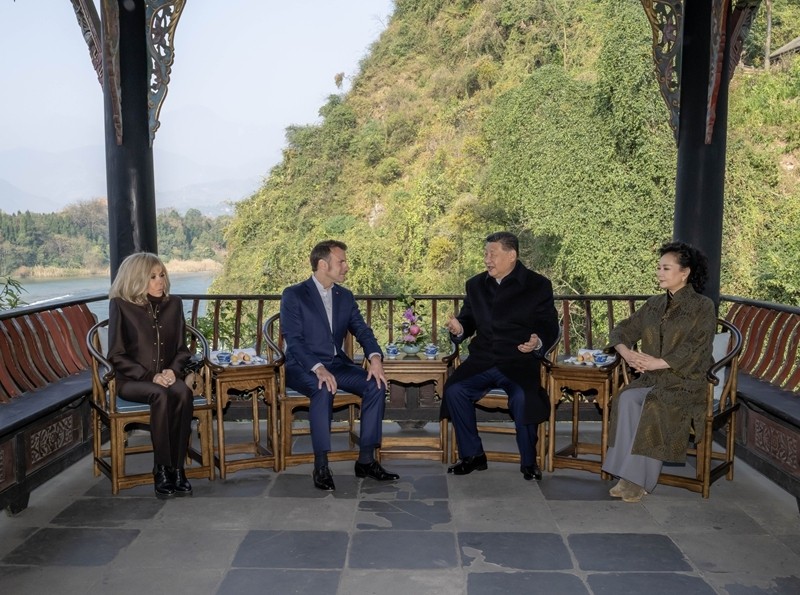
法國總統馬克龍訪華突顯了法國追求戰略自主的立場,即在與中國保持平衡關係的同時,與美俄兩個超級大國也保持距離。
中法元首對話揭示了雙方在全球治理、烏克蘭、加沙和貿易等議題上的共同利益,同時也暴露了西方聯盟內部的潛在矛盾。
2025年5月,馬克龍訪問東南亞時,將法國定位為印太地區的重要參與者和亞洲的外交代理人,敦促友邦深化合作,支持以規則為基礎的國際秩序,體現不結盟外交政策的變化,並擺脫中美競爭的桎梏。
法國意識到如中國向俄羅斯提供後勤物資,俄烏戰爭可能會朝着有利於俄羅斯的方向發展。在特朗普提出新的和平方案以向烏克蘭施壓之際,法國一方面竭盡全力在方案修訂中體現歐洲的意見,另一方面也在游說中國促使俄羅斯重返談判桌。
這種對戰略自主的追求不僅體現在法國對華政策上,也體現在法國如何尋求與西方盟友和亞洲各國的互動。
中國外交部發表聲明表示:「關於烏克蘭危機,中方支持一切有利於和平的努力,希望各方透過對話談判,達成各方都能接受的公正、持久、有約束力的和平協議。同時,中方堅決反對任何不負責任的推卸責任、抹黑他人的行為。」
擔心美和平方案對歐構成潛在威脅
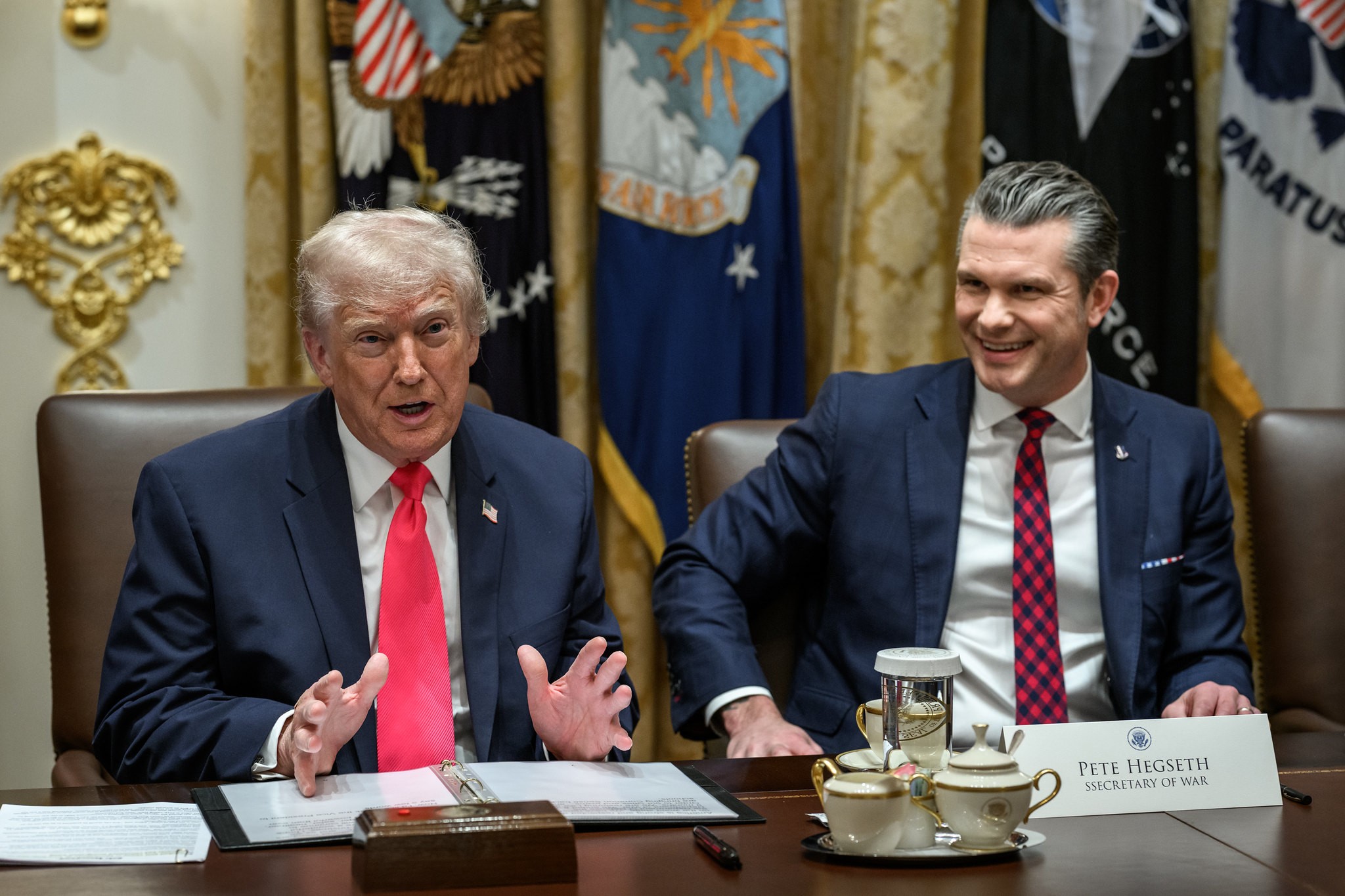
然而,美國提出的28點和平方案對烏克蘭來說無疑是難以接受的苦果。放棄克里米亞、盧甘斯克和頓涅茨克等領土對烏克蘭而言絕非易事。法國也可能認為其中一些提議對歐洲構成潛在威脅,例如限制烏克蘭的軍事人員數量不得超過60萬人。
事實上,法國仍然擔憂俄羅斯的領土野心,以及一旦烏克蘭接受失敗和一項被認為不利於其他歐洲多國國家安全利益的協議,俄羅斯可能會進一步侵蝕歐洲領土。
除了馬克龍總統和習近平主席討論的烏克蘭問題外,他們還強調了兩國之間的共同利益,包括在國際秩序受到嚴重挑戰之際維護多邊主義的必要性,以及兩國悠久的文明歷史。
馬克龍訪成都 如搖滾巨星受歡迎
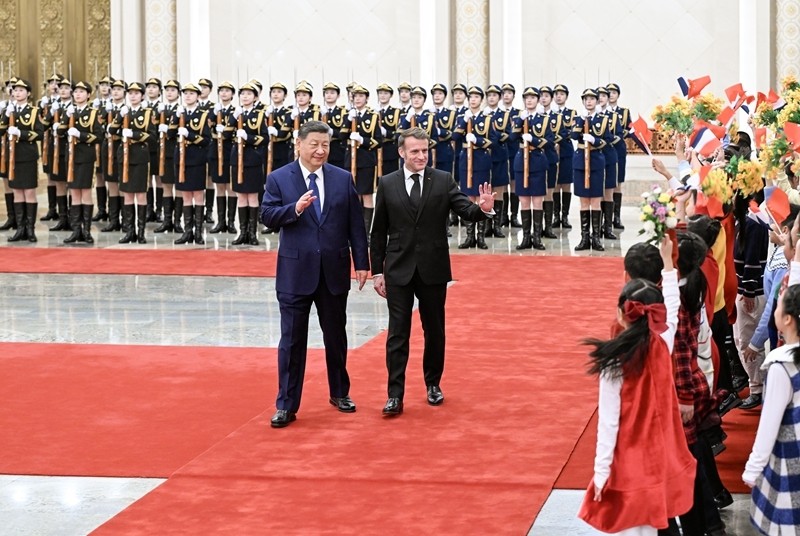
根據中國媒體報道,馬克龍在成都受到學生們的熱烈歡迎,如同搖滾巨星一般。這一幕讓人想起他2023年訪問廣州時的情景。馬克龍感受到中國民眾的熱情,體現了中法兩國人民的友好關係。
習近平主席指出,這種精神面貌可以為國家治理提供借鏡,法國人民擁有堅韌不拔的精神,正因如此,中法兩國更應相互尊重與理解。習近平主席強調,中法兩國不僅擁有悠久的文明史,而且都擁有源自深厚歷史文化底蘊的獨立自主精神。
馬克龍也提出了與中國進行貿易的問題,因為歐盟正面臨對中國大陸的巨額貿易逆差。法國預計中國將增加對法國產品的消費,減少對歐洲的出口。據報道,對法國而言,中國佔其貿易逆差總額的46%。然而,兩國之間的貿易不平衡狀況短期內難以改善。
G7因討論中國影響力 中方被拒出席
然而,日本對法國試圖拉攏中國加入七國集團(G7)的舉動仍有所保留。儘管德國支持中國出席2026年G7峰會,但據報道,日本國家安全保障會議於11月27日告知法國總統外交顧問埃馬紐埃爾·博納,習近平主席的出席可能會使G7領導人難以討論中國日益增強的海洋和經濟影響力。
法方則表示,法國並非真的希望中國加入G7。如果真是如此,那麼法國希望中國參與以規則為基礎的國際秩序的意圖,或許遭到了日本的隱性反對。此前,日本首相高市早苗將台灣局勢描述為對日本構成「存亡危機」的言論,已經疏遠了中國,並立即導致日中關係緊張。
至於台灣問題,中國外交部長王毅在12月3日與法國外長巴羅的會晤中迅速抓住機會,指出日本首相就台灣問題發表的言論是「錯誤的」。習近平主席隨後也回應了王毅的表態,並在與馬克龍會晤後強調,中法雙方應相互理解彼此的核心利益。
如果說目前的新冷戰一方是美國及其盟友,另一方是俄羅斯及其盟友,那麼馬克龍總統這次訪華就具有特殊意義。法國傳統的獨立外交政策如今體現在其更精細的戰略自主性上:一方面與美國及其盟友保持一定距離,另一方面又積極與中國接觸,以期更深入地參與到以規則為基礎的國際秩序中。
最重要的是,法國期望中國遊說俄羅斯緩和烏克蘭戰爭的緊張局勢,重返談判桌,同時爭取更多時間遊說美國,為烏克蘭爭取更有利的協議。因此,法國新的戰略自主外交正在全面展開。
中國一貫奉行低調的游說方式,表面上立場鮮明,實則注重閉門會談,因此馬克龍的訪問和游說很可能獲得中國支持,從而結束俄烏戰爭。然而,法國擔憂俄羅斯在歐洲的領土野心和擴張,這種擔憂促使巴黎需要付出更多努力,為烏克蘭爭取更有利的協議。
晚清時期 俄對華領土野心路人皆見
作為一個飽受外國帝國主義蹂躪的大國,中國的崛起令許多其他國家感到震驚;儘管批評人士指出北京有親俄傾向,但北京也一直奉行戰略自主的外交政策,與美國或俄羅斯這兩個超級大國保持距離。
儘管中國從未就俄羅斯介入俄烏戰爭公開批評俄羅斯,但北京從地緣政治考量,俄羅斯是一個強大的鄰邦,在政治和外交上都不可輕易與之對抗。然而,早在晚清時期,俄羅斯對中國領土的野心已昭然若揭,因此,當馬克龍游說中方約束俄羅斯時,中國當局深知一個「和平」的俄羅斯非常重要。
法國和中國都渴望透過建設性途徑解決烏克蘭和加沙問題,實現世界和平,兩國在這些範疇擁有共同利益。基於兩國悠久的歷史互動和文明傳承,馬克龍近期對中國為期三天的訪問,對中法兩國都具有巨大的政治、經濟、文化和外交意義。
Sino-French relations and the diplomacy of strategic autonomy
Macron' s visit to China highlights France' s pursuit of strategic autonomy, balancing ties with Beijing while maintaining distance from both Washington and Moscow.
Beijing' s use of cultural and panda diplomacy underscores China' s effort to deepen political and public goodwill with France amid rising global tensions.
The Sino-French dialogue reveals shared interests in global governance, Ukraine, Gaza and trade, while exposing underlying frictions within Western alliances.
Macron' s visit to China highlights France' s pursuit of strategic autonomy, balancing ties with Beijing while maintaining distance from both Washington and Moscow.
Beijing' s use of cultural and panda diplomacy underscores China' s effort to deepen political and public goodwill with France amid rising global tensions.
The Sino-French dialogue reveals shared interests in global governance, Ukraine, Gaza and trade, while exposing underlying frictions within Western alliances.
The recent three-day visit of the French President Emmanuel Macron to China has underscored the feature of the diplomacy of strategic autonomy, which has been practised by not only Paris but also Beijing as well. What was interesting in Macron' s visit to China was that Beijing adopted a kind of cultural diplomacy by using pandas to conduct united front foreign policy targeted at France.
In May 2025, when Macron visited Southeast Asia, he portrayed France as an Indo-Pacific actor and a diplomatic agent in Asia, urging like-minded countries to deepen their cooperation, to support the rules-based international order, to realise the passing of the non-alignment foreign policy, and to carve out a diplomacy away from the Sino-US rivalries (French Institute of International Relations, 16 June 2025). In a sense, France under Macron has been adopting a foreign policy of enhancing its strategic autonomy, a diplomatic finesse that shows the shadow of the independent foreign policy adopted by General Charles de Gaulle during the Cold War era.
This strategic autonomy adopted by Macron could be seen in his discussions with President Xi Jinping in China, where the French President hoped that Beijing would be able to woo the Russian side back to the bargaining table over the Russo-Ukrainian war. France is aware of the danger that, if China is too close to Russia by providing logistical supplies to Moscow, the Ukrainian war would be drifting towards a scenario in favour of a Russian victory. At a critical juncture, when Donald Trump has floated a new peace proposal to exert pressure on Ukraine to accept, France is trying its best to make the European views heard in the revision of the proposal on the one hand, and it is lobbying China to bring back Russia to the bargaining table on the other hand.
Strategic autonomy in a shifting global order
This pursuit of strategic autonomy is evident not only in France' s approach to China, but also in how Paris seeks to engage with both Western allies and countries across Asia. Macron' s balancing act suggests that France is navigating a complex international environment, striving to maintain its own voice on the world stage while avoiding entanglement in the escalating rivalry between the United States and China. By promoting dialogue and partnership with a range of actors, France aims to safeguard its interests and strengthen its role as a mediator in global affairs.
Underlying this French diplomacy is a realisation that Ukraine has already lost the war, that Europe must secure a better deal for Ukraine, that Russia' s military ambitions must be thwarted, and that China must play a crucial role as an intermediary to urge the Russians to return to the negotiating table. Moreover, Macron told the media that he hoped China “will join our call, our efforts to achieve, as soon as possible, at the very least a ceasefire in the form of a moratorium on strikes targeting critical infrastructure” (Aljazeera, 5 December 2025).
It was reported that President Xi Jinping did not respond to his call openly. But given that China has traditionally adopted a low-profile approach to conveying messages through closed-door discussions with various countries, it would not be surprising that France' s lobbying efforts will have hidden fruitful results.
As the Chinese Foreign Ministry issued a statement: “On the Ukraine crisis, China supports all efforts conducive to peace, and hopes that parties can reach, through dialogue and negotiation, a fair, lasting and binding peace agreement that is accepted by all parties concerned. At the same time, China firmly opposes any irresponsible attempt to shift blame or smear others” (Ministry of Foreign Affairs website, 4 December 2025: President Xi Jinping and French President Emmanuel Macron Jointly Meet the Press_Ministry of Foreign Affairs of the People' s Republic of China (fmprc.gov.cn)).
Ukraine, peace proposals and European security concerns
Yet, the US-initiated 28-point proposal is a bitter pill for Ukraine to swallow. Abandoning the territories of Crimea, Luhansk and Donetsk is not easy for Ukraine. France may also see some suggested points as potentially dangerous to Europe, including Ukraine being restricted to have 600,000 military personnel. As Macron spoke to the press on 25 November: “We want peace. But not a peace that is in essence a capitulation, which puts Ukraine in an impossible situation, which gives Russia all the freedom to continue to go further, including to other European [countries] and putting everyone' s security in danger” (Le Monde with AFP, 25 November 2025). France remains concerned about Russia' s territorial ambitions and possible further encroachment into European territory once Ukraine accepts defeat and a deal that is seen to be unfavourable to the national security interests of other European states.
Apart from the question of Ukraine, which was discussed between President Macron and President Xi Jinping, they also emphasised the common interests between the two countries, including the need to uphold multilateralism at a time when the international order has been severely challenged, and their long civilisations in the history of both countries.
Because of their long history and civilisations, China and France have reached twelve cooperative agreements covering issues like an ageing population, nuclear energy, trade, and panda conservation work.
China has been traditionally quite skilful in conducting united front foreign policy through the utilisation of pandas as diplomatic ambassadors. As such, Macron was arranged to visit the Chengdu Research Base of Giant Panda Breeding, where two 17-year-old pandas loaned to France in 2012 as part of China' s panda diplomacy, had returned to the Chinese Mainland.
The China Wildlife Conservation Association announced during Macron' s visit that it signed a letter of intent to dispatch two pandas to the Beauval Zoo south of Paris in the year 2027 under a new ten-year round of panda cooperation with France. While panda conservation belongs to the common interest of the two countries, the dispatch of pandas as special Chinese ambassadors to France has a special politico-cultural and diplomatic function, winning the hearts and minds of more French people who love pandas.
Cultural diplomacy and symbolism of the panda
Macron was greeted by students in Chengdu like a rock star, according to Chinese reports. This situation was reminiscent of his visit to Guangzhou in 2023. The reception Macron felt was that he was highly popular among the Chinese citizens, demonstrating the close and warm ties between the two countries.
President Xi Jinping accompanied Macron to visit Dujiangyan in Chengdu, where a 2,000-year-old pioneering irrigation system exists and where it achieved automatic water regulation and flood control without the utilisation of dams and gates. President Xi said that the ancient irrigation project is one of the earliest successful practices of harmonious coexistence between humanity and nature – a demonstration of the Chinese national spirit of self-improvement, fearlessness in the face of hardship, and the personal courage of persistence (China Daily, 6 December 2025).
This spirit, according to President Xi, can offer insights for state governance. He added that the French people possess the spirit of perseverance, and as such, both China and France should be better positioned to respect and understand each other. President Xi noted that China and France have not only long civilisations but also the spirit of independence that stemmed from their profound historical and cultural heritage.
President Xi' s remarks were politically and culturally significant, appealing to President Macron to share the mutual long civilisations, deep understanding, and mutual respect between the two countries.
In fact, in March 2014, during a visit to France, President Xi Jinping used a lion metaphor of Napoleon, who commented that China was a sleeping lion but she would shake the world when waking up one day, to say that the world has nothing to fear about China as a “peaceful lion”. Projecting the image of a peacefully rising power, China is keen to enhance its politico-economic and cultural relations with France so that both countries are contributing to world peace together.
Joint statements, trade tensions and global governance
Due to the common interests of maintaining world peace, China and France issued joint statements on the need to strengthen global governance, consolidate mutual work on climate and environmental change, promote the peaceful usage of nuclear energy, enhance cooperation in agricultural development and food, develop collaboration in the areas of biomedicine and artificial intelligence, increase business in the areas of aviation and aerospace, and to achieve the two-state solution in Gaza for the confrontations between Israel and Palestine. The Chinese Foreign Ministry said that both China and France will work together for the realisation of a comprehensive, just, and lasting solution to the Palestinian question as early as possible. China will also provide US$100 million of assistance to Palestine to tackle the humanitarian crisis in Gaza, supporting the war-torn territory' s recovery and reconstruction.
Macron also raised the issue of trade with the Chinese hosts because the European Union is facing a huge trade deficit with the Chinese Mainland. France expects China to consume more French products and export less to Europe. It was reported that, for France, China represents 46 per cent of its total trade deficit. Yet, it is difficult to expect immediate changes in the trade imbalance between the two countries.
Yet, Japan has some reservations about France' s move to lure China to join the G7. While Germany was supportive of China' s attendance at the G7 Summit in 2026, the Japanese National Security Secretariat reportedly told the French presidential diplomatic adviser, Emmanuel Bonne, on 27 November that President Xi' s participation would perhaps make it difficult for G7 leaders to discuss China' s growing maritime and economic assertiveness (Asahi Shimbun, 4 December 2025). The French side said that France is not really seeking to bring China into the G7. If so, France' s intention of engaging China in the rules-based international order has met a perhaps hidden reluctance of Japan, whose Prime Minister Sanae Takaichi' s remarks on a contingency situation in Taiwan as a “survival-threatening situation” to Japan have already alienated China and strained Japan–China relations immediately.
On the question of Taiwan, the Chinese Foreign Minister, Wang Yi, was swift to grasp the meeting with French Foreign Minister Jean-Noël Barrot on 3 December, during which he pointed to the “erroneous” remarks made by the Japanese Prime Minister about Taiwan. President Xi followed up on Wang Yi' s comment and stressed after his meeting with Macron that both China and France should understand each other' s core interests (NHK World, 4 December 2025). In response to Wang Yi' s remarks, Jean-Noël Barrot was quick to say that France firmly adheres to the one-China policy and that it looks forward to strengthening people-to-people relations through President Macron' s visit.
Strategic autonomy in an emerging bipolar world
If the ongoing new Cold War is with the US alliance on the one side and Russia and its friends on the other side, President Macron' s visit to China has special significances. France' s traditionally independent foreign policy is now expressed in its more refined strategic autonomy, standing a certain distance from the US alliance but simultaneously engaging China to be more involved in the rules-based international order.
Most importantly, France expects China to lobby Russia to de-escalate tensions over the Ukrainian war and to go back to the bargaining table, while buying more time to lobby the US for a better deal for Ukraine. As such, France' s new diplomacy of strategic autonomy is in full swing. As China is a country that cherishes a low-key approach to lobbying other countries in closed-door meetings amid its rhetorical stance on the surface, it is likely that Macron' s visit and lobbying can and will acquire China' s support of ending the Russo-Ukrainian war. However, France is worried about Russia' s territorial ambitions and aggrandisement in Europe – a concern that necessitates more efforts from Paris to secure a better deal for Ukraine.
China, on the other hand, sees France as a country sharing long and ancient civilisations, having mutual respect and understanding, and adopting an independent foreign policy away from US-led hegemonism. As such, China has been emphasising the importance of achieving multilateralism with France. The utilisation of panda diplomacy could be easily discerned as a Chinese-style foreign policy attempting to win the hearts and minds of the French leaders and the French people. If Napoleon referred to China as a sleeping lion that would shake the world if it awoke one day, China is certainly keen to project an image of a peaceful country even though the perception of the “China threat” is commonplace in various parts of the world.
As a big country undergoing the bitter experiences of foreign imperialism, China' s recent rise has alarmed many other countries; nevertheless, Beijing has also been adopting a foreign policy of “strategic autonomy”, distancing itself from the superpowers of either the US or Russia even though critics have pointed to Beijing' s “pro-Russian” tendencies.
If China has never explicitly criticised Russia over the latter' s involvement in the Ukrainian war, it was and is out of Beijing' s geopolitical consideration that Russia is another giant neighbour which cannot be antagonised politically and diplomatically. Russia' s historical ambitions over Chinese territories in China' s decadent Qing dynasty were well known among the Chinese even without the French reminder. Therefore, when Macron lobbied the Chinese side to rein in the Russians, the Chinese authorities in Beijing understood the broader significance of a “peaceful” Russia.
Both France and China are also eager to achieve world peace through constructive solutions over Ukraine and Gaza. In these aspects, both countries are sharing their common interests. Building on their long historical interactions and civilisations, Macron' s recent three-day visit to China has tremendous political, economic, cultural, and diplomatic implications for Paris and Beijing.
原刊於澳門新聞通訊社(MNA)網站,本社獲作者授權轉載。(原文按此)