

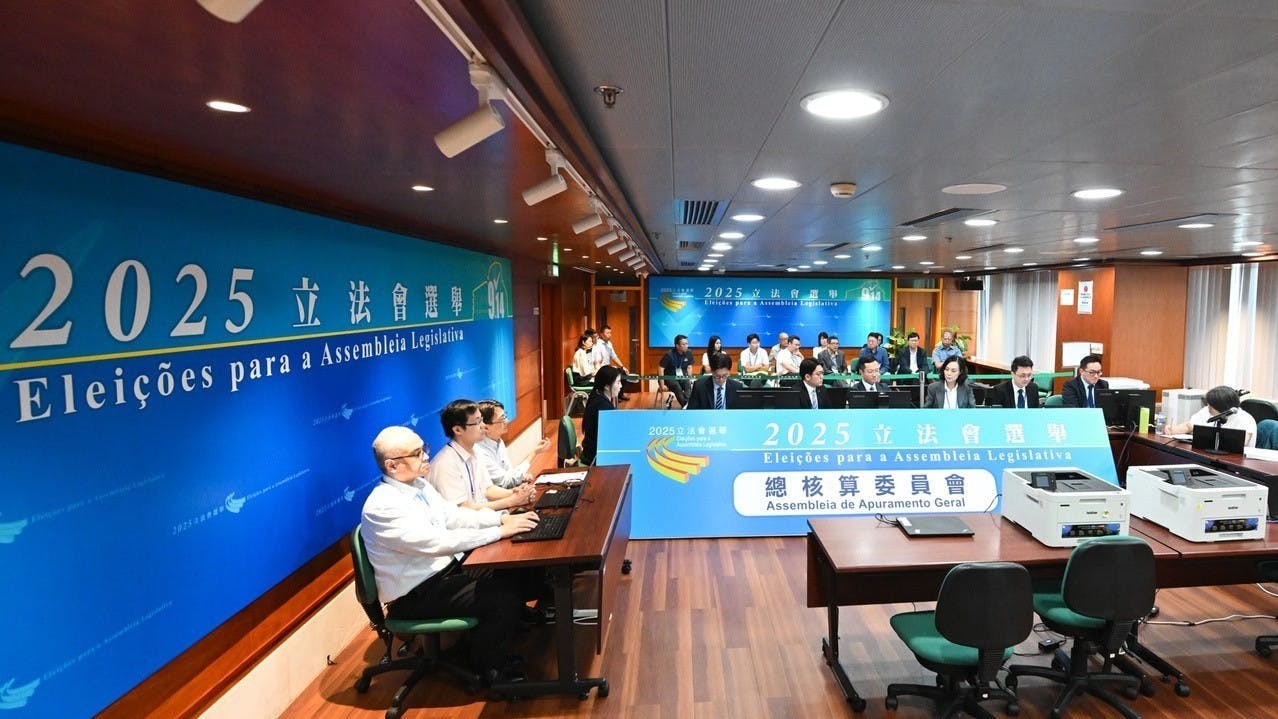


2025年9月14日舉行的澳門立法會直接和間接選舉取得了巨大成功,投票率高達53.35%。從2001至2025年澳門立法會直選的投票行為的深入分析顯示,建制派雖然在2001至2013年期間保持了約60%的支持率,但其選民支持率在2017年大幅下降,但在2021年則躍升至70%。
然而,2025年立法會直選的選民支持率較2021年略有下降。類似的選民支持率波動現像也出現在自由派陣營。自由派的選民支持率在2021年大幅下降至20%,但在2025年9月的選舉中,該陣營的支持率又回升至25%左右。
2021年迄今多位候選人被DQ
綜觀而言,澳門直選兩大陣營建制派和自由派選民的支持率變化,可以分為三個時期來分析:2001至2013年是成長整固階段;2017年政治多元化和競爭激烈程度達至頂峰;在2021至2025年期間,由於部分候選人因不符合國安法的規定被取消參選資格,導致期內建制派和自由派的選舉人數出現波動。
下面我們總結2001至2025年選民支持率的變化波動。首先,登記選民的數量從2001年的159813人增加到2025年的328506人。
其次,投票的公民總數也從2001年的83,644人增加到2017年的 174872人,至2025年為175272人。
第三,2021年立法會直選大量候選人和名單被取消資格,對選民人數和投票率均產生了抑制作用,選民人數從2017年的174872人下降到2021年的137279人,投票率從2017年的57.22%下降至2021年的42.38%,甚至對參加最近2025年立法會直選的候選人似乎也產生了一些心理影響。
順帶一提,2025年投票率為53.35%,是澳門自2001年以來選舉史上投票率第三低的一次,最低投票率為2021年的42.38%和2001年的52.34%。

白票和廢票佔總票數高達7%
第四,一個有趣的現象是澳門立法會直選的白票和廢票佔比較高。在2025年9月14日投票結果,白票和廢票的數量卻高達13040張,佔總票數的7.43%。這結果暗示了幾種可能性。對於那些決定響應號召投票的公民來說,有些人投了白票或廢票,顯示部分被政府動員的選民感到不滿。
第五,透過對澳門兩大政治派別建制派和自由派的得票情況分析,可以發現它們在2001至2025年澳門政治發展過程中的變化。
2021年,大多數自由派候選人和名單被取消資格,是澳門政治史上支持普選的民主運動發展的轉捩點。自由派陣營的得票率從2017年的36.8%下降到2021年的僅19.66%,得票數也從2017年的64366張大幅下降到2021年的僅26996張。
值得注意的是,政府動員選民投票的舉措引發了一些政府機構(包括教育機構)的相應動員,這些機構準備了模板,供員工聲明是否投票以及無法投票的原因。一些大眾媒體質疑,這種「過度」的動員力道是否會對部分員工在選舉日投票構成壓力。
鑑於澳門的投票從來都不是強制性的,政府動員選民的呼籲可能會被一些建制派組織過度解讀,導致意想不到的後果,例如引起一些自由派選民的不滿,以及那些決定聽從政府呼籲的自由派選民做出策略性投票決定。
2017年直選票高達36%
然而,整體直選結果並未改變立法會中自由派與建制派的比例。下表顯示,2025年自由派僅獲得21.4%的直選議席,結果與2021年相同,遠不及自由派在2017年直選中取得的亮麗成績,在2017年他們獲得了36%的直選議席。

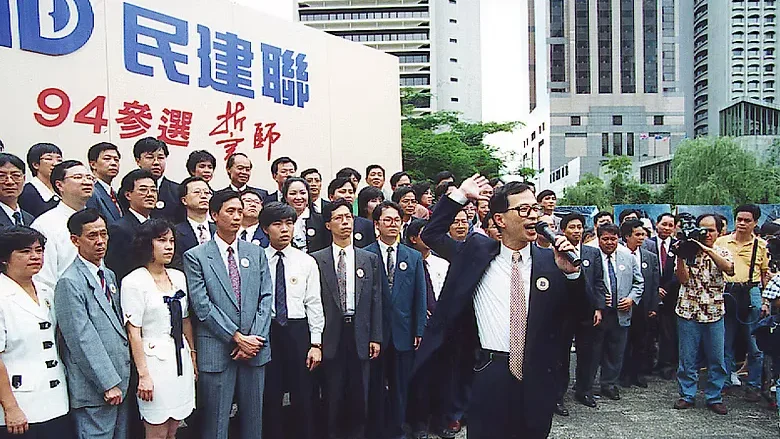
從建制派或親北京統一戰線的角度分析,2005年是建制派勢力的轉折點,福建宗親組織成立了「民眾建澳聯盟」,從2005年到2025年,該組織在支持其領導人的選民總數不斷壯大。
整體而言,建制派或親政府派系的得票率從2001年到2025年穩定成長。毫無疑問,他們將繼續成為親自由派系最強大的對手。親自由派系必須深刻反思,為何其部分候選人和名單在2021年和2025年均被取消資格。

(澳門政府網)
親自由派須反思參選策略
可以預見,自由派必須採取明智且更謙遜的策略,首先包括更謹慎地與國內外媒體打交道,避免給人留下迎合外國或對內地批評過於苛刻的印象。其次,親自由派必須低調處理中國大陸的爭議性政治事件。
第三,自由派可以考慮以個人身分參選,而非集體參選。換言之,即使某個人或某個名單被取消資格,其他個人也有可能透過當局的安全審查,從而參與直選。
第四,自由派必須借鏡2025年立法會直選的經驗,將直接號召支持者投票與策略性投票的動員策略結合。如果自由派能夠採取謙遜和自我批判的政治學習態度,其政治前途將是謹慎樂觀的。
畢竟,在國安法背景下,有必要適應新的政治環境,澳門的自由派陣營必須學習現實政治的技巧和選舉適應的策略,學習維護國家安全的必要性,以及學習支持者策略性投票的價值。
綜上所述,據2001至2025年澳門立法會直選投票行為派系分析表明,建制派勢力不斷壯大,但其投票支持率在2001至2013年期間經歷了震盪,在2017年激烈的競爭中略有下降,在2021年自由派候選人和名單被大量取消資格的年份選民支持率突然反彈,而在2025年直選中,選民支持率略有下降,為67.8%。
儘管如此,2025年直選結果顯示,建制派傳統上總能獲得約六成選票,是一股不容小覷的強大力量。另一方面,自由派勢力自2001年起逐漸崛起,並在2017年達到頂峰。當年史無前例的25個名單參與直選,不僅對建制派造成分化,也稀釋了建制派的選票。

(澳門政府新聞局網)
自由派「新希望」獲選民同情票
有趣的是,政府最近呼籲選民在2025年9月的直選中投票,這促使一些自由派選民重返投票站。雖然其中一些仍然沒有投票,但其他人表達了不同的傾向:部分投票給非建制政治團體「新希望」,也有投了白票或廢票。可以說,澳門自由派選民相當理性、有策略,對澳門的社會政治發展有政治意識,而不是完全政治冷感。
由親政府工會、街坊會、婦女團體和閩粵族團體組成的四重聯盟在選舉中仍然保持相當強勢,在2021年大量自由派候選人和名單被取消資格後,其支持率仍超過三分之二。除了婦女團體在領導力、形象和政綱方面有待加強外,以民眾建澳聯盟為首的福建宗族鬆散聯盟、佔主導地位的工會、傳統街坊組織、勞工團體和婦女團體已成為澳門選舉政治中建制派統一戰線的五大支柱。
2025年立法會直選後,我們可以預期「新希望」黨成員在制衡行政權力方面發揮關鍵作用。同時,四大聯盟並非沒有反對派的效忠派;其各派將繼續向政府提出建議,並扮演建設性批評者的新角色。
那些在2021年和2025年被取消資格的自由派候選人和名單或許需要自我反思,反思如何重塑自身形象和策略,以便在2029年下一屆立法院直選中能夠安全的政治回歸。
A factional analysis of voting behaviour in Macau’s legislative direct elections, 2001–2025
A factional analysis of voting behaviour in Macau’s legislative direct elections, 2001-2025The direct and indirect elections held for Macau’s Legislative Assembly on September 14, 2025, were a tremendous success with 53.35 per cent of the voter turnout. A deep analysis of the voting behaviour in Macau’s legislative direct elections from 2001 to 2025 shows that while the pro-establishment faction has retained its support base of around 60 per cent in 2001-2013, its voters’ support dropped quite significantly in 2017 but jumped up to 70 per cent in 2021.
The 2025 legislative direct elections, however, have demonstrated a slight decline of voters’ support for the pro-establishment camp compared with the situation in 2021. A similar phenomenon of oscillations in voters’ support can be seen in the pro-liberal camp, which gathered around 30 per cent of support from 2001 to 2013, and which shot up to 37 per cent in the hotly contested 2017 direct election. However, the pro-liberal faction suffered a drastic decline of voters’ support to 20 per cent in 2021, but it has risen again in the September 2025 election to around 25 per cent.
In short, the oscillations of voters’ support of the two main camps in Macau’s direct elections – pro-establishment and pro-liberal factions – can be analysed and understood in three periods: the stage of growth and consolidation from 2001 to 2013; the apex of political pluralism and intense competition in 2017; and some degree of electoral fluctuations in the midst of some candidates’ disqualification from 2021 to 2025, when the national security law was applied to screen out some politically ineligible candidates and lists.
Table 1 below sums up the fluctuations in voters’ support from 2001 to 2025. First, the number of registered voters increased over time, from 159,813 in 2001 to 328,506 in 2025. This increasing tendency is shown in the increase in the percentage of the population who registered as voters – from 36.5 per cent in 2001 to 46.79 per cent in 2017 and then to 47.89 per cent in 2025. Second, the total number of citizens casting their ballots also increased over time, from 83,644 in 2001 to 174,872 in 2017, and to 175,272 in 2025.
Third, in terms of the voter turnout, Macau’s legislative direct elections showed a steady voter turnout, ranging from 52.34 per cent in 2001 to 53.35 per cent in 2025, except for the 2021 legislative direct elections during which the disqualification of twenty-one candidates in six electoral lists took place. The massive disqualification of candidates and lists in the 2021 legislative direct elections had a dampening effect on both the number of voters and the voter turnout: a drop of voters from 174,872 in 2017 to 137,279 in 2021 and a decline in voter turnout from 57.22 per cent in 2017 to 42.38 per cent in 2021. Such disqualification of candidates and votes in 2021 appeared to have some psychological impacts on the candidates and lists that participated in the most recent 2025 legislative direct elections, during which only six groups went through the security screening process, while two groups and twelve candidates were disqualified (Ron Lam’s list and Alberto Wong’s list.
Interestingly, the voter turnout of 53.35 percent in 2025 is the third lowest turnout in Macau’s electoral history since 2001, with the lowest turnout of 42.38 percent in 2021 and 52.34 percent in 2001.
Table 1. Voting behaviour in Macau’s legislative direct elections, 2001–2025
 Note: The population data came from December in that particular year. See www.dsec.gov.mo. The other data on votes came from Macau’s official election website: 澳門特別行政區立法會選舉 | 立法會選舉. The pro-establishment votes are calculated on the basis of all major pro-government groups, like Macau United Citizens Association, Union for Development (Macau Federation of Trade Unions),Union for Promotion of Progress (neighborhood associations or kaifong),Macau-Guangdong Union (in the past elections I grouped the pro-government business and clan groups together),and the Alliance for Happy Home (Macau Women Association). In the past legislative direct elections, I also calculated Angela Leong’s casino-based group together with Melina Chan’s electoral group together in the pro-establishment front.
Fourth, an interesting phenomenon is the percentage of total blank and invalid votes in Macau’s legislative direct elections – a reflection of the irony that while voters were often mobilised to cast their ballots, their voting decisions reflect a variety of reasons, including their unawareness of the proper way to vote, and even hidden protest votes in the form of perhaps either blank votes or making votes eventually regarded by election officers as invalid.
Because of the government’s appeal to voters, especially civil servants, to vote on September 14, 2025, many citizens did go to the polls on the election day. However, the enormous number of blank and invalid votes amounted to 13,040 (7.43 per cent of the total votes cast). This result implied several possibilities. For those citizens who decided to respond to the appeal to vote, some cast blank votes, while some made their votes invalidated – a demonstration of hidden discontent on the part of mobilised voters.
Fifth, a deeper analysis of the votes obtained by two main Macau political factions – the pro-establishment and pro-liberal factions – demonstrates their oscillations in the process of political development in Macau from 2001 to 2025.
The pro-establishment faction safely grasped around 60 per cent of the total votes cast by voters from 2001 to 2013, while the pro-liberal – also at the time also referred as pro-democracy – faction grasped around 30 per cent of the total votes during the same period, with a slight drop in the year 2013 when twenty lists participated. Nevertheless, in the most competitive direct elections held for the Macau Legislative Assembly in the year 2017, when twenty-five groups or lists contested among themselves fiercely, this fragmentation of the electoral landscape was beneficial more to the pro-liberal camp, which acquired 36.8 per cent of the total votes. Yet, the pro-establishment camp suffered a drop from 60.7 per cent in 2013 to 52.14 per cent in 2017.
The disqualification of most pro-liberal candidates and lists in 2021 was a turning point in the development of the pro-democracy movement – in favour of adopting universal suffrage – in Macau’s political history. The pro-liberal camp’s votes dropped from 36.8 per cent in 2017 to only 19.66 per cent in 2021, while its number of votes also declined drastically from 64,366 in 2017 to only 26,996 in 2021.
Most interestingly, the disqualification of two groups – one led by Ron Lam seen as holding moderate liberal views and another one by Alert Wong – in the 2025 legislative direct elections and the simultaneous governmental mobilisation of citizens to vote had a combined effect of stimulating more pro-liberal voters to return to the polling stations. The pro-liberal votes jumped from 26,966 in 2021 to 43,361 in 2025, and its percentage of votes also increased from 19.66 per cent in 2021 to 24.73 per cent in 2025 – an indication that the liberals led by José Pereira Coutinho’s list, namely New Hope, returned to almost the pro-liberal percentage of votes (28.3 per cent) back in 2001. This was by no means a bad result for the pro-liberal faction.
Furthermore, if we divide the 43,361 votes won by Coutinho’s New Hope by the 64,366 votes captured by the pro-liberal camp in 2017, approximately 67.36 per cent of the 2017 pro-liberal voters appear to have returned to support their camp in 2025. This is a strong indicator of a gradual rebound among pro-liberal voters, who demonstrated considerable political resilience by choosing to back Coutinho’s list—the only one perceived as representing pro-liberal views.
As a local Macanese, Coutinho wisely included many local Macau Chinese in his list, attracting a lot of formerly pro-liberal or pro-democracy supporters. Although New Hope’s election campaign did not attract so many participants as compared with other pro-establishment groups – notably the United Citizens Association, Union for Development, Union for Promotion of Progress, and Macau-Guangdong Union – its outspoken and critical image appeared to attract a considerable number of formerly pro-liberal and pro-democracy voters.
From a factional perspective, the pro-liberal faction suffered tremendously in the 2021 legislative direct elections, when twenty-one candidates from six groups were disqualified, but the disqualification of only two pro-liberal groups with twelve candidates interestingly did not deter the pro-liberal voters. Rather, the governmental appeal to all citizens to vote made some pro-liberal voters cast their ballots strategically for the only pro-liberal group led by Coutinho, thereby making New Hope secure three seats in the new Legislative Assembly.
It can be inferred from the 2025 legislative direct election results that there were four orientations of the pro-liberal voters. First, some of them still did not go to the polls despite the governmental appeals. Second, some did go to the polling stations, but they cast blank votes as a sign of either protest or silent opposition. Third, some did cast their votes and voted in a way that was eventually invalidated by the election officers. Fourth, some of them did vote strategically and decided to support Coutinho’s New Hope, which accidentally became the only and yet the most effective pro-liberal electoral list, gathering not only its core supporters but also perhaps the sympathetic support of other formerly pro-democracy voters.
It was noteworthy that the governmental mobilisation of voters to vote led to the corresponding mobilisation efforts by some government agencies, including educational institutions, which prepared templates for employees to declare whether they would vote, and why they would not be able to vote. Some mass media questioned whether such “excessive” mobilisation efforts might constitute pressure on some employees to vote on the election day. Given that voting in Macau was and is not compulsory, the governmental appeal to voters to mobilise might be interpreted rigidly and excessively by some pro-establishment organisations, leading to unintended consequences, such as some displeasure on the part of liberal-minded voters, and, interestingly, the strategic voting decisions of those pro-liberal voters who decided to follow the governmental appeal.
Yet, the overall direct election result has not altered the proportion of the pro-liberal faction versus that of the pro-establishment faction in the Legislative Assembly. Table 2 below shows the pro-liberal faction only got 21.4 per cent of the directly elected seats in 2025, a result the same as 2021 and an outcome no match for the impressive pro-liberal victory in the 2017 direct elections, when they grasped 36 per cent of the directly elected seats.
Table 2 .Number of directly elected seats obtained by major pro-establishment groups and pro-liberal camps in Macau’s Legislative Assembly, 2001–2025
From the perspective of analysing the pro-establishment camp or the pro-Beijing united front, it underwent a turning point in the year 2005, when the Fujian clan members gathered together to form the United Citizens Association, which became stronger and stronger from 2005 to 2025 in terms of the total number of voters supporting its leaders, ranging from Chan Meng Kam to Si Ka Lom and Song Pek Kei.
The leadership renewal of the Fujian faction has also shown impressive performance, especially in 2025 as Song Pek Kei succeeded in helping her partners Lei Leong Wong and Chan Lei Kei to win in direct elections Similarly, the pro-establishment Federation of Trade Unions, kaifong associations and Guangdong-Macau clan groups demonstrated their increasing support from 2001 to 2025. The only exception is the women’s association, which is weaker, and which showed fewer participants in their public rallies.
The women’s groups were not really organised from 2001 to 2013, when Angela Leong and Melina Chan’s gaming-linked groups participated in direct elections although their gender background attracted a lot of women voters. The formation of the Alliance for Happy Home in 2017 could be seen as a watershed in the formal organisation of women in their participation in direct elections. Although the Alliance’s votes appeared to increase from 9,496 in 2017 to 18,751 in 2025, their image as a group fighting for the interests of women seems to be quite weak. Unless the Alliance for Happy Home undergoes much bolder reforms and projects a sharper image of fighting for the interests of women, its future leadership and development remain to be observed carefully.
Casino-linked groups were prominent in Legislative Assembly direct elections from 2001 to 2017, after which they ceased to participate openly. This shift signalled a political reorganisation and realignment within the pro-establishment camp. Angela Leong’s election to the 2025 Legislative Assembly through the indirect route suggests that casino interests are now embedded in indirectly elected seats rather than directly elected ones.
Table 3: Votes acquired by the loose coalition of major pro-establishment groups in legislative direct elections, 2021–25
 [1] There was no group in the election that was openly linked tothe city’s Fujianese community
[2] The Women’s General Association of Macau candidates ran under the Kai Fong-backed Union for the Promotion of Progress
[3] No list openly representing Guangdong clan groups appeared on the ballot
[4] Combined votes: 10,452 for the New Macau Development Union, led by gaming concessionaire SJM executive Angela Leong, and 8,186 for the Alliance for Change, led by then Macau Legend Development (satellite casino operator) executive Melinda Chan
[5] Combined votes: 13,093 for the New Macau Development Union, led by gaming concessionaire SJM executive Angela Leong, and 8,755 for the Alliance for Change, led by then Macau Legend Development (satellite casino operator) executive Melinda Chan
[6] Combined votes: 14,099 for the New Macau Development Union, led by gaming concessionaire SJM executive Angela Leong, and 7,857 for the Alliance for Change, led by then Macau Legend Development (satellite casino operator) executive Melinda Chan
[7] Combined votes: 11.642 for the New Macau Development Union, led by gaming concessionaire SJM executive Angela Leong, and 6,081 for the Convergence for Development, led by then Macau Legend Development (satellite casino operator) executive David Chow
[8] Combined votes: 10,016 for David Chow’s Convergence for Development (which also elected then leading Macanese politician Jorge Fão, former head of the Macau Civil Servants Association) – and 5,170 for the list led by João Bosco Cheang, president of the Macau Gaming Industry Employees’ Association
[9] Votes won by the list led by developer Fong Chi Keong
[10] Votes won by the list led by businessman Victor Cheung Lap Kwan
Overall, the pro-establishment or pro-government faction has seen its votes steadily increasing from 2001 to 2025. It will undoubtedly continue to constitute the strongest opponent to the pro-liberal faction. The pro-liberal faction must undergo a critical self-reflection on why some of its candidates and lists were disqualified in both 2021 and 2025.
A wise and more humble strategy will have to be adopted. This new strategy embrace, firstly, a far more careful approach to dealing with the local and foreign media, refraining from either giving any image of “inviting” foreign influence or generating an impression of being “overly critical.” Second, the pro-liberal faction must adopt a low profile in dealing with controversial political events in mainland China, bearing in mind the late Chinese President Jiang Zemin’s remarks that “the river water should not intrude into well water.”
Third, instead of running in direct elections as a group, the pro-liberal faction may consider running in direct elections as an individual. In other words, even though an individual or an individual list may be disqualified, other individuals may be able to go through security screening by the authorities and they will be able to participate in direct elections. Fourth, the pro-liberal faction must learn from the 2025 legislative direct elections, combining direct appeals to their supporters to vote with the mobilizational strategy of tactical voting. If the pro-liberal faction adopts a humble and self-critical attitude of political learning, its political future will be cautiously optimistic. After all, under the necessity of adapting to the new political circumstances under the context of the national security law, the liberal camp in Macau must learn the skills of realpolitik and the tactics of electoral adaptation, the necessary protection of national security, and the value of strategic voting on the part of their supporters.
In conclusion, a factional analysis of the voting behavior in Macau’s Legislative Assembly direct elections from 2001 to 2025 shows that while the pro-establishment camp has grown from strength to strength, its voting support underwent oscillations from 2001 to 2013, a slight decline during the intense competition in the year 2017, a sudden rebound in voters’ support in the year of massive disqualification of pro-liberal candidates and lists in 2021, and a slight decline in the proportion of voters’ support to 67.8 percent in the 2025 direct elections.
Still, the 2025 direct election result illustrated that the pro-establishment camp has traditionally garnered some 60 percent of the votes – a formidable force to be reckoned with. On the other hand, the pro-liberal faction climbed up gradually from 2001 to an apex in 2017, when the unprecedented twenty-five lists participating in direct elections not only had a fragmentation impact on the pro-establishment camp, but also diluted the votes enjoyed by pro-government groups.
As a result, the pro-liberal camp benefited from the fragmentation of electoral lists, reaching 36.8 percent of the total voters’ support. Yet, the pro-liberal or pro-democracy victory was short-lived. The pro-liberal front suffered a severe setback in the 2021 legislative direct elections as twenty-one candidates and six lists were disqualified, with the result that the pro-liberal votes dropped to only 19.66 percent of the total votes. Interestingly, the most recent governmental appeal to voters to cast their ballots in the September 2025 direct elections propelled some pro-liberal voters to return to the polling stations. Although some of them still did not vote, others expressed different orientations: voting for New Hope – the only group seen as espousing critical and liberal views – casting blank votes, or voting in a way that made their votes invalidated by the authorities. It can be argued that the liberal voters in Macau are quite rational, strategic and politically aware of the socio-political development in Macau instead of being totally “apathetic.”
Finally, the pro-establishment front has demonstrated a successful reorganization and political realignment since the emergence of the United Citizens Association in 2005, the establishment of the Macau-Guangdong Union and following the replacement of casino-liked lists with the alliance between women associations, labour groups and kaifong organizations.
The quadruple alliance between the pro-government trade unions, kaifong associations, women groups rand Fujian-Guangdong clan groups remains quite electorally strong, reaching more than two thirds after the massive disqualification of liberal-minded candidates and lists in 2021. Except for the women associations which remain to be strengthened in their leadership, image and platform, the loose coalition of the Fujianese clan led by the United Citizens Association, the dominant trade unions, the traditional kaifong organization, labor groups and women associations has become the five pillars of the pro-establishment united front in Macau’s electoral politics.
After the 2025 legislative direct elections, we can expect the members of New Hope will play a crucial role in checking and balancing the power of the executive branch. At the same time, the quadruple alliance will not be loyalists without opposition; its groups will continue to raise suggestions to the government and play the new role of being constructive critics. If so, the inside politics of the new Legislative Assembly will remain to be observed. At the same time, the liberal-minded candidates and lists that were disqualified in 2021 and 2025 may have to undergo self-critical reflections on how they will reshape their image and strategies so that a safe political comeback for the next legislative direct elections in 2029 will be a realistic possibility.
原刊於澳門新聞通訊社(MNA)網站,本社獲作者授權轉載。(原文按此)