

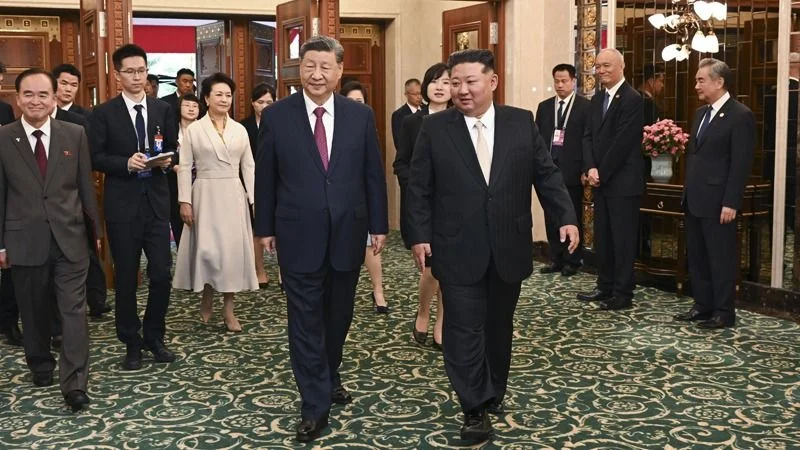


近期一系列外交互動,包括中國國家主席習近平訪問平壤,以及日本與菲律賓共同發起海上劃界倡議,這兩宗最新事態發展已令東北亞安全前景面臨嚴峻的壓力。
習近平主席此次訪朝,釋放出多重關乎東北亞安全走向的戰略訊號。
首先,隨着中國深化對朝經濟援助的戰略定位日益明晰,北韓在貿易、投資及各類經貿往來上對華的依存度不斷攀升。此趨勢直接重塑了區域格局,北韓雖與俄羅斯締結了軍事同盟,但在經濟層面進一步向中國靠攏。
經濟同盟與無核化議題擱置
第二,習近平主席及中方代表團並未提及「無核化」議題。中方代表團抵達平壤前夕,金正恩胞妹金與正公開表態,朝鮮擁有核武器國家地位是絕不退讓的底線,朝鮮絕不接受任何損害其國家安全與主權的外部威脅。
受近期美伊、以伊衝突影響,朝鮮在核地位問題上立場進一步固化。朝鮮官方媒體早在2016年9月就曾提及薩達姆、卡達菲的前車之鑒,兩國主動放棄核計劃、喪失核研發根基後,最終遭到美國政權更迭。
第三,朝鮮經濟高度依賴中國,中方掌握的經濟槓杆持續增強。未來美朝但凡重啟談判、尤其是涉及無核化議題時,中國都將是不可或缺的中間人。
既然朝鮮已直接拒絕無核化框架,美國及其盟友就需要更換表述方式,並拿出更具吸引力的籌碼,推動朝鮮重回談判桌。
修憲表態與地區多國擴軍動向
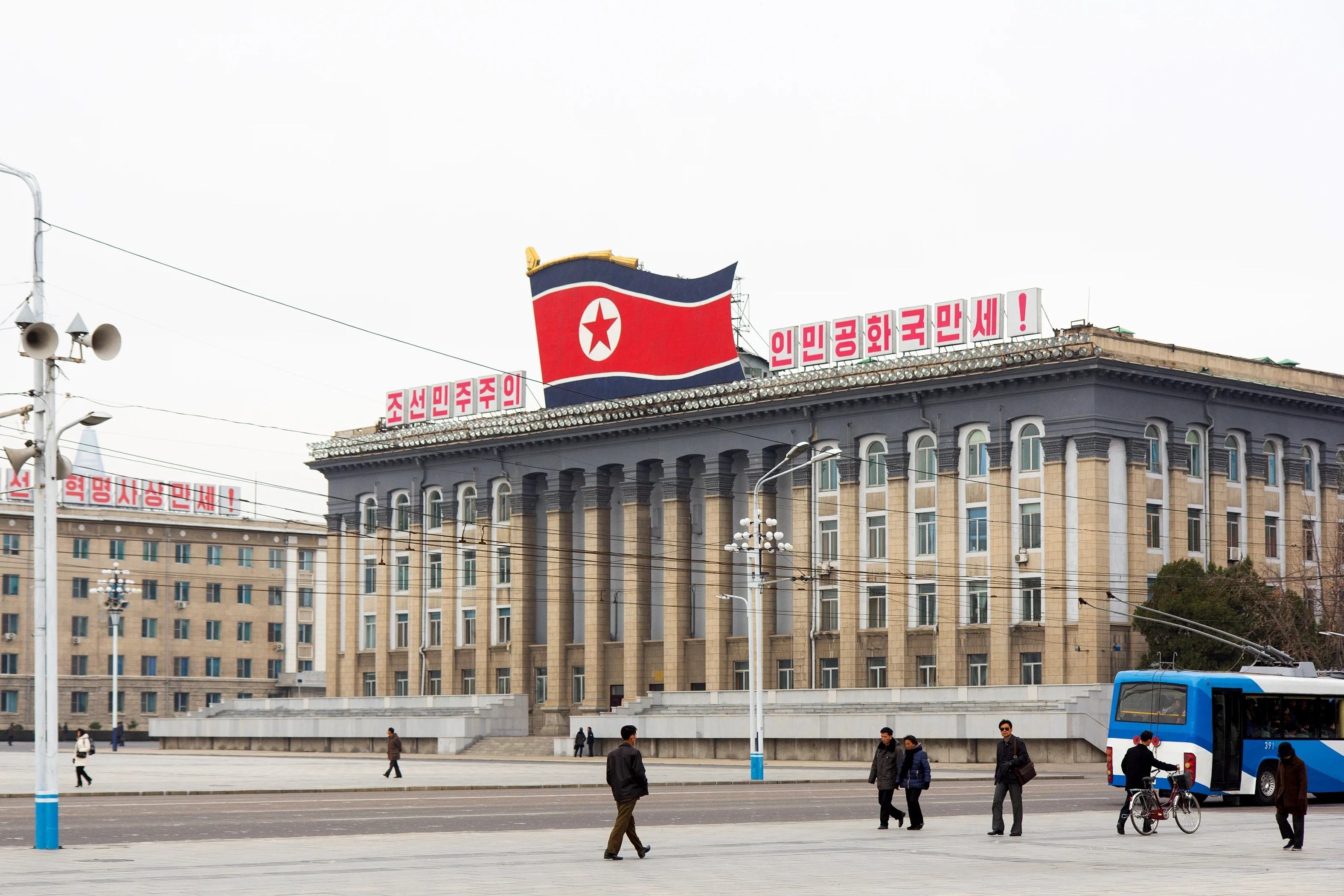
習近平訪朝之前,朝鮮就已在東北亞和平安全議題上大幅收緊立場。該國2026年3月修訂憲法,正式將大韓民國稱作韓國,並將本國定性為「負責任擁核國」。朝鮮將韓國界定為首要敵對勢力,不再提及半島統一議題,談判立場全面強硬,朝美、朝韓緩和的可能性大幅走低。
朝鮮同俄羅斯結成軍事同盟、公開宣告核武器國家身份,勢必給韓、日兩國安全環境帶來實質性挑戰。日本擴充軍備,正是對朝鮮軍力擴張與核武研發的自然回應。日本2023財年國防預算增至580億美元,創下歷史新高,國防預算連續12年上漲,直觀體現出日方對東北亞安全局勢的高度緊張,其認定朝鮮與中國構成安全威脅。
韓國依舊堅持朝鮮半島無核化目標,拒不承認朝鮮擁核武器國家的地位。戰略層面,韓國一方面必須依托美國這個軍事保護者開展對朝談判,同時和日本展開軍事協作對沖朝鮮安全威脅;另一方面,也需要借助中國從中斡旋對朝溝通。
但韓日軍事合作始終受制於歷史遺留矛盾。韓國總統李在明2026年6月8日明確表態:韓日深化軍事合作有前提條件,日本必須就1910至1945年殖民朝鮮的歷史作出道歉。這也就決定了韓日軍事協作存在難以突破的上限。
海域劃界談判與大陸架新摩擦點
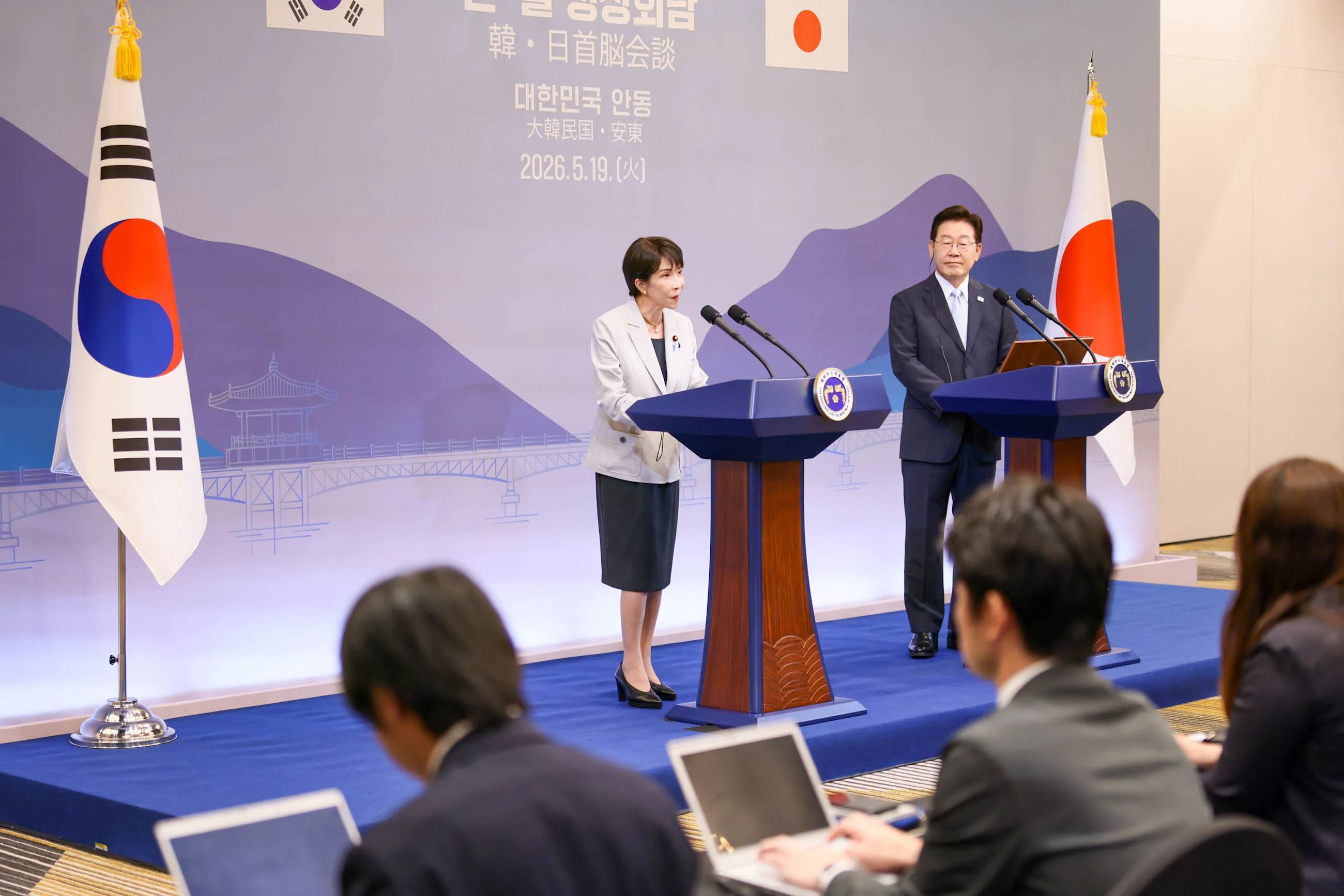
2026年5月28日,日本首相高市早苗與菲律賓總統小馬可斯共同宣布,兩國將正式啟動專屬經濟區與大陸架海上邊界劃定談判,此舉立刻引發中方強烈反對。
中國外交部向日、菲兩國提出嚴正交涉,指出日菲此番行動侵犯中國領土主權與海洋權益。外交部發言人毛寧明確表態,所謂劃界談判非法無效。中方隨即宣布,海警將常態化開展執法巡航,反制日菲劃界磋商決定;台灣方面也提出抗議,指責日菲開展大陸架協商時刻意將台灣排除在外。
台灣以東海域大陸架爭端,成為東北亞全新軍事摩擦熱點,這片海域也處於美國東亞地緣戰略劃定的第一島鏈範圍之內。
日菲此舉本質上是依托美國冷戰思維下守衛第一島鏈、制衡對手的戰略承諾,但也面臨同中國外交、軍事關係全面惡化的風險。尤其是日本首相高市早苗2025年11月就台灣問題發表激進挑釁言論,聲稱中國大陸若採取軍事手段統一台灣,將對日本造成「存亡危機」,中方認定該表態向「台獨」分裂勢力釋放錯誤訊號,對日方強烈不滿。
自此中日關係持續下行,此番日菲聯手推進台灣以東海域大陸架劃界談判,加劇雙邊緊張態勢。中方若再收緊對日稀土出口、管控赴日旅遊規模,中日關係或將迎來更大波折。
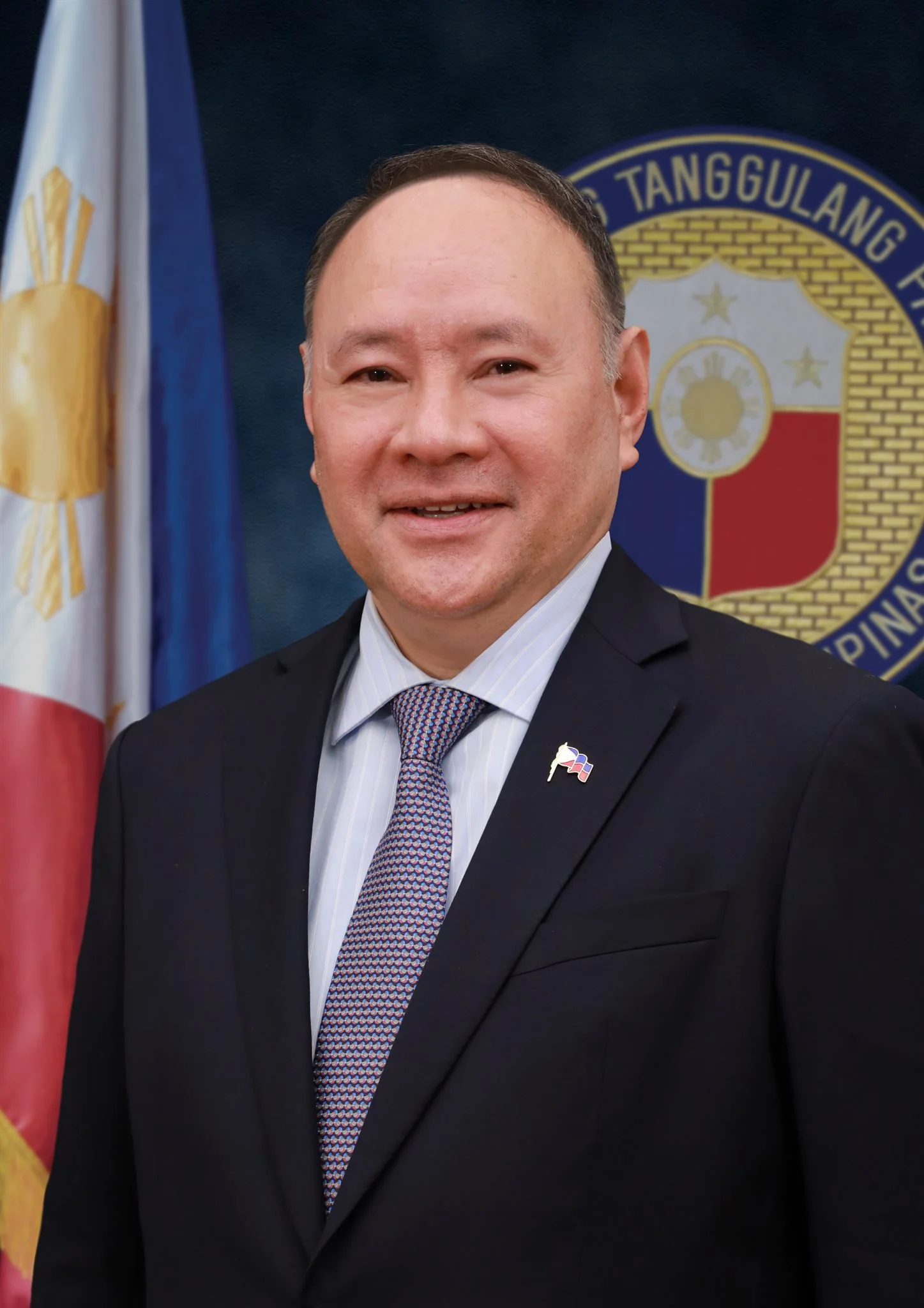
菲律賓國防部長特奧多羅在新加坡香格里拉對話會上發表強硬言論,將南海島礁爭端歸咎於中方,此後中菲關係再度降溫。中方隨即公布制裁特奧多羅及其直系家屬。
菲律賓擔任東盟輪值主席機遇
特奧多羅一貫對華強硬,但中方宣布禁止其及家屬入境中國大陸、香港、澳門後,菲律賓外長拉薩羅表態更傾向於依靠外交對話解決分歧。菲軍方公開聲援特奧多羅,外長卻釋放緩和訊號,清晰暴露出菲律賓國防部、軍方與外交部之間的立場撕裂。若務實外交路線壓倒強硬對抗論調,中菲關係回暖仍需時日。
2026年菲律賓擔任東盟輪值主席國,這為馬尼拉修復對華緊張關係留下窗口期:雙方可持續推進南海行為準則磋商,該協定能否落地,完全取決於各申索國是否抱有達成共識的政治誠意。身為輪值主席,菲律賓必須在南海爭端中保持適度中立;東盟其餘成員國也可借此契機推動準則條文細化落地,有助南海長期和平穩定。
東北亞軍事緊張態勢同時覆蓋朝鮮半島與台灣以東海域,台海走向始終是核心地緣議題。民進黨當局上台後,明令禁止台灣公務人員、地方官員赴廈門參與海峽論壇,導致這一兩岸交流平台陷入停滯。

兩岸僵局與交易型對台軍售博弈
中方近期向美方提出管控對台軍售的訴求,中美元首北京會晤後,中方正持續觀望美方回應。特朗普總統5月中旬訪京三周前,美國在台協會負責人葛萊儀游說台灣民意機構(立法院)多數在野黨陣營通過足額防衛預算,聲稱全球導彈、無人機需求旺盛,若台灣錯過預算審批窗口期,這批裝備或將調配至中東戰場。
目前尚不清楚特朗普政府會如何回應中方訴求。但依據《與台灣關係法》第2條e款,美國政策為向台灣提供防禦性武器,對台軍售不會徹底終止,僅會調整軍售規模、武器數量。特朗普政府奉行交易式外交,這批對台軍售額度是否會成為美方換取中方讓步的談判籌碼,仍有待觀察。
綜上所述,東北亞現已浮現三處軍事熱點:傳統台海問題持續懸而未決,朝鮮半島談判陷入僵局,台灣以東大陸架爭端又新增摩擦點。特朗普政府推行交易型外交的背景下,各方仍有耐心分步化解安全矛盾、構建戰略韌性的操作空間。
放眼未來,秉持經濟務實原則、拿出化解領土與政治分歧的政治意願,將成為緩和東北亞緊張局勢、實現多方共贏格局的兩大核心驅動力。
Northeast Asian security under stress
Recent developments in the visit of Chinese President Xi Jinping to meet North Korean leader Kim Jong Un, and in the announcement of Japan and the Philippines to delimit their overlapping Exclusive Economic Zones (EEZs) and continental shelves in the waters east of Taiwan, have already raised two questions on the prospects of Northeast Asian security. Is the consolidated economic alliance between China and North Korea conducive to Northeast Asian security? Is the joint Japanese and Filipino move suddenly challenging the security of Northeast Asia unintentionally at a time when China is genuinely concerned about its sovereignty over Taiwan, and when North Korea’s “denuclearisation” is still considered by the US and yet rejected outright by Pyongyang?
Economic alliances and the avoidance of denuclearisation
The visit of the Chinese President, Xi Jinping, to Pyongyang has sent some signals on the development of Northeast Asian security. First, China has developed its strategic clarity of assisting the economic development of North Korea, which tends to increasingly rely on the Chinese trade, investment and socio-economic interactions. The immediate implication here is that while North Korea has already forged a military alliance with Russia, it has edged closer to China in its economic development. North Korea has already shown its strategic clarity in Northeast Asia, namely forming a military alliance with Russia especially during the Russo-Ukrainian war during which North Korea sacrificed the lives of many its soldiers to fight for Russia while gaining military experience and advanced technological knowhow from the Russians.
Second, it is clear that President Xi and his delegation have avoided the issue of “denuclearisation,” a term used by the US after President Trump visited China and discussed with President Xi Jinping. Shortly before President Xi and his delegation arrived at Pyongyang, Kim Jong-un’s sister, Kim Yo Jong, said openly that North Korea’s status as a nuclear weapons state is “the line of no retreat” (RTHK news, June 7, 2026), and that Pyongyang would not tolerate any threat to its national security and sovereignty.
From the perspective of strategic clarity, North Korea has told the world, especially the US and also China, that the question of its “nuclear weapons state” has to be recognised and that it cannot be easily negotiated. The implication is that North Korea’s position on its nuclear weapons status has hardened in light of the recent US-Israeli conflicts with Iran. Kim Jong Un and his subordinates might recall the fate of Saddam Hussein and Muammar Gaddafi, who were toppled by the US “after being deprived of the foundations for nuclear development and giving up nuclear programmes of their own accord,” according to the North Korean state media as early as September 2016 (BBC, September 8, 2016). Gone were the good old days in which US President Donald Trump met North Korean leader Kim Jong Un in Singapore in June 2018, when both discussed the question of “denuclearisation.”
China’s leverage and alternative diplomatic pathways
Third, although the Chinese delegation has avoided talking about “denuclearisation,” China will be increasingly an important intermediary between the US and US-led allies, like Japan and South Korea, on the one hand and North Korea on the other hand. China’s economic leverage over North Korea is arguably increasing as the latter depends on the former quite extensively. From 2023 to 2026, China already occupied 95 to 98 per cent of Pyongyang’s official trade with the outside world (North Korea News, July 22, 2024, and DW News, June 1, 2026). Unless North Korea is going to diversify its international trade, China will surely become a key player who can play a role of middleman in any future negotiations between the US side and Pyongyang, especially with regard to the question of “denuclearisation.”
If “denuclearisation” is rejected by North Korea right away, the US and its allies may have to consider another term, and some stronger incentives, that can and will woo Pyongyang to the negotiating table. The crux of the problem is that with the ongoing North Korean economic dependency on China, there is virtually little economic incentive that can be offered from the US side. As such, replacing the term “denuclearisation” with another one, like “win-win peace talks” would perhaps be more conducive to attracting the North Korean side back to the discussion table. Otherwise, the diplomatic impasse between North Korea and the US side will likely persist.
Constitution updates and regional military rearmament
Prior to President Xi’s visit to North Korea, Pyongyang had already hardened its position on peace and security in Northeast Asia. It amended the constitution in March by referring the Republic of Korea to South Korea, and by using the term “responsible nuclear weapons state” to describe the Democratic People’s Republic of Korea (DPRK) (DW News, June 5, 2026). North Korea regards South Korea as a “primary foe” or “principal enemy,” rejecting the issue of “reunification.” If so, the negotiating stance of North Korea has hardened, making its rapprochement with US and South Korea increasingly difficult.
However, the word “responsible” in the term “responsible nuclear weapons state” seems to imply that North Korea would not utilise any nuclear weapon arbitrarily, and that at least some room for negotiation would be possible. As of January 2024, it was estimated that North Korea possessed fifty nuclear warheads, and that it had fissile material for an estimated 70 to 90 nuclear weapons (Arms Control Association, June 2024). Military deterrence is increasingly a prominent feature of Japan’s military rearmament.
Under the circumstances that North Korea has formed a military alliance with Russia, and that North Korea has declared itself as “a nuclear weapons state,” South Korea and Japan’s security situation is inevitably challenged. In particular, Japan’s rearmament is a natural response to the North Korean military build-up and nuclear weapons development. Japan has already approved a record defence budget of US$58 billion for the fiscal year of 2023, marking the twelve consecutive year of increases and characterising its foremost concern about Northeast Asian security, especially the perceived security threat from North Korea and China (Observer Research Foundation, January 13, 2026). Japan has also recently stepped up its military drills with Australia and the Philippines, apart from its traditional military exercises with the US.
Historical legacies and economic incentives for deterrence
South Korea remains committed to the process of de-nuclearising the Korean Peninsula, and it has refused to accept North Korea as a nuclear weapons state. Strategically speaking, South Korea must rely on its military patron, the US, to protect itself and to negotiate with North Korea, while at the same time partnering with Japan militarily to counter the North Korean security threat. South Korea will also have to depend on China as a middleman in case of any negotiation with North Korea.
However, the military cooperation between South Korea and Japan has been hampered by a historical legacy. As the South Korean President Lee Jae-myung said on June 8, any closer military cooperation between South Korea and Japan has a precondition, namely Japan should apologise for its colonial rule in Korea during the period from 1910 to 1945 (Global Times, June 9, 2026). As such, there is and will be a limit on the military collaboration between South Korea and Japan.
However, given that North Korea’s economy is reliant on China, it is in the interests of South Korea to negotiate and reach a free trade agreement with China. If such a free trade agreement with China can be reached, with or without Japan whose relations with China have turned sour, the Chinese intermediary with North Korea will arguably be enhanced with the prospects of having a free trade zone in the China-Korean Peninsula region. In other words, a free trade agreement between China and South Korea will give more economic incentive to North Korea to go to the bargaining table over the issue of a “responsible” nuclear weapons state.
Delimitation talks and the continental shelf flashpoint
Perhaps Japan and the Philippines made the most alarming move in Northeast Asian security development. A recent announcement made by Japanese Prime Minister Sanae Takaichi and Philippine President Ferdinand Marcos Jr. on May 28 that the two countries would “commence formal negotiations to delimit the maritime boundary of the exclusive economic zone and the continental shelf” between them is immediately provoking China (TCN News, June 5, 2026).
The Chinese Mainland and Taiwan reacted to such an announcement quickly. China’s Foreign Ministry lodged formal representations with both Japan and the Philippines, saying that the joint Japanese and Filipino move “infringes” upon the Chinese “territorial sovereignty and maritime rights and interests” (South China Morning Post, June 1, 2026). Mao Ning, the Chinese Foreign Ministry spokesperson, said that the so-called talks were “illegal, null and void” (TCN News, June 5, 2026).
Beijing has swiftly announced that Chinese law-enforcement patrols will be made by the coastguard in response to the decision of Japan and the Philippines to launch maritime boundary delimitation discussions. On the other hand, Taiwan has protested that Japan and the Philippines made the move to discuss the shelves by excluding Taipei’s involvement.
A new military flashpoint has surfaced in Northeast Asia: the continental shelves east of Taiwan which may also be seen as falling into to the so-called first island chain under the US geopolitical strategy in East Asia. In a sense, Japan and the Philippines appear to take advantage of the US strategic clarity of defending the first island chain against any “enemies” in the old context of the Cold War mentality. From another geopolitical perspective, both countries are risking the deterioration of their diplomatic and military relations with China, especially Japan after its Prime Minister Takaichi had made some frank but provocative remarks about Taiwan in November 2025. Her comment saying that any Chinese military attack on Taiwan would constitute a “life-threatening situation” to Japan alienated the Chinese authorities, who regarded the Prime Minister’s comment as “sending a wrong signal to the Taiwan independence separatist force” (Xinhua, November 28, 2025).
Sino-Japanese relations have been deteriorating since then, and the most recent announcement of Japan and the Philippines on the continental shelves east of Taiwan has exacerbated the tense Sino-Japanese relations. If China has already exerted control over its exports of rare earth and also its tourist visits to Japan, Sino-Japanese relations are likely going to take a turn for the worse.
Rifts in Manila and the opportunity of the Asean chair
The relations between China and the Philippines have also worsened since the provocative remarks made by the latter’s Defence Minister Gilberto Teodoro in Singapore’s Shangri-La Dialogue in which he attributed the disputes over islands and reefs in the South China Sea to China’s “conduct.” In response to his severe criticisms, China has sanctioned him and his close family members.
Teodoro’s remarks on China have been consistently hardline and critical. Interestingly, after China banned Teodoro and his close family members from visiting the Chinese Mainland, Hong Kong and Macau, the Philippines Foreign Minister Theresa Lazaro emphasised that she preferred diplomacy and dialogue (CNA News, June 12, 2026). While the military in the Philippines rallied behind Teodoro, the Foreign Minister’s remarks clearly illustrated a rift between the defence and military establishment on the one hand and the foreign ministry on the other hand. If pragmatism and diplomacy prevail over open criticisms, it will take time for the Sino-Philippines to return to a less tense atmosphere.
Since the Philippines is the chair of the ASEAN in 2026, Manila still has a window of opportunity to repair the tense relations with Beijing through a continuous discussion of the Code of Conduct for the South China Sea – a pending issue dependent on the claimant states and their political will to reach an agreement in a productive and harmonious manner. After all, being the chair means that the Philippines has to maintain a certain degree of neutrality over the disputes in the South China Sea. Consequently, other ASEAN member states may recognise the valuable opportunity to pursue advancements in the Code of Conduct’s provisions, ultimately contributing to sustained peace and stability in the South China Sea.
Cross-strait deadlocks and transactional weapon sales
Military tensions in Northeast Asia include the Korean Peninsula and areas east of Taiwan, with Taiwan’s future remaining a key issue. Under the rule of the Democratic Progressive Party (DPP), the annual Strait Forum held in Xiamen has been hampered by its ban on Taiwan civil servants and local officials to attend (China Daily, June 10, 2026). Ideally, the Strait Forum presents an excellent opportunity for both sides of the strait to discuss issues of low politics, or those matters with less political sensitivity. Due to the worsened relations between the Chinese Mainland and Taiwan since the DPP came to presidential power, especially after its leader William Lai was elected in January 2024, cross-strait relations have come to a deadlock.
The recent demand made by China on the US administration to control the sale of weapons to Taiwan, especially during the most recent Xi-Trump meeting in Beijing, is evaluating the response from Washington. Three weeks before President Donald Trump visited Beijing in mid-May, Raymond Greene, the Director of the American Institute in Taiwan, told the opposition-majority Legislative Yuan to pass a “comprehensive” defence budget, saying that missiles and drones were in high demand globally (Taipei Times, April 27, 2026). He implied those missiles and drones would likely be redeployed to the Middle East if Taiwan’s Legislative Yuan missed an opportunity to approve the budget.
It is not known how Washington is going to tackle the demand from President Xi Jinping after the meeting with President Trump. Nevertheless, if Article 2(e) of the Taiwan Relations Act states that it is the policy of the US to “provide Taiwan with arms of a defensive character,” the US weapons sale to Taiwan will continue, but it will only be a matter of the size and the amount. It remains to be seen whether the amount and size of military weapons will become a bargaining chip for Washington to negotiate with China for some concessions, especially if the Trump administration favour the adoption of a transactional diplomacy.
Strategic resilience and drivers for a win-win scenario
In conclusion, three military flashpoints in Northeast Asia can be seen: apart from the traditional concern about Taiwan’s future, the Korean Peninsula is witnessing a deadlock while a new flashpoint over the continental shelves east of Taiwan has suddenly emerged. Under President Trump’s transactional diplomacy, there is and will be still a window of opportunity to solve these security issues gradually with patience and resilience. On the relations between the two Koreas, if North Korea has already hardened its position and claimed itself as a “responsible” nuclear weapons state, the challenge is for the US to take the initiative to design the details of such “responsibilities.” Washington will also have to rely on Beijing as a middleman to talk to Pyongyang, especially if North Korea is increasingly replying on China economically.
Japan’s military rearmament in the face of the perceived North Korean and Chinese “threats” is understandable, but its stance on Taiwan has to be moderated and changed for the sake of avoiding further provocation to China. On the other hand, Japan’s alliance with the Philippines to tackle the continental shelves east of Taiwan is perhaps by no means a move conducive to security and peace in East Asia. Perhaps the Philippines can grasp the window of opportunity of chairing the ASEAN in 2026 to let its member states produce a workable Code of Conduct for South China Sea so that a win-win situation will be achieved. Economic pragmatism and the political will of settling territorial and political differences are arguably the two main drivers that can and will dilute the tensions and minimise the security threats in Northeast Asia in a win-win scenario in the coming years.
原刊於澳門新聞通訊社(MNA)網站,本社獲作者授權轉載。(原文按此)