





在緬甸北部果敢地區,由四大華人家族操縱的有組織犯罪團夥,憑藉當地政治庇護,建立起以詐騙園區、賭場、毒品產業為主業的黑色利益帝國。其後內地公安通過跨境引渡、司法審判等手段將相關罪犯繩之於法。
今年1月29日,浙江省溫州市依法對明氏犯罪集團11名家族核心成員及外部關聯主犯執行死刑,為這一盤根錯節、肆虐多年的跨境罪案網絡正式畫上休止符。
此案不僅標誌着中緬跨國警務合作取得重大實效,更徹底揭開了緬北老街深層的黑色生態:地方民兵武裝、腐敗公職人員與犯罪家族深度勾結、利益綁定,形成了一條完整且固化的跨境非法產業鏈。
緬北四大家族的崛起,源於果敢地區動盪的地緣局勢。緬甸軍方對果敢民族民主同盟軍開展軍事清剿,疊加2009年同盟軍內訌分裂、地方權力格局重組,明氏家族趁勢抓住時機迅速崛起,成為果敢地區的核心黑惡勢力。
家族首領明學昌攜手族人打造「臥虎山莊」犯罪據點,將勢力延伸至酒店經營、賭場博彩、非法洗錢、色情交易、電信詐騙等眾多領域,明目張膽地開展各類違法犯罪活動,瘋狂斂財、殘害民眾。隨着詐騙產業日益猖獗,大量中國公民受害,中方警方與外交部門多次與緬甸方面交涉施壓,緬甸軍方隨即對明氏家族核心成員發出嚴厲警示,預示着新一輪整治打擊即將到來。

明氏家族頑抗出逃 釀成傷亡慘案
面對輿論壓力與執法整治風向,緬甸官方召集當地四大家族召開專項整治會議,明確要求全面清查、取締電信詐騙及各類關聯犯罪。明氏家族預判全面打擊行動將至,提前啟動應對部署。2023年10月,由明珍珍主導轉移臥虎山莊的據點,準備將園區內的詐騙操盤骨幹,以及被綁架挾持、強迫勞動的受害人員,全數轉移至家族預設的所謂「安全據點」,試圖規避打擊、延續非法產業。
在大規模人員轉移過程中,70至100名長期被非法拘禁、失去人身自由的中國公民趁機集體出逃。面對受害人的求生反抗,明氏犯罪團夥實施暴力鎮壓、肆意行凶,最終釀成四人慘遭殺害、四人重傷的惡性慘案。這起殘酷事件,也成為中方啟動全方位、高壓式跨境打擊行動的重要轉折點。
惨案發生後,中國官方明確表態支持果敢同盟軍反攻收復老街。國內社交平台資訊顯示,重整後的果敢同盟軍獲得軍火支援,順利發起攻勢、攻克老街據點,成功抓捕四大家族大量核心骨幹成員,徹底瓦解其地盤優勢。2024年1月30日,緬甸警方正式將四大家族核心涉案嫌疑人移交中方,所有核心涉案人員全部佩戴械具,由中方警方全程專機押解、空運引渡回國,接受司法審判。
白氏家族:盤踞多年終告覆滅
白氏家族以白所成為核心,聯合其子白應蒼、家族親屬一同操控龐大黑色產業體系。經深圳市中級人民法院審理查明,白氏家族涉罪極廣,囊括電信詐騙、故意殺人、故意傷害、非法綁架、敲詐勒索、強迫賣淫等多項重罪,罪行累累、惡跡昭彰。
2025年11月,內地法院依法對白所成、白應蒼判處死刑。判決後不久,白所成在服刑期間因病死亡。其女白應蘭長期對外塑造正規商人形象,在父兄相繼落網後僥幸潛逃。據新華社2025年11月權威通報,白氏家族先後運營41個電信詐騙園區,勾結三名幕後金主,長期瘋狂實施綁架殺人、跨境人口走私、開設賭場、製毒販毒等系列犯罪,大肆詐取內地民眾財產,累計造成六名中國公民死亡、多名民眾受傷,社會危害極其嚴重。
劉氏、魏氏家族的權黑勾結
劉氏家族以劉正祥(劉阿寶)為首,早在2000年初便私自開設賭場瘋狂斂財,依托旗下宏邦集團搭建跨區黑色產業版圖,非法勢力遍布緬甸多個區域。2018年,劉氏家族進一步將詐騙產業拓展至柬埔寨,以旅遊、酒店、地產、金融等合法產業作為偽裝,掩蓋各類違法勾當,持續擴大犯罪規模。2023年10月,中方警方成功抓獲劉氏核心成員劉正奇;同年12月,福建警方公開懸賞通緝首犯劉正祥。2024年10月,劉正祥被緬甸警方抓捕,隨後引渡回國接受法律制裁。
魏氏家族為緬北四大黑惡勢力最後一大核心勢力,由1958年出生於果敢的魏懷仁一手掌舵。步入晚年後,魏懷仁逐步將家族產業交由兒子魏清濤、女兒魏蓉打理,持續擴張酒店、賭場、電信詐騙等非法業務。
憑藉家族壟斷的地方權力,魏懷仁出任1006邊防營監督委員會主席,其子魏清濤擔任委員會委員,家族成員深度把持當地邊境安保執法職權,肆意濫用公權力充當犯罪保護傘,明目張膽庇護各類非法產業,成為中緬邊境跨境犯罪頑疾的重要根源。
三階段全方位打擊 清剿犯罪網絡
針對緬北盤根錯節的家族跨境犯罪勢力,中國公安分三個階段開展精準有力的全方位打擊行動,徹底瓦解四大家族構建的黑色犯罪帝國。
第一階段為2021至2022年,以勸導整改、警示威懾為核心。中方明確號召四大家族涉案成員主動回國自首、終止一切跨境犯罪活動,同時釋放嚴厲執法信號,告知頑固涉案人員將被依法注銷中國戶籍、取消居留資格。與此同時,中方啟動聯動懲戒機制,對涉案人員親屬實施從嚴約束,其子女升學、參軍、考公等資格均受到嚴格限制,福建地區公辦學校明確禁止錄取緬北涉案詐騙人員子女。但明氏、白氏家族漠視官方警示,持續頂風作案、殘害同胞。
第二階段同步推進於2021至2022年,以切斷犯罪鏈、堵塞作案渠道為核心。中方精準切斷詐騙團夥用於誘騙內地民眾的港澳、台灣地區通訊線路,從源頭堵塞詐騙作案通道;深圳中國銀行集中凍結大批涉案洗錢賬戶,阻斷非法資金流通;全國範圍鋪開反詐宣傳教育,全面普及電信詐騙作案手法與防範知識,築起全民防詐防線。
第三階段集中於2023至2025年開展,以全面打擊、徹底清剿為核心。中方公開點名曝光四大家族涉詐犯罪事實,撕下其偽裝的合法外衣。2023年緬北發生的六名中國公民遇害慘案,徹底觸底中方執法底線,成為新一輪全方位、零容忍打擊行動的關鍵轉折點,此後跨境執法、國際引渡、司法判決全面提速、全面升級。
緬北跨境犯罪集團核心運作特徵
從跨境犯罪治理視角復盤,緬北四大家族犯罪網絡長期難以根除,具備極為典型的黑色產業運作特徵,也是東南亞邊境犯罪的典型縮影。
其一,軍政權力與黑惡勢力深度捆綁。老街、果敢地方民兵武裝、公職人員與四大家族核心成員利益共生,為家族犯罪集團提供了堅固的政治庇護。依托官方保護傘,其詐騙、販毒、色情、洗錢等非法活動長期肆無忌憚。四大家族將非法產業獲取的巨額暴利持續用於行賄輸利,構建出穩固且閉環的官商勾結利益鏈,2009至2023年間,在緬北果敢老街復刻並鞏固成熟的邊境黑色犯罪生態。
其二,邊境管控長期存在漏洞。2009至2024年,中緬邊境管控相對鬆散,跨境人口走私、非法流竄現象猖獗,為犯罪集團跨區作案、人員轉移、資金流通提供了可乘之機。當前,中緬雙方已全面收緊邊境管控,中方強化雲南邊境口岸出入境核查力度,但邊境線路漫長、地形複雜,管控漏洞尚未徹底消除,仍須雙方海關、移民、公安部門開展常態化聯動執法、協同治理。
其三,親緣地緣綁定形成家族式犯罪體系。四大家族依託同族親緣、同鄉地緣人脈紐帶,快速擴張犯罪版圖、壟斷當地非法產業。但全族綁定黑色產業、全員參與違法犯罪的模式,也注定了其覆滅的結局。目前,僅有魏氏家族魏蓉、白氏家族白應蘭、魏青松、劉氏家族劉基光等少數邊緣涉案人員在逃,四大家族核心決策層、骨幹成員已全部被依法處決或收監,對緬北電信詐騙及各類跨境非法產業形成毀滅性震懾。
跨境聯合執法的意義
緬甸官方積極抓捕四大家族涉案人員、主動向中方引渡罪犯,充分印證了中緬跨國警務合作、聯合執法協作的強大效能,為全球跨境犯罪治理提供了範本。國際社會常將緬甸歸為「弱勢治理國家」,但其邊境執法與亂象整治成效,取決於執政方的治理意願與執行力度。在中方高層次交涉施壓與國際輿論監督下,緬甸官方主動開展整治、抓捕、引渡工作,有效肅清了邊境犯罪亂象,修復了自身國際治理形象。
Cross-border crime in Laukkai: The rise and decline of four Chinese families
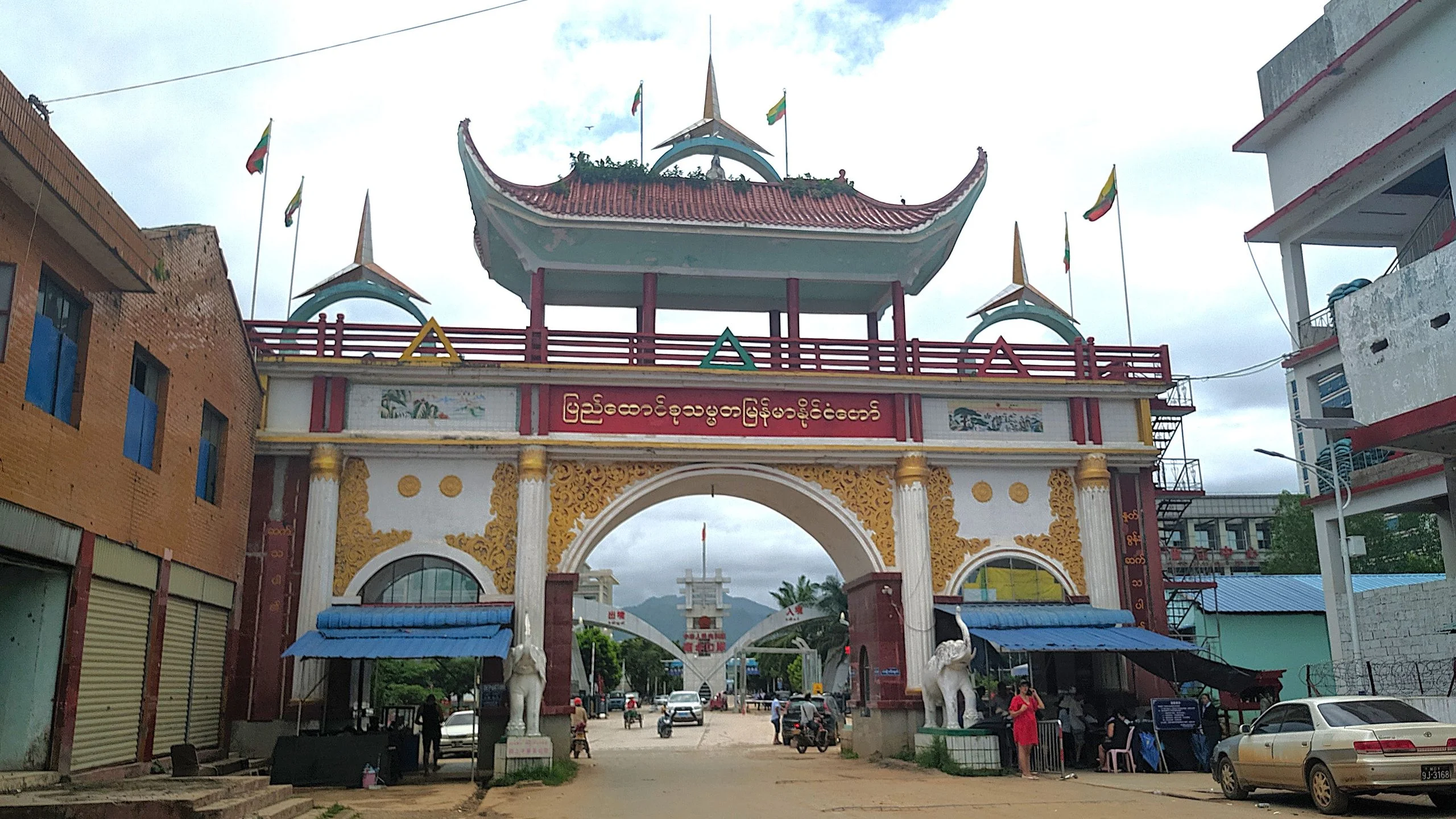
The execution of eleven members and close associates of the Ming family – one of the four “big” Chinese families including the Bai, Wei, and Liu families – in Wenzhou in February 2026 was an important demonstration that the People’s Republic of China (PRC) does not tolerate any cross-border criminal activities committed by Chinese citizens across the border in Laukkai, which is the capital of the Kokang self-administered zone located in the northern part of Shan State in Myanmar (HK01, 26 February 2026).
Starting from 2009, the four “big” Chinese families not only migrated their core members from the Chinese mainland to Laukkai but also built up their business empires, including the transformation of opium production to methamphetamine manufacturing, the establishment of hotels and casinos, and the “contracting out” of other businesses, notably scam operations, to subordinates and opportunists who coerced and kidnapped many mainland Chinese citizens to work in scam compounds.
Origins of the Kokang power shift
The origins of the four “big” families could be traced back to the Myanmar military’s operation against the Myanmar National Democratic Alliance Army (MNDAA), an ethnic Chinese insurgent army that had controlled the Laukkai areas from the 1980s to 2009 (BBC News, 29 January 2026). The MNDAA was formed in 1989; its leader Pheung Ka-shin left the Communist Party and formed his own group. In 2009, the MNDAA clashed with the Myanmar armed forces, after which the influence and manpower of the anti-government rebel groups were curbed. Most importantly, in 2009, an internal power struggle within the MNDAA led to a split in which the Ming, Bai, Wei, and Liu families filled the political vacuum. The Ming and Bai families became the powerholders driving economic development in Laukkai by both legal and illegal means. Pheung Ka-shin died in 2022, and his son Peng Deren succeeded him as the commander of the MNDAA.
Rise and fall of the Ming syndicate
The Ming family emerged after the power struggle with the MNDAA; its leader Ming Xuechang and his siblings set up the Crouching Tiger Villa, where there was a mixture of hotels, casinos, money-laundering activities, prostitution, and scam operations. The scam operations were conducted so openly that the Myanmar military, after listening to the concerns and lobbying efforts from PRC police and diplomats, began to warn the family’s core members.
A meeting was held between the Myanmar authorities and the four big families on the need to tackle scam syndicates and scam-related crimes. Sensing the danger of a government-led crackdown, in October 2023, the Crouching Tiger Villa, led by Ming’s daughter Ming Zhenzhen, tried to transfer the scam operators and those employees who were kidnapped and coerced to work in the scam syndicates to another “safe” place. In the process of changing the scam operational base, seventy to one hundred kidnapped Chinese citizens attempted to escape, but four of them were killed and four others were injured. Rumours were rife that those who were killed included mainland Chinese undercover police from Wenzhou, but this was later denied by the official Chinese media, Xinhua.
The PRC side eventually supported the MNDAA to attack and recapture Laukkai. There were rumours on mainland Chinese social media that the MNDAA suddenly received arms supplies from mysterious sources. Its army managed to capture the capital of Laukkai, where it arrested the key members of the four families. On 30 January 2024, the Myanmar police formally transferred the key members of the four families to the Chinese police – an extradition process through airlifting the core suspects, who were handcuffed and closely accompanied by Chinese police on the aeroplane (HK01, 6 February 2026).
During the fight against the MNDAA, Ming Xuechang, who was the patriarch of the Ming family, was said to have committed suicide after being captured (Wen Wei Po, 30 September 2025). But there was also a rumour saying that he had contacted a group of mercenaries to help him escape, but there were arguments about the payment and he was subsequently killed.
Regardless of which rumour was correct, Ming Xuechang’s son Ming Guoping and daughter Ming Zhenzhen were also arrested. Ming Guoping was actually a local councillor of the Kokang self-administered leading committee, controlling the police in Laukkai and serving as a key operator of the Crouching Tiger Villa. Believing that their personal connections, or guanxi, with the local authorities were politically strong, the Ming family’s core members harboured an illusion that their mix of legitimate and illegitimate businesses possessed a “protective umbrella.” Both Ming Guoping and Ming Zhenzhen were finally sentenced to death by the Chinese court, as they were deeply involved in scam operations and the deaths of four Chinese nationals at the Crouching Tiger Villa.
Collapse of the Bai empire
The Bai family was led by Bai Suocheng, his son Bai Yingcang, his daughters, and other members (Hong Kong Free Press, 2 February 2026). Bai Suocheng was originally a subordinate of Pheung Ka-shin, but he turned against the latter during the MNDAA’s internal rivalries. The Shenzhen Intermediate People’s Court stated that the Bai family members committed crimes such as “fraud, intentional homicide, intentional injury, kidnapping, extortion and forced prostitution” (Hong Kong Free Press, 2 February 2026). Bai Yingcang was charged with the offence of selling and manufacturing eleven tonnes of methamphetamine, according to the court statement. Bai Yingcang was a deputy bureau chief of the Finance Bureau in Kokang, and he was also a captain of the local militia of the Kokang self-administered region (FTNN News, 2 February 2026). As with the Ming family, the Bai family had at least one core member connected with the local authorities.
The Bai family patriarch, Bai Suocheng, died of illness in prison shortly after the mainland Chinese court sentenced him and his son to death in November 2025. His daughter Bai Yinglan was said to portray herself as a successful businesswoman in Laukkai, and she luckily escaped once her father and brother were arrested. Xinhua News reported in November 2025 that the Bai family opened forty-one parks in which three main financiers were involved in opening scam operations, kidnapping and killing victims, organising cross-border human smuggling, establishing casinos, producing drugs, and cheating money from mainland Chinese citizens (Xinhua News, 4 November 2025). Eventually, six Chinese citizens died and many others were injured.
On 6 February 2026, Bai Yingcang was shown on official Chinese television repenting his wrongdoing, stating that he represented the whole family in apologizing to Chinese citizens and the Chinese government (HK01, 6 February 2026). He admitted that he possessed nothing now, and that he “hated his own ignorance, foolishness, uncontrolled greed and shortsightedness (HK01, 6 February 2026).”
Prosecution of the Liu and Wei clans
The Liu family rose to prominence in December 2021 when its leader Liu Zhengxiang (Liu Abao) was awarded an honorary title for his contributions to “state development” (BBC News, 29 January 2026). Liu was born in Kokang in 1962 and worked with Pheung Ka-shin in the early 1990s to minimize opium production and switch to substitute crops; nevertheless, Liu built up his casino in the early 2000s and benefited politically from the decline of Pheung and the rise of the other three “big” families. In 2018, it was reported that Liu and his associates set up scam parks in Cambodia, combining his illegitimate enterprises with legitimate businesses such as tourism, hotels, real estate, and finance. His Fully Light conglomerate was said to have lucrative businesses in other parts of Myanmar. In December 2023, the Chinese police in Fujian province issued a reward for the capture of Liu.
According to mainland Chinese media, Liu opened seven casinos and was involved in twenty-eight scam operations (HK01, 16 October 2025). He was also enmeshed in drug production and trafficking while portraying himself as a businessman making donations to support charitable work in society (HK01, 6 October 2025). Moreover, to protect his business empire, Liu relied on his own private security personnel in 2015. Two years later, he founded his local militia composed of five hundred officers equipped with weapons to guard various scam compounds, casinos, and vice establishments. In October 2023, the Chinese police arrested another core member of the Liu family, Liu Zhengqi. In October 2024, Liu Zhengxiang was arrested by the Myanmar police during the official crackdown on the four families, leading to his extradition to China.
The fourth family was led by Wei Huairen, who was born in Kokang in 1958. He was originally a member of the Communist Party, but he later left the group and joined Pheung Ka-shin’s MNDAA. Benefiting from the power struggle with Pheung, Wei became a key member of the Laukkai election committee. As Wei aged, he allowed his son Wei Qingtao and daughter Wei Rong to manage his businesses, which gradually expanded to include hotels, casinos, and scam operations. Most importantly, Wei Huairen himself was the chairman of the 1006 Border Battalion Supervision Committee, while his son Wei Qingtao was a member of the supervision committee. As such, the family was part of the local militia dealing with border security, yet it abused political power by engaging in illegitimate businesses.
Multi-stage law enforcement operation
The Chinese police took three years to crack down on the four families. It was reported that they adopted three stages in the crackdown (HK01 News, 4 February 2026). The first stage, from 2021 to 2022, was characterized by police persuading members of the four families to return to the Chinese mainland rather than committing cross-border criminal activities.
They were also warned that their Chinese citizenship and right of abode in the PRC would be revoked. The PRC authorities reportedly adopted strict criteria to deal with the relatives of these families involved in scam operations, affecting their study prospects, military conscription, and applications for civil service positions. In Fujian, public schools were not allowed to admit the children of families enmeshed in scam operations in northern Myanmar. However, the Ming and Bai families remained the “tigers” ignoring government appeals.
The second stage, from 2021 to 2022, was punctuated by the disconnection of telephone lines from Hong Kong, Macau, and Taiwan, as these lines were used by scam syndicates to deceive mainland Chinese victims. The Bank of China in Shenzhen froze the accounts of many Chinese citizens used for money-laundering activities, while an extensive anti-scam education campaign was launched across the Chinese mainland to educate citizens on how scam operations functioned. From 2023 to 2025, Chinese police openly named the four families as being involved in scam operations. The turning point occurred in 2023 when six Chinese nationals were killed in Laukkai.
Structural dynamics of borderland syndicates
From the perspective of analyzing cross-border crime, the four big families demonstrated several critical features.
First, the local authorities in Laukkai and Kokang maintained close connections with the core members of the four families. Their roles were either overlapping or intertwined, rendering the families politically influential. Consequently, they believed that their illegitimate businesses, such as scam operations, drug production and trafficking, prostitution, and money laundering, could be protected by local authorities and their militias or private armies without fear. Indeed, leveraging handsome incomes from illicit enterprises, the families paid bribes to local officials, creating a resilient nexus with local state authorities. If a “protective umbrella” refers to how local state officials protect criminal elements on the Chinese mainland, the same dynamic clearly applied to Kokang and Laukkai in northern Myanmar from 2009 to 2023.
Second, the border between China and northern Myanmar functioned as relatively porous. Human smuggling was conducted with ease along the border from 2009 to 2024. At present, Myanmar and Chinese authorities are tightening control over the border, with the Chinese side enforcing stricter checks on mainland citizens crossing Yunnan province into northern Myanmar. Nevertheless, loopholes persist, and combating cross-border crime relies heavily on joint efforts among customs, immigration, and police authorities on both sides.
Third, ethnic Chinese ties were fully utilized and maximized by the four families. However, by putting all their eggs in one basket, they also maximized the risk to their entire clans. Although a few family members remain at large – including Wei Rong of the Henry Group, Bai Yinglan, Wei Qingsong, and Liu Jiguang – the core leadership of all four families has been either executed or imprisoned, exerting a powerful deterrent effect on regional scam operations and associated illicit enterprises. The trajectory of the four families demonstrates how they leveraged their guanxi (personal connections) to the fullest extent to enrich themselves, victimize Chinese citizens, and extract maximum profit through any means.
State capacity and bilateral deterrence
Fourth, the Myanmar government took decisive action to arrest members of the four big families and extradite them to China, demonstrating that state-to-state cooperation and Myanmar-China collaboration yield positive results in curbing cross-border crime. While critics often label Myanmar as a “weak” or “failed” state, its effective state capacity depends significantly on the political will of its military leaders and police authorities. Under the international spotlight, and particularly under pressure and direct requests from China, Myanmar authorities acted to warn the four families and apprehend offenders involved in scam operations to repair the state’s international standing.
Fifth, the methods employed by the Chinese police to pursue the four families carry significant political weight. Executing the leading figures of these scam operations provided a powerful demonstration effect, confirming that cross-border crime can be systematically curbed through resolute political determination and close law enforcement collaboration between China and Myanmar. Such police cooperation effectively combats cross-border crimes committed by unethical business figures and syndicates that have victimized individuals across China and Southeast Asia.
In conclusion, the mechanisms through which cross-border crimes were perpetrated by ethnic Chinese syndicates in Kokang and Laukkai – and the subsequent arrest and penalization of their leaders – represent pivotal milestones in regional law enforcement. The case highlights the success of cross-border police cooperation while exposing the complex ties between local militias, corrupt authorities, and predatory criminal families. Moving forward, fostering ethical business practices between northern Myanmar and the Chinese mainland, alongside sustained cross-border police cooperation, will remain essential to dismantling networks involved in drug trafficking, forced prostitution, illegal gambling, human smuggling, kidnapping, torture, and scam operations along the Sino-Myanmar border.
原刊於澳門新聞通訊社(MNA)網站,本社獲作者授權轉載。(原文按此)