



加拿大總理卡尼近期對中國進行了為期三天的訪問,標誌着中加關係在2026年春季開始回暖。
八年前,華為高階主管孟晚舟在溫哥華遭拘留,隨後被引渡到美國,面臨金融詐欺指控。在孟晚舟被引渡到美國之前,中國於2018年12月逮捕了兩名加拿大人康明凱(Michael Kovrig)和斯帕弗(Michael Spavor),他們被指控違反中國國家保密法。
此後中加關係急劇惡化,直至卡尼最近對訪問北京,這是自2017年首次有加國總理訪問中國,有分析形容兩國關係破冰,意義非常重大。
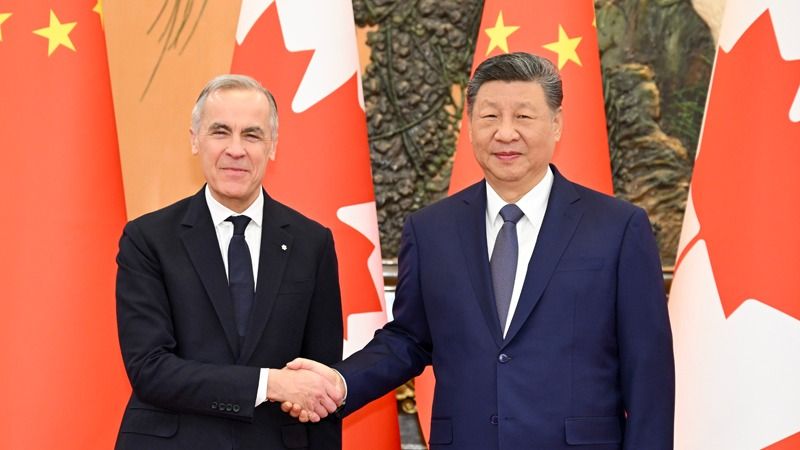
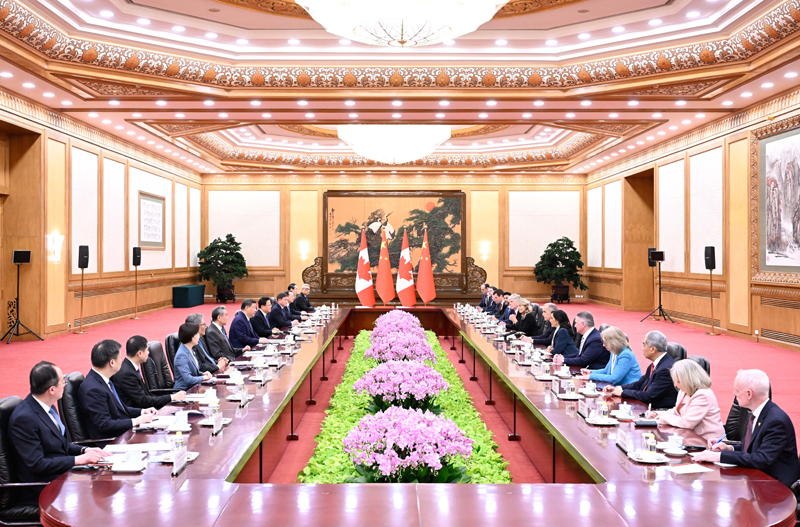
1月16日上午,習近平主席與卡尼會面時後,發表了一系列演講,並對中加關係改善作出正面評價。
首先,中加兩國應是相互尊重的夥伴。自1971年中加建交以來,兩國關係歷經波折,但習近平主席指出,兩國國情不同,但都尊重彼此的主權和領土完整,因此雙方都應以積極的態度處理彼此間的互動。
中加經濟互補 互利共贏
第二,習近平主席表示,中加應成為經貿關係中共同發展的夥伴,實現互利共贏,中國既要追求內部高品質發展,又要奉行對外開放政策。他補充說,中加必須擴大和深化合作範圍,同時減少摩擦。
卡尼指出,中加外交關係歷史悠久,經濟上更有強大的互補性,因此加拿大渴望與中國建立新的戰略夥伴關係,為兩國人民謀福祉。
此外,加方重申堅持一個中國原則,並本着相互尊重和加強合作的精神,與中國在經濟、貿易、能源、農業、金融、教育和氣候變遷等領域開展合作。他認同多邊主義是全球安全、穩定與和平的塑造者。
當被媒體問及加中關係時,卡尼表示,加拿大已同意允許至多4.9萬輛中國電動車進入加拿大市場,最惠國關稅稅率為6.1%。他也指出,中國是世界第二大經濟體,對全球經濟成長的貢獻率達三分之一。
中國是加拿大第二大貿易夥伴和第三大投資來源國。據卡尼稱,加中雙邊貿易額每年高達1,200億美元,加拿大有40萬個就業機會仰賴對華貿易,從草原地區的農民、安大略省和魁北克省的製造商和工程師,以及大西洋沿岸省份和不列顛哥倫比亞省的漁民都受益於加中貿易。
加國打工仔年獲200億美元收入
加拿大人每年透過與中國的貿易關係獲得200億美元的薪資收入。卡尼表示,過去十年間,加中關係疏遠,不但窒礙了投資、抑制了商業發展,甚至使加拿大工人喪失了就業機會。
這一事態發展導致加拿大更加依賴其最大的貿易夥伴美國,為了減少對美依賴,卡尼的新政府將以戰略性、務實性和果斷性的方式重新調整加拿大與中國的關係。
加拿大前政府曾形容中國是「具破壞性」的全球行為者,與卡尼一同訪華的外交部長阿南德被媒體問及是否認同這看法時,她巧妙地迴避問題,但她強調在新的地緣政治環境下,加拿大採取了一項新外交政策,未來十年間將非美國貿易額至少提高到50%,實現加拿大貿易夥伴多元化。
中加關係較中美更可預測性
當被記者問到中國是否比美國更可預測、更可靠時,卡尼表示,他與習近平主席及中方的會晤都圍繞着如何在不同意見中合作、如何尊重彼此差異展開,這種持續坦誠的對話最終將促成與中國建立更可預測、更有效的關係。
其次,兩國致力於推動經貿關係成果,包括舉行中加經濟金融戰略高階對話、召開中加經貿聯合委員會會議、簽署《中加經貿合作路線圖》、透過重振的中加農業聯合委員會開展合作、啟動部長級能源對話以支持雙邊清潔能源和常規能源投資,以及管理雙邊民用核能發展。
從地緣政治角度來看,加拿大和中國不再像過去那樣,因孟晚舟、康明凱和斯帕弗事件的政治遺留問題而陷入尷尬的僵局。加拿大卡尼政府變得更加務實和戰略性,尤其是在美國總統特朗普將加拿大視為美國第51個州的情況下。
吞併格陵蘭引加國領導層警覺
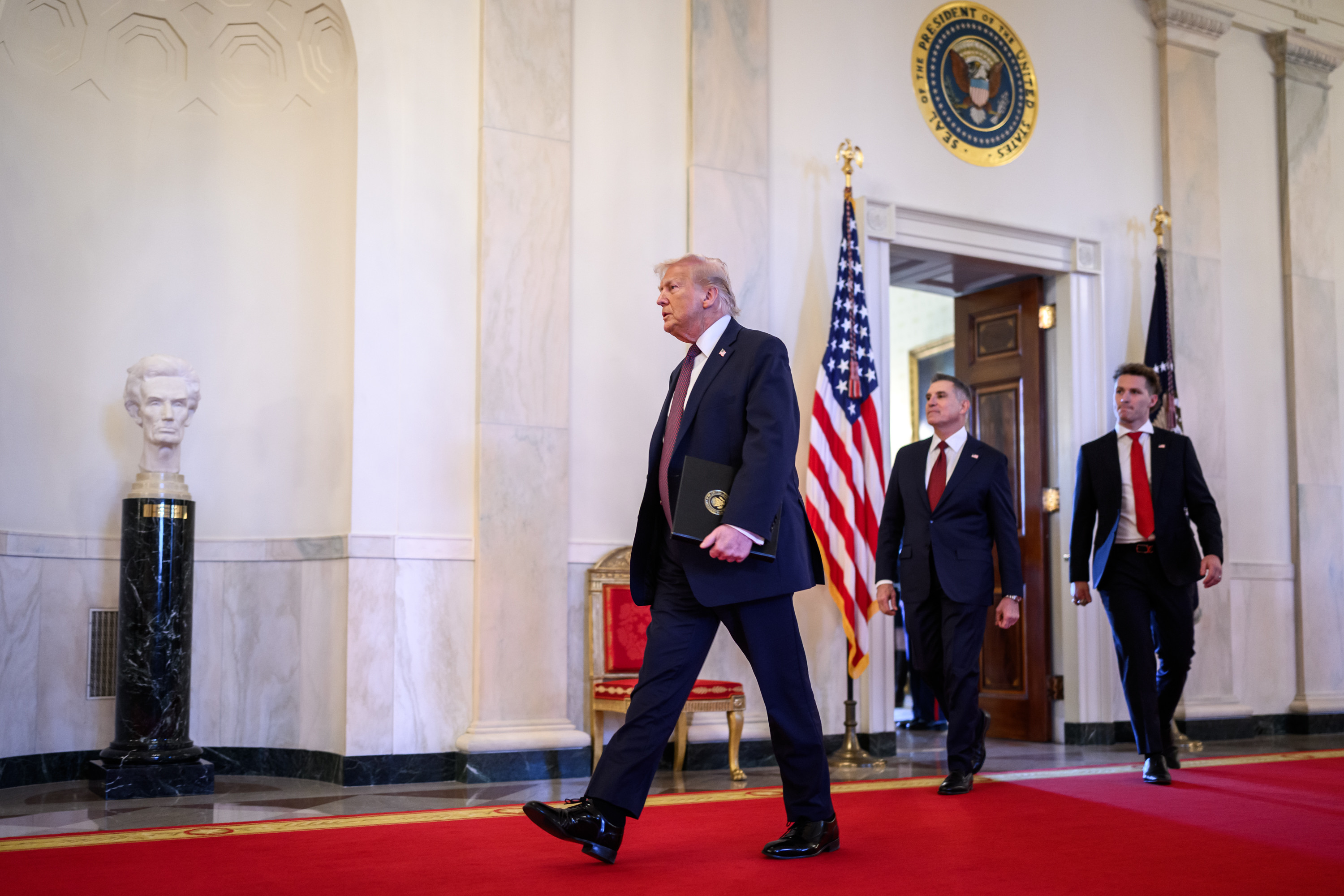
美國近期試圖吞併格陵蘭島的舉動似乎引起了加拿大領導層的警覺。儘管加拿大也可以被視為美國的後花園,但其與美國在資本主義意識形態上的親和性,以及其西式民主制度意味著美國不必將加拿大視為意識形態上的敵人。
然而,在美國優先政策的背景下,加拿大認為有必要推動中加關係緩和,以保障加拿大的就業,造福加拿大社會和經濟,並遏制美國日益增強的經濟影響力。
從依附型發展的角度來看,中加關係緩和顯示加拿大試圖減少對美國的經濟依賴,並使其貿易關係多元化,轉向非美國夥伴,尤其是中國。所謂「中國威脅論」曾在一些加拿大保守派人士中盛行,但卡尼政府現在認為這種說法明顯誇大其詞。
卡尼曾任加拿大央行總裁(2008-2013)和英國央行行長(2013-2020),是一位務實的經濟主義者,他對華新政策自然、戰略性且經濟明智,着眼於加中互利共贏。
電動車換油菜籽 中加互削關稅
加拿大取消對中國電動車100%的進口關稅,成為中國降低對加拿大油菜籽關稅的重要交換條件。卡尼承認,加拿大需要借鏡中國的創新技術來發展自身的電動車產業。
兩國聯合聲明不僅反映了加中兩國務實的經濟態度,也反映了兩國對國際組織角色的重新重視。在美國退出部分國際組織之際,中加兩國透過國際組織鞏固關係意義重大,顯示美國的孤立主義和自我保護主義政策不得人心。
加拿大認為,在維護全球化活力和繁榮的同時,也應該遵循以規則為基礎的國際秩序,並積極擁抱和參與中國事務。永續發展、跨國犯罪管制等其他務實的合作領域,是加中兩國超越意識形態分歧、推動卓有成效合作的途徑。
卡尼政府明確反對唐羅主義
此外,卡尼政府明確反對特朗普版本的門羅主義;儘管加拿大有時被視為美國的後院,但加拿大仍然是一個自主主權國家,必須在經濟、政治和意識形態上更加獨立於美國的影響。
加拿大與非美國經濟夥伴建立更多元化的關係,以經濟務實主義作為對外關係的核心,意味加拿大不再是美國的經濟追隨者,也不再將中國視為經濟、政治和軍事上的威脅,而中國亦順理承章成為加拿大這項新的地緣政治戰略和經濟務實主義的重要組成部分。
Sino-Canadian rapprochement and its geopolitical implications
The recent three-day visit of Mark Carney, the Canadian Prime Minister, to China has marked the Sino-Canadian rapprochement in early 2026, eight years after the controversy over Meng Wanzhou, a top executive of Huawei, who had been detained in Vancouver and then extradited to the US for alleged financial fraud charges. The transfer of Meng to the US took place prior to China’s arrest of two Canadians, Michael Kovrig and Michael Spavor, in December 2018 for allegedly being involved in the violation of state secrecy law. Since then, Sino-Canadian relations took a turn for the worse until the most recent pathbreaking visit of Prime Minister Carney to Beijing, where he met President Xi Jinping and where both sides signed a Joint Statement marking Sino-Canadian rapprochement with important economic and geopolitical implications.
During the meeting with Mark Carney on the morning of 16 January, President Xi Jinping made a number of remarks. First, both China and Canada should be partners respecting each other. After the diplomatic ties between China and Canada were established in 1971, Sino-Canadian relations went through ups and downs. Still, according to President Xi, both countries have different national circumstances with mutual respect for each other’s sovereignty and territorial integrity. As such, both sides adopt a positive approach to dealing with their interactions.
Second, President Xi said that China and Canada should be partners pursuing shared development in economic and trade relations, with a win-win situation in which China pursues quality development internally and an open-door policy externally. He added that China and Canada must broaden and deepen their scope of cooperation while “shortening the list of irritants” (Ministry of Foreign Affairs website, 16 January 2026). Third, President Xi emphasised that both China and Canada should enhance people-to-people interactions and understanding in the areas of education, culture, tourism and sports at national and subnational levels.
Fourth, the Chinese President emphasised the importance of practising multilateralism and building a community with a shared future for humanity. As such, China is eager to enhance communication and coordination with Canada in international organisations, such as the UN, G20 and APEC.
Canada’s pragmatic approach and economic engagement
Carney remarked that both Canada and China have a long history of friendly engagement and strong economic complementarity. As such, Canada is eager to build up a new strategic partnership with China to deliver benefits to the peoples of the two countries. Moreover, the Canadian side reaffirms the adoption of the one-China principle, while working with China in the spirit of mutual respect and enhanced cooperation in the areas of economy, trade, energy, agriculture, finance, education and climate change. He agreed that multilateralism is the shaper of global security, stability and peace.
When asked by the media about Canada’s relations with China, Carney said that Canada has agreed to allow up to 49000 Chinese electric vehicles to enter the Canadian market, with the most favoured nation tariff rate of 6.1 per cent – a return to the level of trade that had existed prior to the period of Canada–China trade frictions. He also remarked that China is the world’s second-largest economy, contributing to one-third of global growth.
China is Canada’s second-largest trade partner and third-largest investor. Two-way trade between Canada and China, according to Carney, amounts to US$120 billion yearly, with 400,000 careers in Canada supported by trade with China. He revealed that farmers in the prairies, manufacturers and engineers in Ontario and Quebec, and fish harvesters in Atlantic Canada and British Columbia are all supported by Canada’s trade with China. Twenty billion US dollars in wages are earned each year by Canadians – a result of the existing trade relations between Canada and China. According to Carney, this relationship, which was distant for a decade, held back investment, stalled business growth and even cost Canadian workers opportunities.
This development had the consequence of leaving Canada even more dependent on Canada’s largest trading partner, namely the US, although Carney in his press briefing diplomatically did not name it. He said that this is why after the national election, his new government recalibrates Canada’s relations with China “strategically, pragmatically, and decisively.”
When asked by the media whether her remarks on China have softened compared with her past comment on China as “a global destructive power,” Canada’s Foreign Minister Anita Anand avoided the question skillfully, but she stressed that the new government of Canada with a new Prime Minister has adopted a necessarily new foreign policy of diversifying Canada’s trading partners and expanding non-US trade to at least 50 per cent in the coming ten years and under the new geopolitical environment. Obviously, Canadian foreign policy towards China has changed with the electoral victory of the Liberal Party led by Mark Carney.
The Joint Statement and strategic cooperation
Asked by Canadian reporters whether China is a more predictable and reliable partner to Canada than the US, Carney remarked that his meetings with President Xi and the Chinese side were all about how to cooperate amid different opinions, and how to respect each other’s differences – a persistent and frank dialogue leading to a “more predictable and effective relationship” with China. Carney frankly told the media that Canada’s relations with the US are much more multifaceted, much deeper and much broader than Canada’s relations with China. But in terms of Canada’s recent relations with China, Carney admitted that China is a more predictable partner with fruitful results. Reading between the lines of what Anand and Carney told the media, Canada has realised the importance of a more durable, pragmatic, stable and predictable relationship with China.
First, both President Xi and Prime Minister Carney affirmed the principles and policies guiding Sino-Canadian relations with the advancement of a new strategic partnership characterised by mutual respect, equality and mutual benefits.
Second, both countries are committed to advancing outcomes in economic and trade relations, including the high-level China–Canada Economic and Financial Strategic Dialogue, the meetings of a renewed China–Canada Joint Economic and Trade Commission, the signing of the China–Canada Economic and Trade Cooperation Roadmap, the cooperation through a revitalised China–Canada Joint Agricultural Committee, the launching of a Ministerial Energy Dialogue to support bilateral investment in clean and conventional energy, and the management of bilateral civil nuclear energy development.
Third, China and Canada set up a Financial Working Group to enhance bilateral engagement on financial issues, including the implementation of the Third Agreement to Extend and Amend the Chinese Yuan and Canadian Dollar Bilateral Currency Swap Arrangement between the People’s Bank of China and the Bank of Canada.
Fourth, regarding public security and safety, both China and Canada strengthen their law enforcement cooperation to combat corruption and transnational criminal activities, such as telecommunication and cyber fraud, and the trafficking of illegal synthetic drugs. Police cooperation between the two countries will be naturally strengthened.
Fifth, China and Canada are committed to enhancing people-to-people interactions and cultural exchanges. The two countries will reignite the meetings of the China–Canada Joint Committee on Culture. Both sides will also increase their cooperation in education, arts, heritage and creative industries at the legislative and subnational levels. Media professionals will also be facilitated in their two-way travel between China and Canada.
Sixth, China and Canada reaffirm their commitment to pursuing multilateralism, supporting the role of the UN in dealing with international affairs, and improving the rules-based multilateral trading system underpinned by the World Trade Organization, and the mutual collaboration to implement the UN 2030 Agenda for Sustainable Development. Canada also takes note of China’s Global Governance Initiative and supports its hosting of the 2026 APEC, while working together in the enhancement of exchange and cooperation within G20. Both sides also vow to work closely on the Ministerial on Climate Action, the China Council for International Cooperation on Environment and Development, the Kunming–Montreal Global Biodiversity Framework, and the Memorandum of Understanding on Climate Change Cooperation and the Memorandum of Understanding Concerning Environmental Cooperation.
Cooperation in infrastructure, energy and agriculture
Seventh, other areas of cooperation embrace the implementation of the Memorandum of Understanding between the Ministry of Housing and Urban-Rural Development of China and the Department of Natural Resources of Canada, and the Ministry of Forests of British Columbia on Cooperation in Modern Wood Construction. Both sides decide to collaborate in the areas of energy, food security, animal and plant health, customs and quarantine, and hygiene for pet food to be exported from Canada to China.
From the geopolitical perspective, gone were the days when Canada and China were uncomfortably locked in the political legacies of the cases of Meng Wanzhou, Michael Kovrig and Michael Spavor. The Carney government in Canada has become far more pragmatic and strategic, especially in the face of President Donald Trump treating Canada as the 51st state of the US. The recent attempt by the US to claim Greenland appears to have alarmed the Canadian leadership. Although Canada can also be regarded as the “backyard” of the US, its capitalist ideological affinity with the US and its Western-style democratic system mean that Washington does not have to see Canada as an ideological foe.
However, amid the American First policy, Canada has felt that it is necessary to move towards Sino-Canadian rapprochement for the sake of safeguarding jobs in Canada, benefiting Canadian society and economy, and curbing the dominant economic influence of the US.
From the perspective of dependent development, the Sino-Canadian rapprochement points to Canada’s attempt to reduce its economic dependency on the US and diversify its trade relations to clearly non-US partners, notably China. The so-called “China Threat,” which became popular in the psyche of some Canadian conservatives, is now regarded by the Carney administration as clearly exaggerated.
As a former governor of the Bank of Canada (2008–2013) and a former governor of the Bank of England (2013–2020), Carney is an economic pragmatist, and his new policy towards China is natural, strategic and economically wise, focusing on the win-win situation between Canada and China.
Economic pragmatism and complementary interests
Carney’s pragmatism was echoed by former Canadian Prime Minister Jean Chrétien, who has described Canada’s relations with China as “complementary,” as both countries can and should use their vast land, resources and massive populations to help each other and grow in peace and prosperity.
The removal of the 100 per cent tariffs on Chinese electric vehicle (EV) imports to Canada has become a significant measure in exchange for China’s lowering of its tariffs on Canadian canola. Carney admitted that Canada needs to build its EV industry by learning from China’s innovative technology. Carney’s idea is to welcome Chinese investment in Canada’s automobile industry, thereby stimulating job creation in Canada. Following the European Union’s agreement with China on the regulation and entry of Chinese EVs into Europe, the most recent Canadian move can be regarded as a progressive development in China’s exports of electric vehicles to Canada. In return, China is going to import more Canadian canola seeds, whose export to China amounted to US$3.4 billion in 2024.
The Joint Statement of both countries illustrates not only the economic pragmatism of Canada and China, but also their renewed focus on the role of international organisations. At a time when the US is withdrawing from some international agencies, the Sino-Canadian consolidation of their relations through international organisations is a significant move, pointing to the unpopularity of US isolationism and self-protectionism.
Both Canada and China continue to support global economic liberalisation and multilateralism. A rules-based international order, for Canada, should and must be followed, while embracing and engaging China to keep globalisation alive and thriving. Sustainable development, cross-border crime control and other practical areas of cooperation are ways in which Canada and China can work together fruitfully regardless of ideological differences.
Furthermore, the Carney administration clearly rejects the Trump version of the Monroe Doctrine; although Canada can be regarded as the US “backyard,” Canada remains an autonomous and sovereign state that must become more economically, politically, and ideologically independent of US influence.
Geopolitical and economic implications
In conclusion, economic pragmatism has prevailed in the most recent development of Sino-Canadian relations, with the Canadian side switching its dependent development on the US to more diversified relations with non-US economic partners. China is part of this new Canadian geopolitical strategy and economic pragmatism. The triangular economic relations between Canada, China and the US have changed; Canada is no longer an economic follower of the US that regards China as a threat economically, politically and militarily.
Putting aside political and ideological differences, the new Mark Carney administration has triggered Canada’s rapprochement with China, with important geopolitical and economic implications. Ottawa is now adopting a new foreign policy of pursuing economic diversification, minimising its dependent development on Washington, navigating its ideological differences with Beijing through mutual dialogue and understanding, and adopting economic pragmatism instead of blindly following any ideological dogmatism.
原刊於澳門新聞通訊社(MNA)網站,本社獲作者授權轉載。(原文按此)