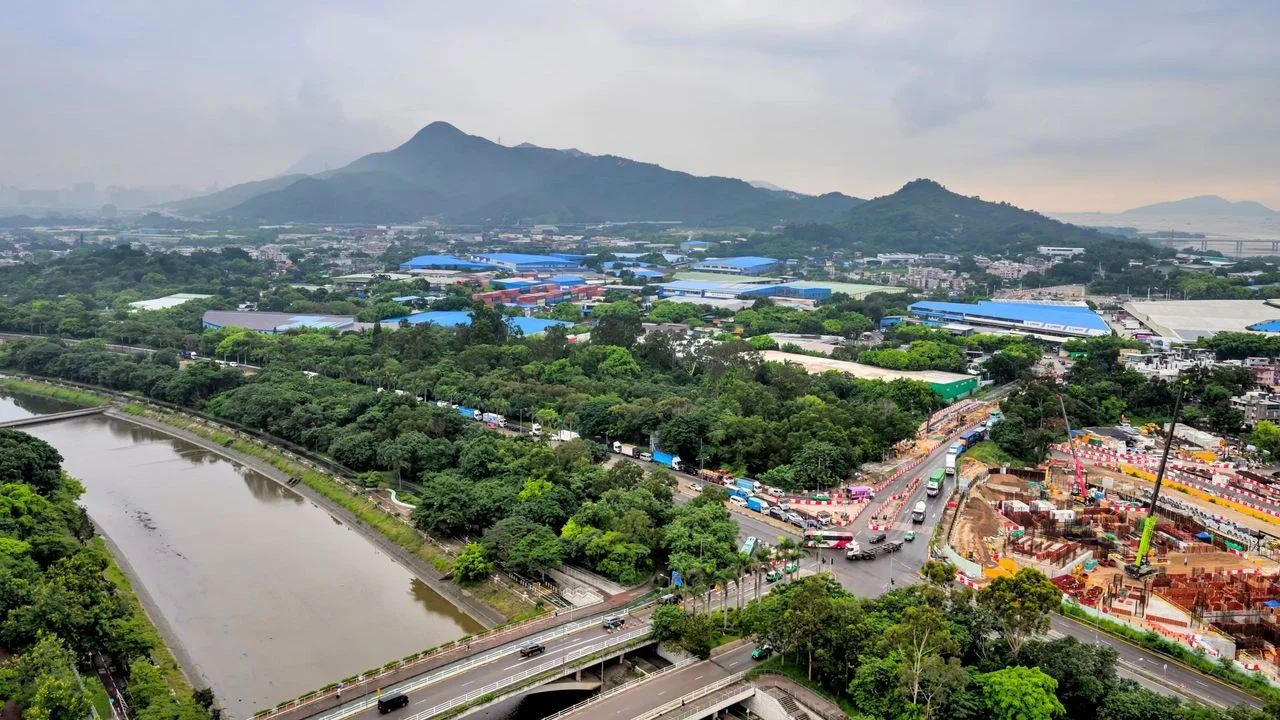


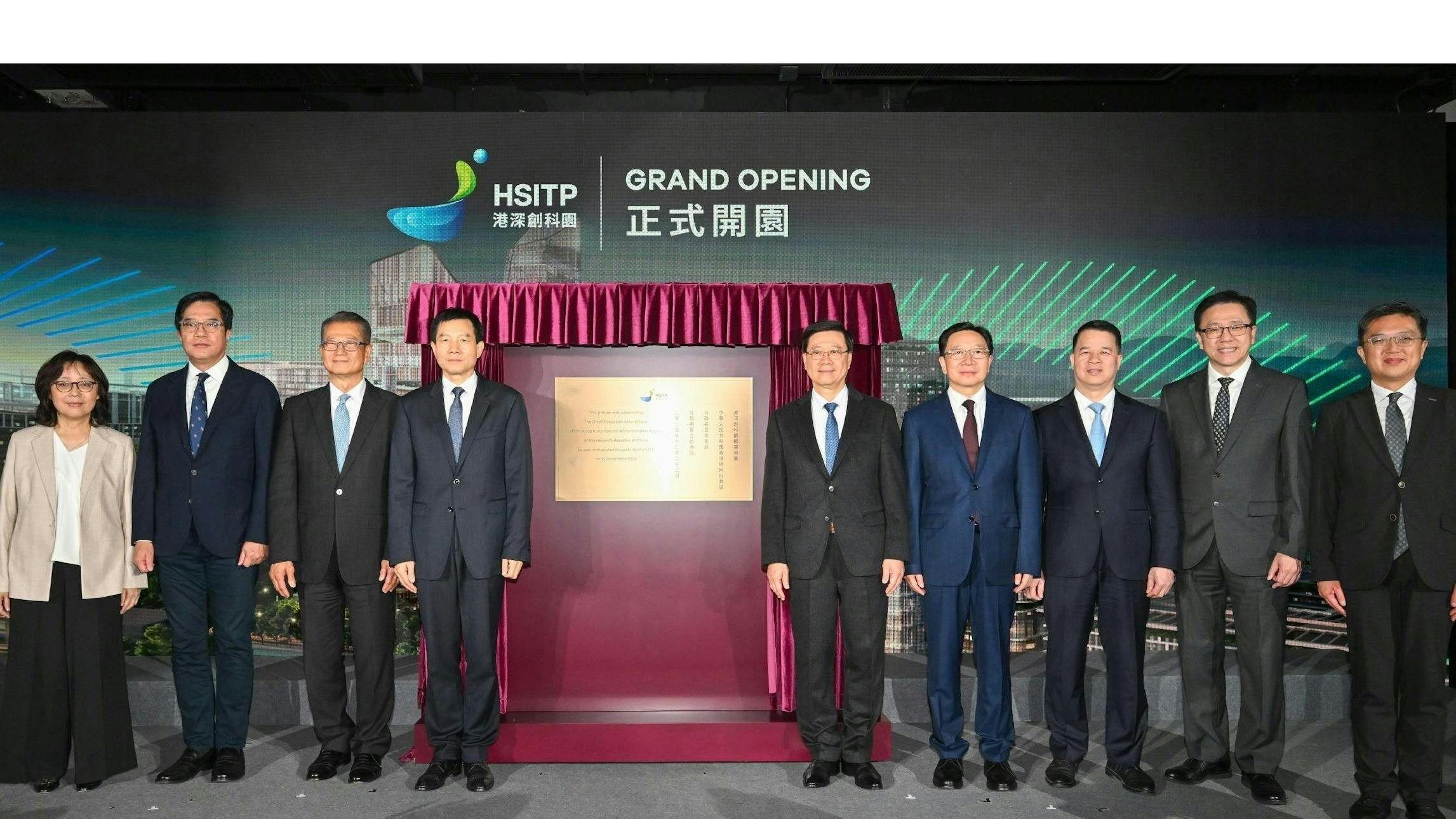

2025年12月22日,河套港深創新及科技園(香港園區)正式啟用。這間跨國創新科技園是香港內前所未有的「特區中特區」,它匯聚內地人才和企業,加強港深兩地的創新交流。
這次開園標誌着香港科技發展如何善用深圳的科技專長和知識優勢,以及香港的科技政策如何促進港深聯合科研。港澳辦常務副主任徐啟方在開園儀式上表示,園區的建設符合習近平主席提出的國家發展戰略。
徐啟方強調香港加強軟體與硬體聯繫的重要,又指香港應加強與前海、南沙等內地其他區域的關係,以推動產業鏈和供應鏈的發展,提升科技創新競爭力,從而在粵港澳大灣區實現互利共贏。
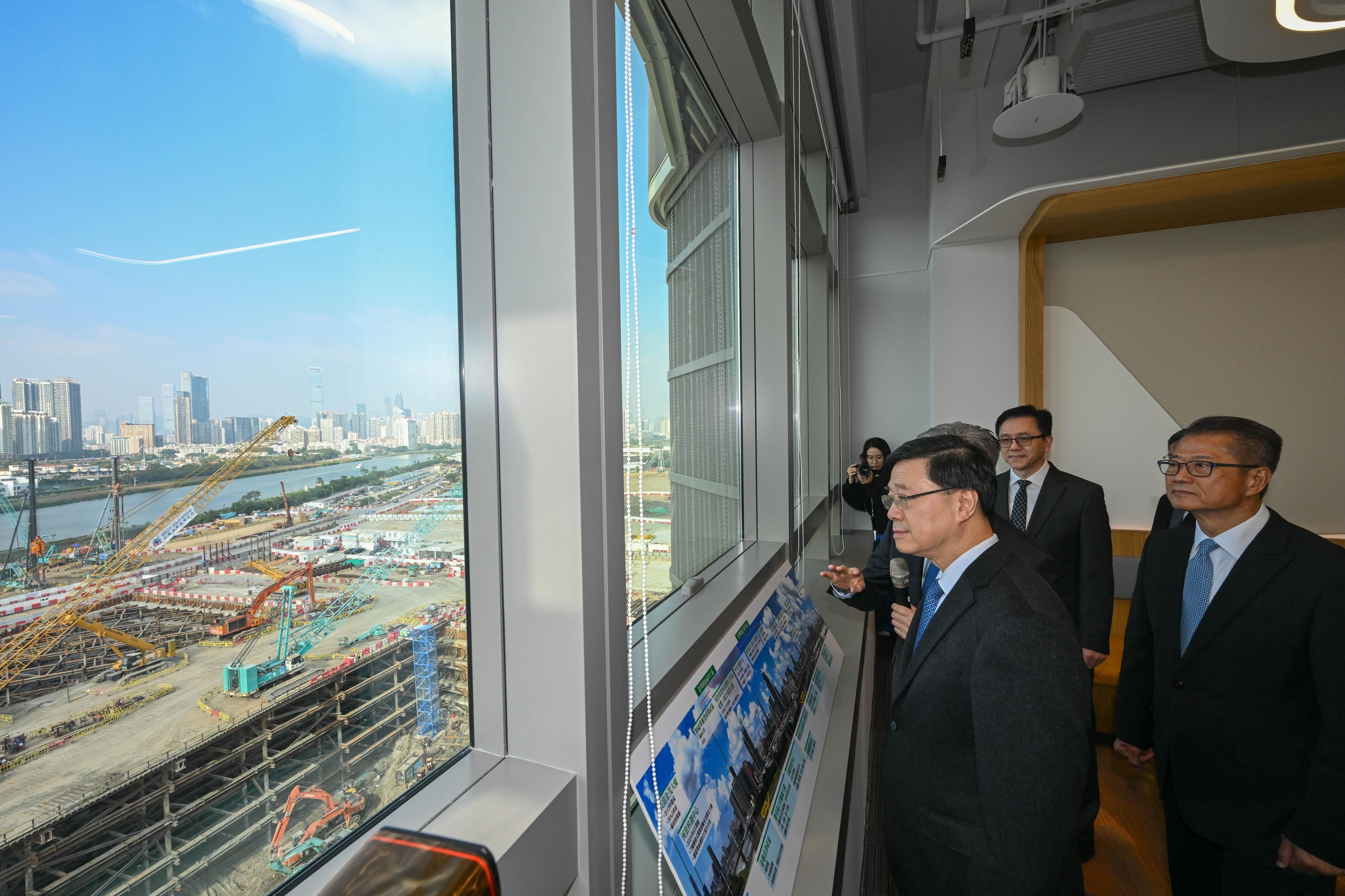
此外,連接香港園區2號和3號大樓與深圳新皇崗口岸南方的接駁橋已開始動工,相關的建設費用由兩地共同承擔,預計於2027年完工。

園區已吸引60家中外企業進駐
資料顯示,超過60家海外、內地及香港企業租賃了位於香港園區第一期的兩座濕實驗室綜合大樓,出租率接近80%,有四分之一來自海外,它們不僅對中國內地市場感濃厚的興趣,也覬覦亞洲市場商機。
第一期其餘五座大樓將於2027年完工,第二期規劃也最終定案。兩期發展總面積將達200萬平方米,比原先規劃擴大了七成。
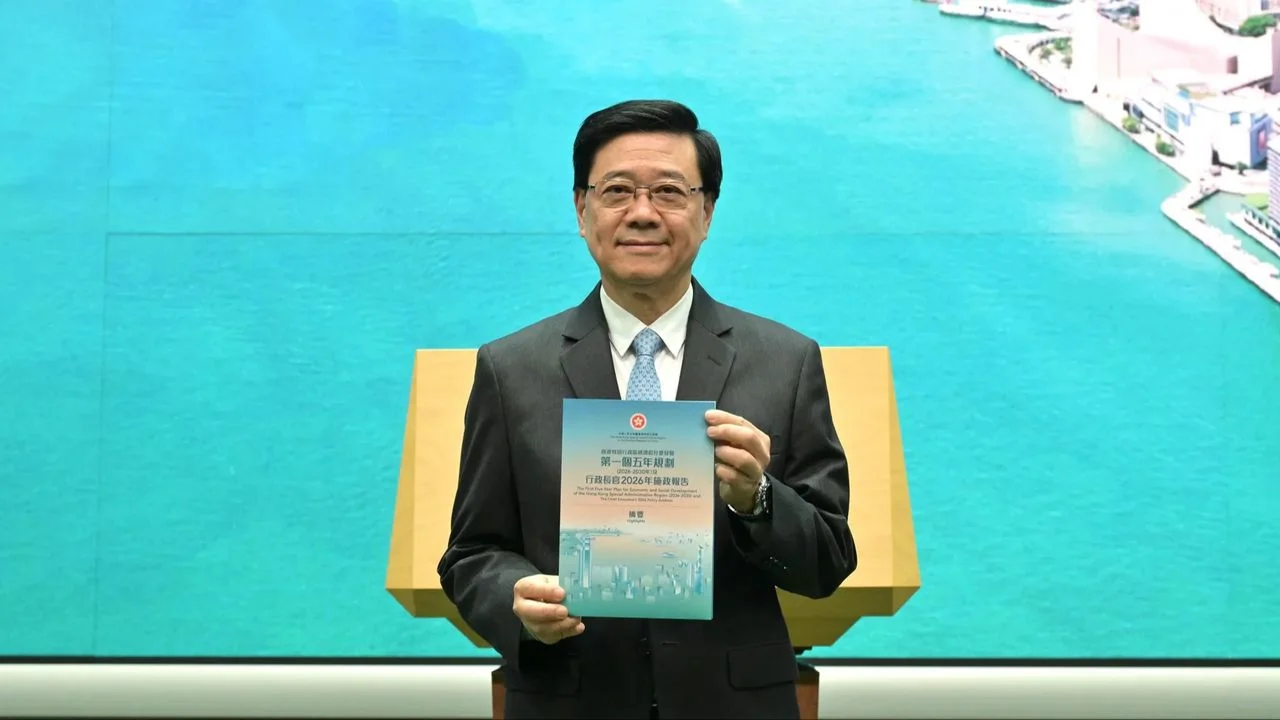
香港園區預計將涵蓋生命健康科技、人工智能與數據科學等領域。據行政長官李家超透露,科技園區的目標是推動有序發展,整合創新和技術價值鏈,並促進上游、中游和下游產業的跨國協同發展。
在大陸當局強調發展新質生產力之際,香港政府開始探索如何透過採取新的科技創新政策、更深入地與深圳合作,以及利用大陸科技企業的巨大專業知識和潛力,推進新質生產力的發展。
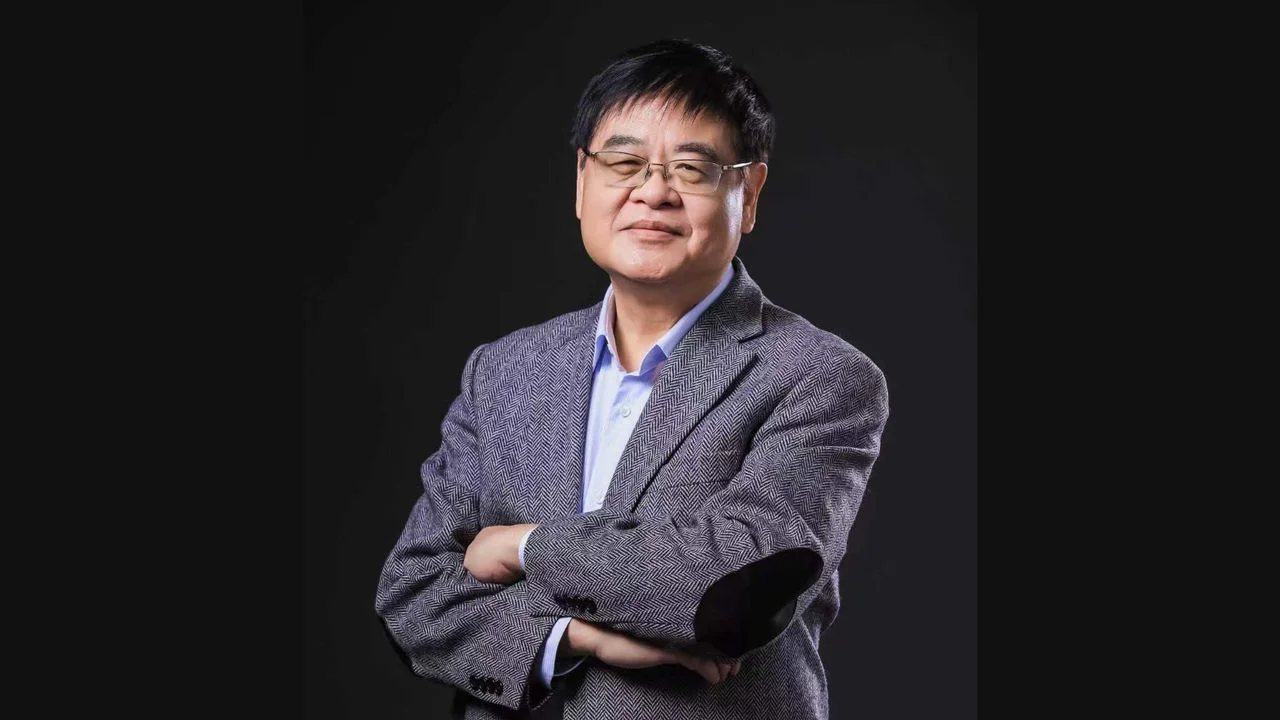
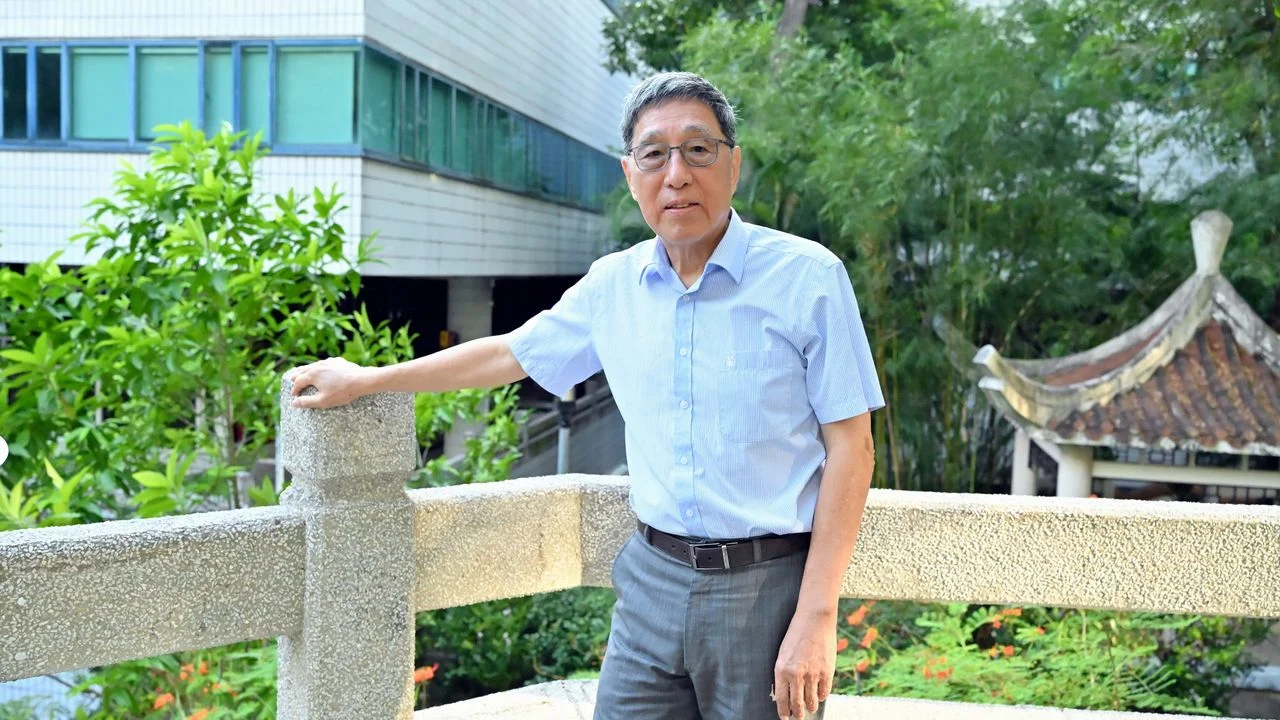
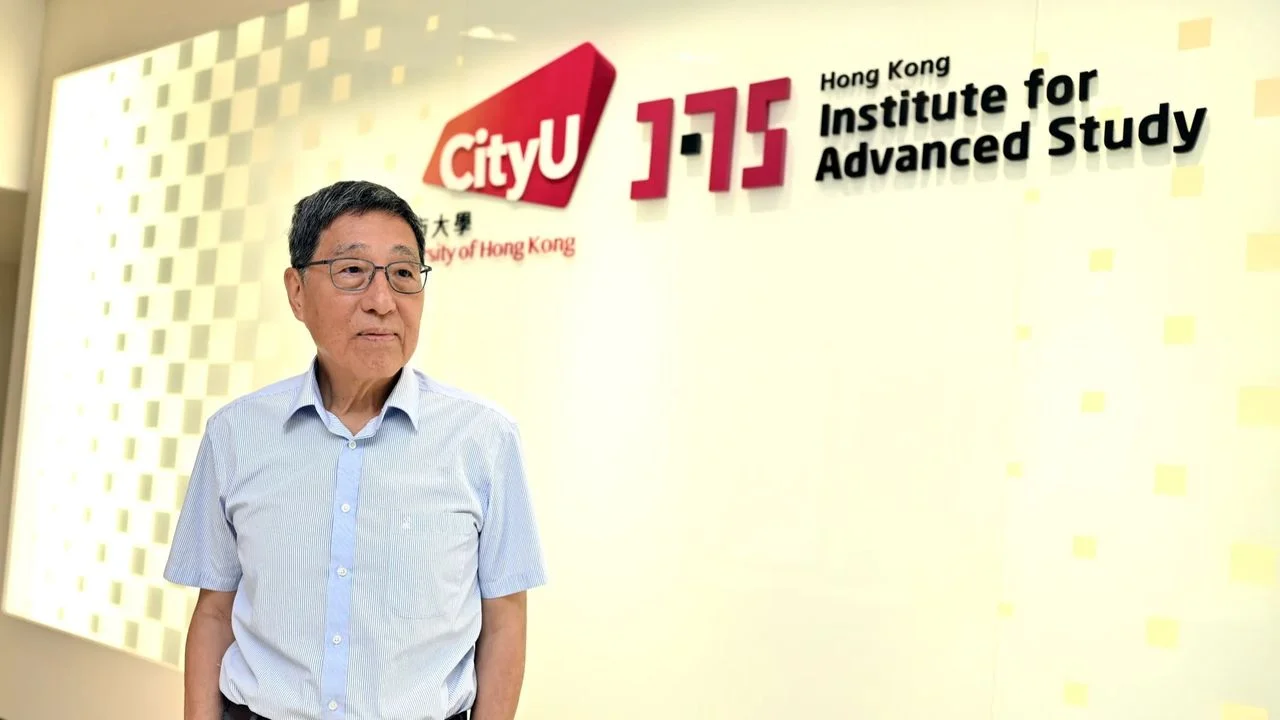
事實上,港深創新及科技園深圳園區近年致力提升科研實力,未來兩市園區將發揮互補作用。2025年9月,由知名美籍華裔數學家丘成桐創立的河套數學與交叉學科研究所(深圳)正式成立。該研究所位於深圳園區,專注於應用數學研究。丘氏強調,研究所招募了17位頂尖人才,並計劃在2025年底前將研究團隊擴充至50至60人。
創新科技及工業局局長孫東表示,人才、貨物和科技數據的流動目前進展順利,香港和深圳已就內地跨境生物樣本運往香港的物流安排達成基本共識。顯然,技術、科學和工藝制作的細節仍須精心制定和落實,以確保跨境科技創新與合作的順利進行和成功實施。
須引資2000億元 公私合作不可缺
孫東表示,當務之急是為香港園區第一期工程預留足夠的發展資金,若要完成香港園區的後續工程,則需要2000億港元,而政府是無法承擔如此龐大的投資,因此引入商業資本勢在必行。政府已收到來自商界的27份建議書,這意味着要順利完成香港園區第一期工程,公私合作不可或缺。
香港園區預計將為本地高校培養的博士和博士後研究人員,提供巨大而寶貴的研究機會。一方面,他們與內地科技專家將有很多機會合作和學習,從而在香港和內地高科技人才交流中實現互利共贏,另一方面,他們也將受益於在香港園區投資營運的外資企業的專業知識和經驗。
2025年11月,創科及工業局常任秘書長蔡傑銘透露,政府已撥款240億港元用於公園第一期基礎設施和公共設施建設。此外,連接香港園區與河套的道路和基礎設施網絡也間接投資了143億港元。
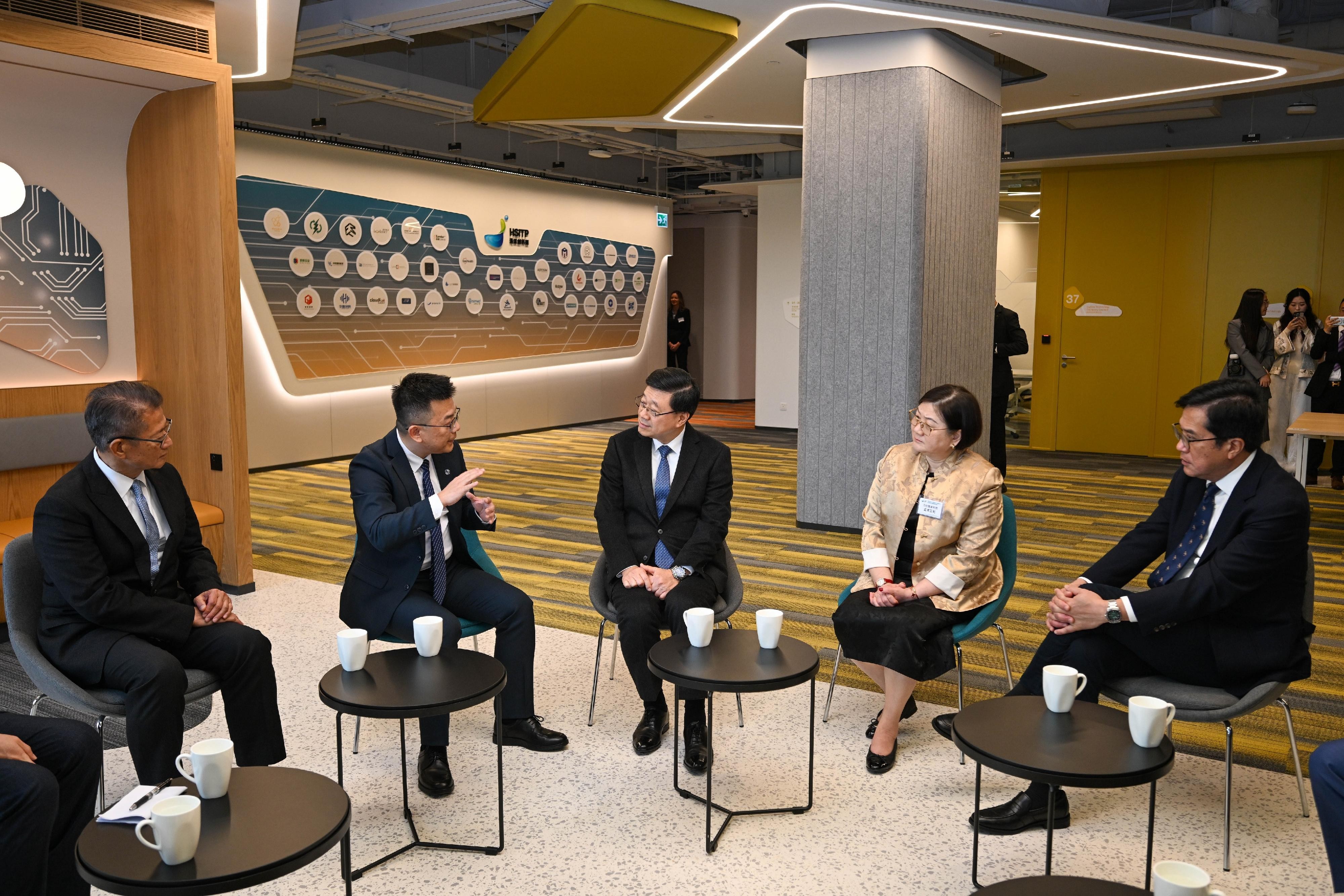
目前新進駐香港園區的企業包括廈門鈉離子電池生產商海辰儲能科技,其出貨量排名全球第二。該公司聯合創始人王鵬程表示:「經過一年多的評估,我們最終選擇香港作為基地,因為它完美地將國際研發資源與內地產業優勢相結合。」
深圳元化智能科技的手術機器人公司也決定在園區設立第二總部,並計劃生產智能醫療設備,包括手術機器人。
香港園區及河套園區的進一步發展將取決於三個因素。首先,如何鼓勵和維持私部門投資將決定香港園區第一期工程的完成情況、以及其未來的擴展。
橫琴合作區異同
其次,新一屆立法會需要盡快審查並批准政府提出的法案,以建造河套地區周邊重要的交通基礎設施。換言之,北部都會區的開發是香港園區進一步擴展的一部分。第三,位於香港園區南側的新田科技城的興建與開發也必須加快。
與橫琴粵澳深度合作區(簡稱橫琴合作區)相比,河套港深創科園既有相異之處,也有共通點。首先,橫琴合作區發展迅速,吸引了許多澳門居民遷居至此。而香港園區的行政措施將為內地科技專家的進入提供便利。
其次,香港園區專注於科技發展,而橫琴合作區則着重於澳門經濟擺脫對博彩業過度依賴的四大關鍵領域,分別為中醫藥、展覽中心、科技研究和現代金融服務。
香港園區和橫琴合作區的發展重點都有共通點,就是兩者均強調科技發展,但後者覆蓋的領域更為廣泛。第三,商界投資對於這兩個特區中的特區至關重要,因此公私合作是其順利發展所必需的。
第四,兩者都強調了兩地政府的必要領導作用,並且是今後將港澳兩地發展規劃與國家五年規劃對接的必要組成部分。
香港超級樞紐 連結中外市場
總而言之,港深創科園自2025年12月開園以來,取得了突破性進展。這不僅標誌着香港與深圳乃至大灣區的融合更加深入和迅速,也反映了香港作為超級樞紐的重要作用,一方面連結內地企業與其海外市場,另一方面連結海外企業與其內地及亞洲市場。
一旦部分內地企業在香港園區站穩腳跟,它們與港方的科研合作與交流將得到促進和加強,從而推動香港科技創新進一步發展。
未來幾年,預計會有更多香港高校遷至北部都會區的大學校區,不僅將進一步支持香港園區的發展,也將促進深圳園區的發展,從而實現港深科技協同發展的互利共贏。
Shenzhen-Hong Kong Science and Technology Innovation Cooperation Zone in Hetao: a special zone within the HKSAR
On December 22, 2025, when an opening ceremony of the Hong Kong side of the Hetao Shenzhen-Hong Kong Science and Technology Innovation Cooperation Zone was held, this cross-boundary innovation hub represented an unprecedented and special developmental zone within the Hong Kong Special Administrative Region (HKSAR). The zone marks the establishment of a unique science and technology hub within the HKSAR, utilising mainland talents and enterprises across the boundary and strengthening innovative exchanges between Hong Kong and Shenzhen.
During the opening ceremony, Chief Executive John Lee said that the Cooperation Zone would open the area’s transportation network, promote the exchange of mainland science and technology talents with Hong Kong’s counterparts, and consolidate the innovative connections between the HKSAR and Shenzhen.
A bridge has begun its construction linking the technology parks in Hong Kong and Shenzhen. It will serve, according to John Lee, as “a landmark symbol for the ‘one zone, two parks’ vision, connecting the Greater Bay Area’s innovation pulse” (South China Morning Post, December 23, 2025, p. A1). The bridge is technologically, socially, and economically significant because it will connect the Shenzhen Technology Park with the Hong Kong Science and Technology Innovation Park (HKITP), which is called the Hong Kong park.
The bridge’s cost will be shared between Hong Kong and Shenzhen, and it is expected to be completed in 2027.
The opening ceremony witnessed the attendance of the deputy director of the Hong Kong and Macau Affairs Office, Xu Qifang, and the director of the Hong Kong Liaison Office, Zhou Ji. Shenzhen city’s deputy mayor, Luo Huanghao, also participated in the landmark event.
Strategic and political significance
Shortly after John Lee’s duty visit to Beijing, where President Xi Jinping asked the HKSAR to align its developmental plan with the nation’s 15th Five-Year Plan, the opening of the Hong Kong side of the Innovation Cooperation Zone is politically significant, as it represents how the HKSAR’s science and technology development is capitalising on the advantages of science and technology expertise and knowledge in Shenzhen, and how Hong Kong’s science and technology policy is facilitating the joint research efforts of Hong Kong and Shenzhen. In fact, Xu Qifang said at the opening ceremony that the park’s development belongs to the national developmental strategy promoted by President Xi.
During President Xi’s visit to Guangdong in November, when he inaugurated the opening of the National Games, he also mentioned the need for the cities in the Greater Bay Area to cooperate in the areas of technological innovation, infrastructure networks, market integration, and the “soft connectiveness” of rules and mechanisms.
Xu Qifang echoed the Chinese President’s remarks by emphasising the importance of Hong Kong strengthening both “soft” and “hard” connectivity. He also remarked that Hong Kong should consolidate relations with other Mainland zones like Qianhai and Nansha to propel the further development of the industrial supply chain and to enhance the competitiveness of science and technology innovation, creating a win-win scenario in the Greater Bay Area.
The Innovation Cooperation Zone attracted overseas enterprises. More than sixty overseas, mainland, and Hong Kong enterprises signed leases for the two wet laboratory complexes located at the Hong Kong park, enhancing the occupancy rate to almost eighty per cent. The remaining five blocks of buildings will be completed in 2027, which falls into the first stage of science and technology development. The second phase’s planning has just been finalised. The total area covering the two phases of development will occupy two million square metres – an expansion of seventy per cent from the Hong Kong government’s initial plan.
The Hong Kong park is expected to cover life and health technology development, artificial intelligence, and data science. Mr John Lee revealed that the objective of the park is to propel orderly development, consolidate the innovation and technology value chain, and foster cross-boundary and/or cross-border synergy across upstream, midstream, and downstream sectors.
Apart from the development of the Hong Kong park and its connectivity with Shenzhen, the San Tin Technopole is expected to be developed at a much faster pace for the sake of attracting more business investment and providing additional support for Hetao.
Development challenges and progress
At a time when the mainland authorities are emphasising the significance of developing “new quality productive forces,” the Hong Kong leadership has started to explore how such “new quality productive forces” can be advanced further by adopting a new science and technology innovation policy, cooperating with Shenzhen in a more intensive manner, and tapping into the immense expertise and potential of mainland science and technology enterprises.
In fact, it has taken eight years for the Hong Kong park to be established since an agreement with Shenzhen was signed in 2017 to develop the joint science and technology park. Critics said that it took too long for the HKSAR to develop its science and technology policy (see Editorial, Ming Pao, December 23, 2025, p. A2). The Shenzhen side of Hetao has seen more rapid development, but the Hong Kong side has been developing slowly.
In September 2025, the Hetao Institute of Mathematics and Interdisciplinary Sciences, established by renowned Chinese-American mathematician Yau Shing-tung, was inaugurated (Hong Kong Standard, September 10, 2025). The Institute is located at the Shenzhen park and specialises in applied mathematics research. Yau highlighted that the Institute had already recruited seventeen top talents and that it plans to expand the research team members to fifty or sixty by the end of 2025.
Despite the construction of the bridge linking the two sides of the science and technology parks, some details remain to be hammered out, including whether immigration and customs will adopt a single co-location checkpoint or two different customs checkpoints (Ming Pao, December 23, 2025, p. A2). It was reported that a new idea of adopting “a white list” will be used, meaning that mainland science and technology experts will have their names registered and will be allowed to cross the bridge and enter the Hong Kong park easily.
Sun Dong, the Secretary for Innovation, Technology, and Industry, said that the flows of talents, goods, and scientific data are now achieving good progress, and that both Hong Kong and Shenzhen had reached “a basic consensus” on the logistics arrangements for cross-boundary biological samples from the mainland to Hong Kong. Obviously, the details of technical, scientific, and technological operations will have to be formulated and implemented meticulously to ensure smoothness and success in cross-boundary science and technology innovation and collaboration.
Other details will need to be discussed, including the number of post-doctoral researchers and scientists who will work in the Hong Kong park, and the related issue of intellectual property rights of innovative products. In other words, both Hong Kong and Shenzhen will have to fully utilise the comparative advantages of “one park, two districts.”
Financial and private-sector support
Sun Dong told the media that a more imperative issue is to ensure that the Hong Kong park’s development in the first stage will have enough financial resources (Oriental Daily, December 21, 2025). He revealed that HK$200 billion will be required if the rest of the Hong Kong park is to be completed, and that the government cannot sustain such a huge amount of investment. As such, private-sector investment will be necessary. The government has received twenty-seven proposals from the private sector, meaning that public-private partnerships will be necessary for the smooth completion of stage one of the development of the Hong Kong park.
As early as June 2025, Sun Dong told the media that software and hardware would have to work together for the tech zone to be successful. He said: “By software, I mean how we can create a favourable business, scientific research, and exchange environment so that top talent and businesses would be willing to move to Hetao” (Hong Kong Standard, June 26, 2025).
Some overseas enterprises have expressed deep interest in investing in the Hong Kong park. An executive of the Swiss company Spirecut, Frederic Schuind, said that he hoped to use the base in the Hong Kong park to enter the large market of Asia (Ming Pao, December 23, 2025, p. A2). It was reported that one-fourth of the sixty companies in the Hong Kong park are from overseas countries and that they are deeply interested in entering not only the mainland market but also the Asian one.
The Hong Kong park is expected to provide tremendous and precious research opportunities for the doctoral and post-doctoral researchers produced by local universities. They will have immense opportunities to work with and learn from mainland science and technology experts, generating a win-win situation in the exchange of high-tech talents from both Hong Kong and the mainland. They will also benefit from the expertise and knowledge of foreign companies that have investments and operations in the Hong Kong park.
Overseas investment and research opportunities
The talent dormitory in the Hong Kong park has witnessed the entry and residence of some talents and employees of the science and technology enterprises. A few restaurants have been opened in one of the residential buildings. It can be anticipated that when the Hong Kong park is developed further, more residents from the mainland, overseas, and Hong Kong will be seen.
In November 2025, Kevin Choi Kit-ming, the Permanent Secretary for Innovation, Technology, and Industry, referred to the Hong Kong park as a “special zone within the special administrative region” of Hong Kong (Hong Kong Standard, November 10, 2025).
He revealed that a German pharmaceutical company would establish its company in the Greater Bay Area by leveraging Hong Kong’s international medical standards, while a Beijing-based AI company was using Hong Kong’s blockchain technology to connect with the market in Australia. Choi unveiled that the Hong Kong government had already allocated HK$24 billion for the initial phase of the park’s infrastructure and public facilities, apart from an indirect investment of HK$14.3 billion for the road and infrastructure network that connects the Hong Kong park with Hetao.
In December, when the Hong Kong park was opened, the new arrivals included a Xiamen sodium-ion battery producer, Hithium Energy Storage Technology, whose shipment was ranked second globally. Its co-founder Wang Pengcheng commented: “After more than a year of evaluation, we firmly chose Hong Kong as our base, as it perfectly integrates international resources for R&D within the industrial strengths of the mainland” (Hong Kong Standard, December 23, 2025). A Shenzhen-based surgical robot company named Yuanhua Tech also decided to open a second headquarters in the zone, bringing its medical devices into local hospitals and trying to expand overseas orders for its facilities. Mainland companies have been grasping the tremendous business opportunities through the Hong Kong park, thereby strengthening the role of the HKSAR as a “super-connector.”
It can be recalled that in February, Xia Baolong, the director of the HKMAO, visited the Hong Kong park in Hetao, listening to Hong Kong officials, such as Acting Chief Secretary Eric Chan and Financial Secretary Paul Chan, for their reports on the development of the park and the Northern Metropolis. Since then, the Hong Kong government has been accelerating developmental work in the Hong Kong park. As such, the opening ceremony of the Hong Kong park in December 2025 was a governmental response to Xia’s aspiration and a report card on how the HKSAR government has been accelerating not only its science and technology policy but also its genuine efforts at integration with the Greater Bay Area.
Integration and future development
The further development of the Hong Kong park and the Hetao area will hinge on three factors. First, the way in which private sector investment is fostered and sustained will shape the Hong Kong park’s completion in its first phase of development and also its future expansion. Second, the new Legislative Council will need to quickly scrutinise and approve government-initiated bills that will build up the important transport infrastructure surrounding the Hetao area. In other words, the development of the Northern Metropolis is part of the further expansion of the Hong Kong park. Third, the San Tin Technopole, located south of the Hong Kong park, will also have to be accelerated in its construction and development.
In comparison with the Guangdong-Macau In-Depth Cooperation Zone in Hengqin, the Shenzhen-Hong Kong Science and Technology Innovation Cooperation Zone in Hetao has some differences and similarities. First, the In-Depth Cooperation Zone in Hengqin is developing rapidly, with many Macau residents moving there to live. Nevertheless, the Hong Kong park in Hetao is located within the HKSAR.
While the Hong Kong park is a special developmental zone within the HKSAR, the entry of mainland science and technology experts is facilitated by administrative measures. Second, the Hong Kong park tends to focus on science and technology development, while the In-Depth Cooperation Zone in Hengqin tends to focus on the four key areas of Macau’s economic diversification away from its overdependence on the gaming industry, namely Chinese medicine, convention and exhibition centres, science and technology research, and modern financial services.
The focus of the two special zones within the two special administrative regions has shown a commonality: it emphasises the development of science and technology, but the areas of development in the Macau-Hengqin In-Depth Cooperation Zone tend to be much broader. Third, private-sector investment is vital to the success of both zones, and thereby public-private partnerships are needed for their smooth development. Fourth, both special zones envisage the necessary governmental leadership of the two special administrative regions, and they belong to an indispensable part of aligning the two cities’ developmental plans with the nation’s Five-Year Plan from now on.
The role of the government is critical to the success of the two special zones in the cases of Hong Kong and Macau, one within the HKSAR and the other cutting across the boundary with Hengqin, respectively.
Strengthening Hong Kong’s role as a GBA super-connector
In conclusion, the development of the Shenzhen-Hong Kong Science and Technology Innovation Cooperation Zone in Hetao has achieved a breakthrough since its opening ceremony in December 2025. It signals the deeper and faster integration of the HKSAR into not only Shenzhen but also the Greater Bay Area. It also demonstrates the significant role of Hong Kong as a super-connector, playing the role of a bridge between mainland enterprises and their overseas markets on the one hand, and between overseas companies and their mainland and Asian markets on the other.
Once some mainland enterprises have established their footholds in the Hong Kong park of Hetao, their research collaboration and exchange with the Hong Kong side will be facilitated and fostered, driving the further development of Hong Kong’s science and technology innovation. More Hong Kong universities are expected to move to university campuses in the Northern Metropolis in the coming years, providing further support to the development of not only the Hong Kong park of Hetao but also the Shenzhen park of Hetao, leading to a win-win situation in the co-development of science and technology in both Hong Kong and Shenzhen. As such, the foundation of Hong Kong’s faster and deeper integration into the Greater Bay Area, including the alignment of its developmental plan with the nation’s Five-Year Plan, is firmly entrenched.
原刊於澳門新聞通訊社(MNA)網站,本社獲作者授權轉載。(原文按此)