
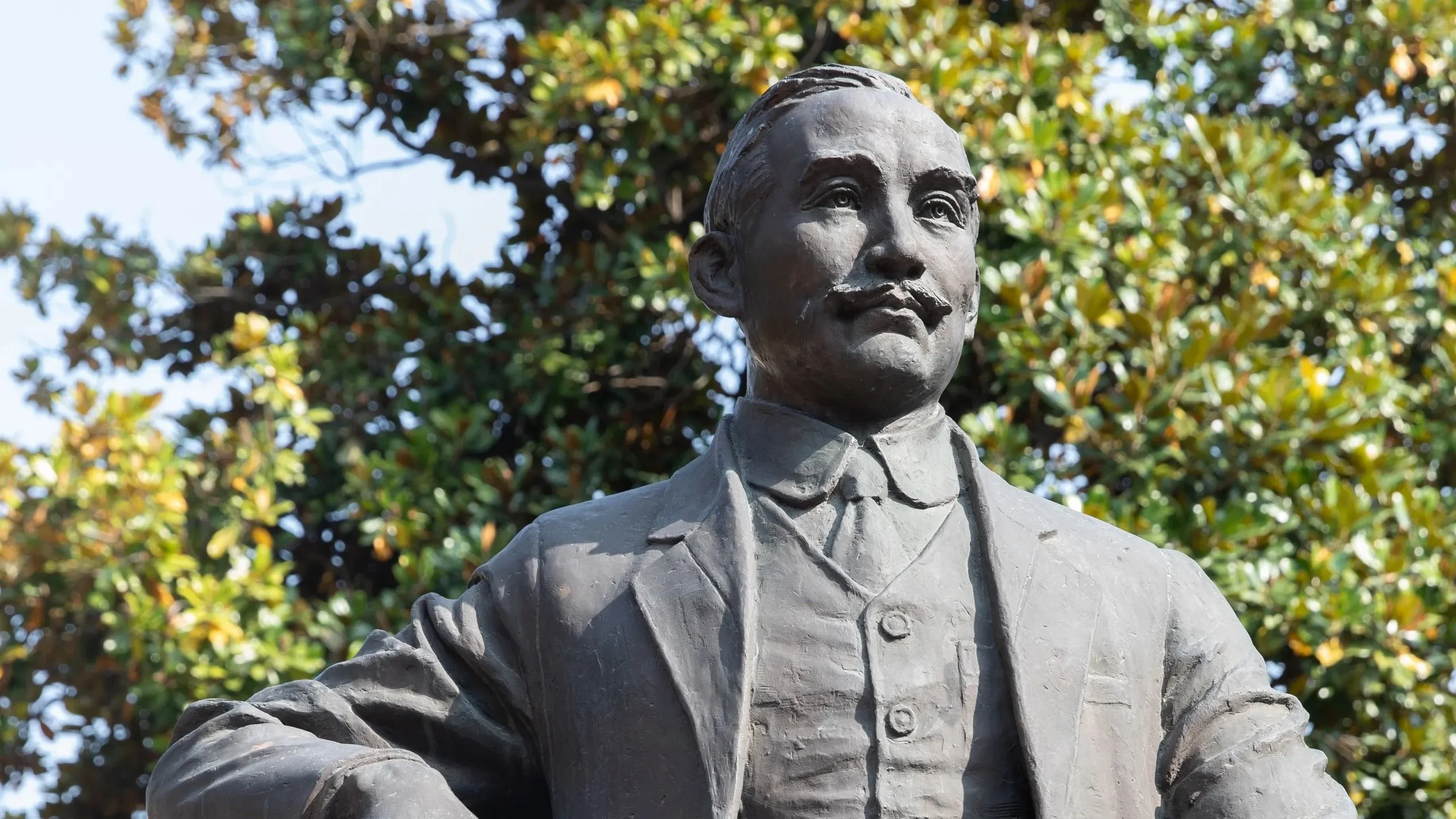
2026年11月孫中山誕辰160周年紀念活動中,中國共產黨與中國國民黨對孫中山遺產作出截然不同的解讀。兩方立場,折射出圍繞九二共識、國家統一目標、中介角色等議題持續的兩岸政治攻防。
孫中山是1911年辛亥革命的領袖,這場革命推翻腐朽衰敗的清王朝。他生於廣東中山,其所倡導的民族主義、民權主義、民生主義,自辛亥革命之後,成為海內外華人極具號召力的政治綱領。
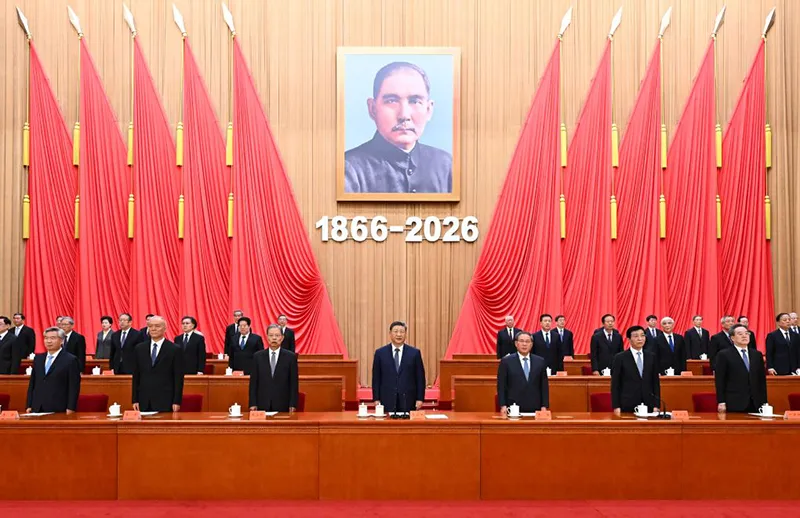
11月12日,北京人民大會堂舉辦孫中山誕辰160周年隆重紀念大會。中共中央總書記習近平主持儀式,與會人數達3000人,出席者包括政治局常委李強、趙樂際、王滬寧、蔡奇、丁薛祥、李希等。大會開始前,習近平會見孫中山後人與海外來賓代表。
習近平高度評價孫中山,稱其為偉大的民族英雄、偉大的愛國主義者、中國革命的偉大先驅,並號召全體中國人民學習孫中山,弘揚愛國主義,建設富強昌盛的祖國。
北京紀念孫中山 闡述對台政策
值得關注的是,習近平在講話中強調要堅持統一戰線工作,凝聚全體中華兒女的力量,此番言論不僅針對台灣民眾,亦面向廣大海外華人。他讚揚孫中山始終堅定維護國家統一與民族團結,堅決反對任何分裂國家與民族的言行;談及兩岸前途時,習近平更重申,解決台灣問題、實現祖國完全統一,是中國共產黨矢志不渝的歷史使命。
習近平接着闡述實現完全統一的條件:必須堅持「一個中國」原則和九二共識,展開對話,跟台灣社會各界就兩岸關係與國家統一議題開展協商。他總結:「我們會充分照顧台灣現實情況,充分顧及台灣同胞的利益與情感……但絕不給任何形式的台獨分裂活動留下空間。」
所謂九二共識,指國共雙方達成的非正式共識:雖然國共認同「一中」內涵,但各有不同表述。
客觀來看,九二共識至今仍然充滿爭議。近期國民黨主席鄭麗文調整論述,除支持九二共識之外,同時主張反對台獨。無論國民黨論述如何調整,九二共識依舊是兩岸坐回談判桌、尋求突破的基礎。
國民黨元老齊辦紀念活動 呼籲兩岸對話
想要解讀習近平講話背後的政治意涵,需要對比2022年8月發布的《台灣問題與新時代中國統一事業》白皮書。白皮書的核心要點包括:
呼籲台灣接受九二共識
以一國兩制方案處理台灣前途
闡述一國兩制能給台灣帶來的益處
主張分步推進對話協商進程
沒有提到未來台灣可以保留自身軍隊
把解決台灣問題、實現國家復興定為歷史使命。
對比來看,習近平2026年11月12日講話,重申台灣方面必須接受九二共識這一前提,以及國家統一的終極目標,但沒有重複提及一國兩制,而是重點強調要和台灣各界開展對話協商。這也就意味着,未來統一的具體模式,無論名稱為何,仍然存在進一步討論、協商的空間。
大陸釋放最重要的政治訊號:優先爭取和平統一,但兩岸展開討論的前提,是台灣接受九二共識。中共總書記的表述也釋放訊息,跟台灣民眾的對話協商大門依舊敞開。
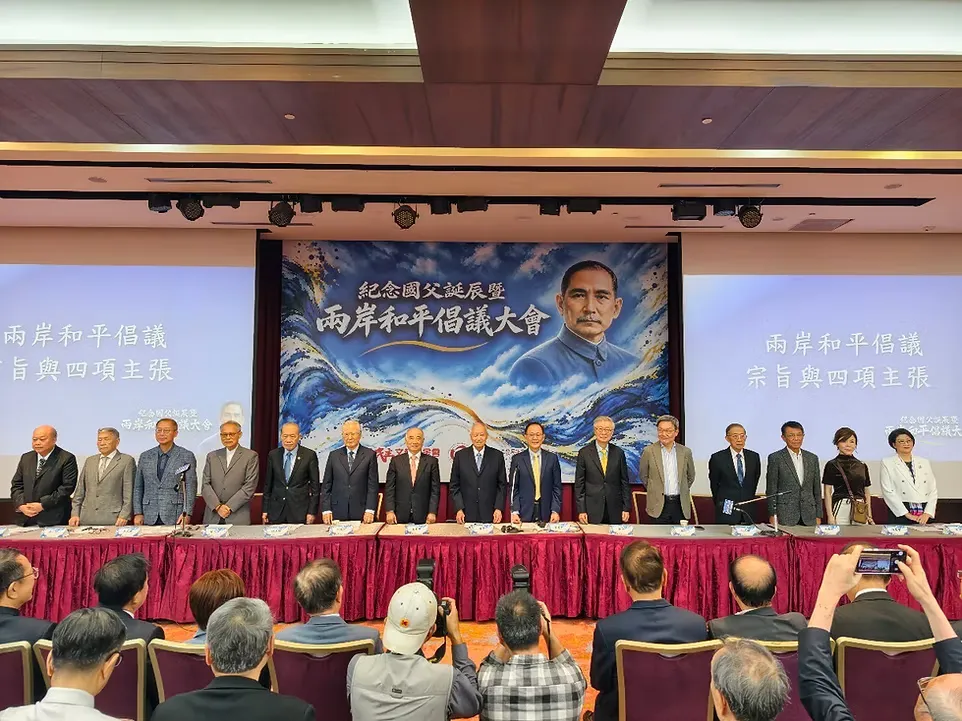
巧合的是,國民黨方面也在2026年11月12日舉辦另一場孫中山紀念活動,發起倡議大會,紀念孫中山160歲誕辰,同時呼籲簽署兩岸和平協議。
這場大會核心發起人為考試院前院長關中、前立委丁守中兩位國民黨資深人士,與會人數270人,不少國民黨重量級人物出席,包括前立法院長王金平、前行政院長陳沖、前國安會秘書長蘇起。大會提出四大主張:
兩岸關係把和平放在第一位
恢復兩岸對話
深化兩岸各領域合作
推動開展政治協商。
丁守中表示,團隊自2026年5月至11月中旬,一共辦理10場座談會,整理出這份倡議綱領,目的就是避免海峽爆發戰爭衝突。他強調兩岸同屬中華民族,雙方應將民族情感轉化為化解衝突、共創雙贏的資本。丁守中呼籲兩岸建立軍事互信機制、緊急熱線,建立軍事、航空意外事件互相通報機制。
國民黨籲大陸與台灣民眾對話
在經貿社會合作層面,丁守中團隊倡議兩岸在全球供應鏈、人工智慧、半導體研發、醫療衛生領域推動功能性合作。丁守中強調,這份倡議超越政黨立場,希望台灣不同政黨、不同背景民眾都予以支持,促成和大陸展開對話。
國民黨資深人士釋放的政治姿態十分明確:大陸應當和台灣民眾展開對話,而他們可以充當兩岸重要中介。不過,國民黨團隊提出的部分構想短期內實現難度很高,例如人工智能、半導體領域科技合作,本身極度敏感。當下黃仁勳風波剛剛爆發,美中科技博弈持續升溫,此時談兩岸高科技合作顯然過於樂觀。除此之外,建立雙邊軍事互信機制,短期也不具備現實條件。
大陸至今沒有放棄對台使用武力選項,這是針對台獨分裂勢力的重要威懾手段。2022年白皮書當中,也沒有寫明台灣未來可以保有自己的軍隊。近期大陸也多次向美國抗議,反對美國對台軍售。未來美台軍售議題很可能會成為中美談判桌上的議題,甚至有可能拿台灣軍隊存續問題做交換——儘管大陸始終強調台灣是中國內政,美國不應該干涉。
2026年10月15日,台灣的大陸委員會發布新聞稿表示,大陸方面對孫中山先生的詮釋不符合史實,並且不核准台灣民眾赴大陸參加這場紀念活動。陸委會並提醒台灣民眾,不要前往大陸參加活動,避免淪為北京統戰工作的工具。
兩岸關係癥結,如國台辦發言人陳斌華2026年5月公開所言:民進黨應當「盡速廢除台獨黨綱」。只要民進黨的台獨黨綱繼續存在,兩岸關係就難有突破。國民黨自2016年之後淪為在野黨,但是仍然是大陸願意接觸的對話對象。
民進黨抵制與政黨角力交織
孫中山160周年誕辰紀念,出現共產黨、國民黨兩套不同歷史詮釋。兩黨理論上都可以圍繞台灣前途議題開展溝通。但國民黨自2016年就已經失去執政權,身為在野黨,在兩岸事務當中影響力有限。
另一方面,中共透過孫中山紀念活動釋放清晰訊號:九二共識依舊是兩岸對話的前提,統一的具體模式仍然留有討論空間,但台灣民進黨立場強硬,官方抵制大陸統戰作為,兩岸依舊陷在僵局之中。
倘若祖國完全統一存在時間表,那麼兩岸前景並不樂觀。除非國民黨能在2026年11月地方選舉,尤其是2028年1月總統大選展現出強大的重返執政實力;否則短期之內兩岸關係仍會維持緊張狀態。
‘One Father, Two Interpretations’: Political signalling and implications
On November 12, 2026, the 160th anniversary of Sun Yat-sen’s birth, the Communist Party of China (CPC) on the Chinese Mainland and the Kuomintang (KMT, or Nationalist Party) in Taiwan offered two distinct interpretations of his legacy. These interpretations reveal both political signaling from the mainland and important implications for Taiwan’s future.
Sun Yat-sen was the father of the Chinese revolution in 1911 when the decadent and weak Qing dynasty was overthrown. Born in Zhongshan in Guangdong province, Sun’s political ideas of advocating the promotion of nationalism, the protection of human rights and the pursuit of the people’s livelihood have since 1911 become the politically attractive and rallying platform for the Chinese both inside and outside China. As such, the interpretations and celebrations of Sun Yat-sen’s 160th anniversary of his birth deserve our attention and analyses.
On November 12, a formal gathering was held in Beijing’s Great Hall of the People to commemorate the 160th anniversary of Sun’s birth. Xi Jinping, the General Secretary of the CPC, presided over the ceremony, which saw the attendance of 3,000 people, including members of the CPC Central Committee and of the Standing Committee of the Politburo, such as Premier Li Qiang, Zhao Leji, Wang Huning, Cai Qi, Ding Xuexiang, and Li Xi (Xinhua, November 12,2026). General Secretary Xi met the relatives of Sun and representatives of overseas guests before the ceremony began.
Xi Jinping hailed Sun Yat-sen as a great national hero, a great patriot and a great pioneer of the Chinese revolution. He added that the Chinese communists remain the most steadfast supporters, loyal collaborators, and the faithful followers of the revolutionary cause led by Sun. Xi remarked: “The best way for us to remember Dr. Sun is to emulate, inherit and carry forward his invaluable spirit, steadily advancing our endeavors to build a great country and rejuvenate our nation” (Xinhua, November 12, 2026).
Xi appealed to the Chinese people to learn from Sun Yat-sen and to promote patriotism for the sake of achieving a strong and prosperous China. He praised Sun for his dedication to fighting for the interests of the people, putting the people first,and serving them wholeheartedly. According to Xi, it is crucial for China to make progress for the promotion of personal development and the achievement of common prosperity.
Beijing commemorates Sun Yat-sen’s legacy and outlines Taiwan policy
General Secretary Xi added that it is necessary to learn from Sun’s example to adapt Marxism to Chinese circumstances,to rise to new challenges, and to achieve breakthroughs in China’s development. He said: “We must carry forward the fighting spirit, build up our ability, be ready to withstand high winds, choppy waters, and even dangerous storms, and overcome all the risks and challenges we face on the way forward” (Xinhua, November 12, 2026).
Interestingly, Xi in his speech called for the Chinese people to adhere to united front work and to strengthen unity among all the sons and daughters of the Chinese nation – a remark directed at not only the people of Taiwan but also all overseas Chinese. Xi added: “Dr. Sun always upheld national unity and ethnic solidarity and resolutely opposed any word or act attempting to split the country and divide the nation” (Xinhua, November 12, 2026).
On the question of Taiwan’s future, General Secretary Xi emphasized that the CPC’s historical mission is to resolve the Taiwan question, and to realize the “complete reunification of the motherland” (Xinhua, November 12, 2026).
Most importantly, the “complete reunification” of the motherland is not only “the shared aspiration of all Chinese people” but also “a natural requirement for the great rejuvenation of the Chinese nation” (Xinhua, November 12, 2026). Xi also pointed out that the people on both sides of the Taiwan Strait and all Chinese people at home and abroad should join hands to oppose “Taiwan independence” separatist forces, and that they should cooperate to achieve the objectives of fostering the peaceful development of cross-strait relations and bringing about the “complete reunification” of the motherland.
Then Xi laid down the conditions for achieving such “complete reunification” by referring to the necessity of “adhering to the one-China principle and the 1992 consensus,” engaging in dialogue, and consulting people from all sectors in Taiwan on matters pertinent to cross-strait relations and national reunification. He concluded: “We will definitely give full consideration to Taiwan’s realities and take full account of the interests and feelings of our compatriots in Taiwan … But we will never leave any room for ‘Taiwan independence’ separatist activities in any form” (Xinhua, November 12, 2026).
The 1992 consensus referred to an informal agreement reached by the CPC and KMT that there is only one-China, whose interpretation is open to both sides. Up to now, objectively speaking, the 1992 consensus remains quite controversial. While the CPC emphasizes the importance of adhering to the one-China principle, the KMT has seemingly laid an emphasis on the interpretation of the meaning of “one China.” The ruling Democratic Progressive Party (DPP) has even gone so far as to deny the existence of the 1992 consensus. Recently, US commentators have pointed to KMT chairwoman Cheng Li-wan’s shift of emphasis to not only support the 1992 consensus but also “oppose Taiwan independence” (See: Will Taiwanese accept Xi Jinping’s version of ‘One China’? | Brookings). Regardless of any shift of the KMT emphasis, the 1992 consensus does provide the foundation of both sides to sit down on the negotiating table with potential breakthroughs.
KMT veterans hold parallel commemoration and call for cross-strait dialogue
From the perspectives of decoding the remarks of General Secretary Xi and deciphering their political implications, we have to compare his remarks with the main ideas of the White Paper on the Question of Taiwan – a document published in August 2022 (White Paper: The Taiwan Question and China’s Reunification in the New Era_Embassy of the People’s Republic of China in the United States of America).
The document was characterized by (1) the appeal to Taiwan to accept the 1992 consensus; (2) the utilization of “one country, two systems” to resolve Taiwan’s future; (3) the benefits of the “one country, two systems” to Taiwan; (4) the need to “phase in” the process of dialogue and consultation; (5) the absence of mentioning that Taiwan would retain its own military in the future; and (6) the historical mission of reunifying Taiwan to achieve China’s national rejuvenation.
Basically, General Secretary Xi’s speech on November 12 mentioned the precondition of Taiwan’s acceptance of the 1992 consensus and the objective of reunifying Taiwan. He did not repeat the utilization of “one country, two systems” but instead stressed the necessity of having dialogue and consultation with the people of Taiwan. As such, one can argue that the model of reunification, whatever it will be called, can be discussed and negotiated further. What distinguished his speech from the 2022 White Paper is the recent emphasis on “the complete reunification” of China – a key term pointing to the reunification of Taiwan as the final destination of the Chinese Mainland’s national rejuvenation.
Arguably, the most important political signal from the Chinese Mainland is that the priority is to achieve peaceful reunification with Taiwan, but that discussion with the Taiwan side has the precondition of Taiwan’s acceptance of the 1992 consensus. Dialogue and consultation with the people of Taiwan are still open, according to the remarks from the CPC General Secretary.
Coincidentally, the second interpretation of Sun Yat-sen’s anniversary came from the KMT side on November 12, 2026,when an advocacy conference was held among KMT members to commemorate Sun Yat-sen’s 160th anniversary of his birth and to call for a cross-strait peace agreement (United Daily News, November 13, 2026).
Two veteran members of the KMT, John Kuan Chung, former President of the Examination Yuan, and Ting Shou-chung, a former member of the Legislative Yuan from 1990 to 2016, were the core organizers of the conference, which advocated (1) the need for peace first in cross-strait relations, (2) the resumption of dialogue, (3) the deepening of cross-strait cooperation, and (4) the pursuit of political consultations. The advocacy conference attracted the participation of 270 people, including former KMT heavyweight politicians, such as former Legislative Yuan president Wang Jin-pyng, former premier Sean Chen Chun, and former national security secretary Su Chi.
According to Ting, his group organized ten talks and seminars from May to mid-November 2026 to produce the advocacy platform for the sake of preventing any war or conflict across the Taiwan Strait. He emphasized that comrades across the Taiwan Strait belong to the Chinese nation, and that people from both sides should convert their emotions into “a capital for conflict resolution and win-win mutual development” (United Daily News, November 13, 2026). Ting appealed to both sides to establish a military mechanism to foster mutual trust, an emergency hotline, and a mutual reporting system for military and aerial accidents (United Daily News, November 12, 2026).
Tensions and strategic hurdles
On the question of socio-economic interactions, Ting and his group appealed to both sides of the Taiwan Strait to promote functional cooperation in the areas of global supply chain management, artificial intelligence collaboration, semiconductor development, and biomedical and health promotion. Ting finally stressed that his group’s advocacy goes beyond partisan background, implying that the people of Taiwan from different political parties and backgrounds should support the group and its possible dialogue with the Chinese Mainland. In the coming years, the group led by Ting will have five sub-groups, coping with issues like cross-strait maritime security and crisis prevention, economic and technological cooperation, youth and education exchange, livelihood and sustainable development, and peaceful integration (United Daily News, November 12, 2026).
The political posturing and signaling from the KMT’s core members are as follows: the Chinese Mainland should engage the people of Taiwan with dialogue, and they can become an important intermediary between the two sides. The group led by Ting and John Kuan is clearly portrayed as the middleman who can minimize and prevent cross-strait conflicts, discuss with the mainland side to resolve conflicts, and explore areas of collaboration in the coming years.
Some ideas floated by the KMT-led group appear to be quite difficult in the short run, including technological cooperation in the areas of artificial intelligence and semiconductor development, which remain extremely sensitive. At a time shortly after the Jensen Huang scandal broke out and when the technological war between the US and China remains quite tense,talk about technological collaboration between the Chinese Mainland and Taiwan is clearly premature. Moreover, the appeal for both sides to set up a military trust mechanism is unrealistic in the short run.
The Chinese Mainland has not yet renounced the use of force to deal with Taiwan – an essential deterrence against Taiwan separatists, not to mention that the 2022 White Paper did not mention Taiwan’s maintenance of its own military in the future. Given China’s recent complaints to the US that Washington should not provide military weapons to Taiwan, it appears that the question of US weapons sales to Taiwan will likely be discussed on the Sino-US bargaining table one day, perhaps in exchange for allowing Taiwan to retain its own military, even though the Mainland Chinese side constantly insists that Taiwan concerns China’s internal affairs and that the US should not interfere.
It is noteworthy to see how the Taiwan authorities responded to the Chinese Mainland’s celebration of Sun Yat-sen’s 160thanniversary of his birthday. On October 15, 2026, the Mainland Affairs Council said that the Chinese Mainland’s “portray of Dr. Sun Yat-sen is not faithful to historical fact,” and that the Taiwan government would not approve those people who intended to travel to the mainland to attend the celebration of Sun’s 160th anniversary of his birth (Mainland Affairs Council Press Release, No. 052, October 15, 2026: MAC Urges Taiwanese Citizens Not to Attend CCP Events “Commemorating the 160th Anniversary of Dr. Sun Yat-sen’s Birth” to Avoid Becoming Tools of United Front Operations). The MAC Press Release added that the people of Taiwan should not travel to the Chinese Mainland to avoid becoming the “tools of Beijing’s united front operations” (Mainland Affairs Council Press Release, No. 052, October 15, 2026).
The crux of the problem in cross-strait relations is that, as Chen Binhua, a spokesman of the Chinese State Council’s Taiwan Affairs Council said publicly in May 2026, the DPP should “delete its ‘Taiwan independence’ party platform as soon as possible” (Global Times, May 27, 2026: DPP should immediately abandon its ‘Taiwan independence party platform,’ stop separatist activities: Taiwan Affairs Office spokesperson – Global Times). If its platform persists, cross-strait relations are destined to be difficult although the KMT, which has become an opposition party failing to grasp the presidency in Taiwan since 2016, remains a politically acceptable actor in cross-strait dialogue.
Future outlook
The commemoration of Sun Yat-sen’s 160th anniversary of his birth witnessed two interpretations: one from the CPC and the other from the KMT. Both parties can and will have dialogue on the question of Taiwan’s future. Nevertheless, the KMT has already been relegated to the role of an opposition party in Taiwan since 2016, lacking a major say in cross-strait relations.
As such, the most recent call for peaceful development by a group of KMT veterans remains a political gesture without immediate and easy concrete results. On the other hand, the CPC’s commemoration of Sun Yat-sen’s 160th anniversary of his birth sent clear signals to the Taiwan side: namely that the 1992 consensus remains a prerequisite for cross-strait dialogue and that the future model of reunification can be discussed further. Still, given the controversial stance of the ruling party in Taiwan and its governmental opposition to any united front work conducted by the CPC,cross-strait relations remain exceedingly difficult and deadlocked.
The people of Taiwan, especially those from the KMT who communicate with the Chinese Mainland, are bound to be viewed by some Taiwan radicals as falling into the CPC’s united front umbrella. Profound mutual distrust and divergent political stances are testing cross-strait relations to the extent that the intermediary role of the KMT is bound to be questioned and criticized.
If the “complete reunification” of Taiwan has a timetable, then the future of cross-strait relations is increasingly less optimistic than before, unless the KMT demonstrates a stronger likelihood of a political comeback in the upcoming local elections in November 2026 and, most importantly, the presidential election in January 2028. Otherwise, we can anticipate relatively tense cross-strait relations in the near future.
原刊於澳門新聞通訊社(MNA)網站,本社獲作者授權轉載。(原文按此)