


今年1月美軍生擒委內瑞拉前總統馬杜羅夫婦後,美國隨即加強制裁古巴,切斷了委內瑞拉對古巴的石油出口,試圖迫使這個社會主義政權進行經濟和政治改革,結果古巴轉向中國尋求政治和經濟上的支援,而中方視古巴為其社會主義兄弟,亦認為必須立即解決哈瓦那的經濟需求和民生問題。在美國勢力威懾下,中古兩國開始加強雙邊關係。
事實上,古巴的經濟和社會長期以來深受對委內瑞拉石油的過度依賴的影響。在美國加強封鎖古巴的原油供應後,1000萬民眾的生計受到嚴重影響,其中許多人面臨能源、燃料和電力短缺的困境。
切斷古巴石油供應的影響已開始漫延至民生經濟的領域,其中旅遊業也遭受重創。英國和加拿大已警告其公民避免不必要的古巴旅行。
古巴的中央集權經濟嚴重依賴前蘇聯和委內瑞拉政府的補貼,每日停電已導致古巴陷入生計和治理危機,古巴總統迪亞斯-卡內爾(Miguel Díaz-Canel)呼籲民眾以戰時心態和創意應對困境,但現實情況是,許多普通民眾抱怨基本生活需求難以滿足,以及將蔬菜和其他食品從農村運送到城市中也困難重重。
1月29日,美國總統特朗普發布了一項行政命令,不僅以古巴對美國國家安全構成威脅為由宣布國家進入緊急狀態,而且還對委內瑞拉和墨西哥等向古巴出售或供應石油的國家徵收關稅。

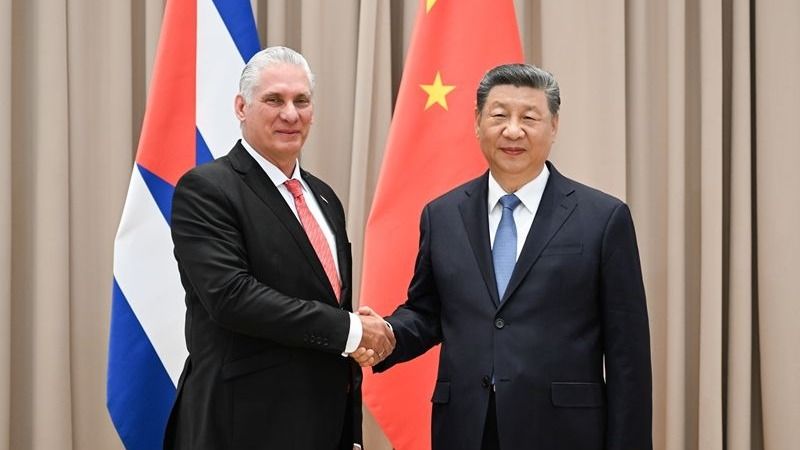
(中國外交部網)
中方堅決反對剝奪古巴人民生存權
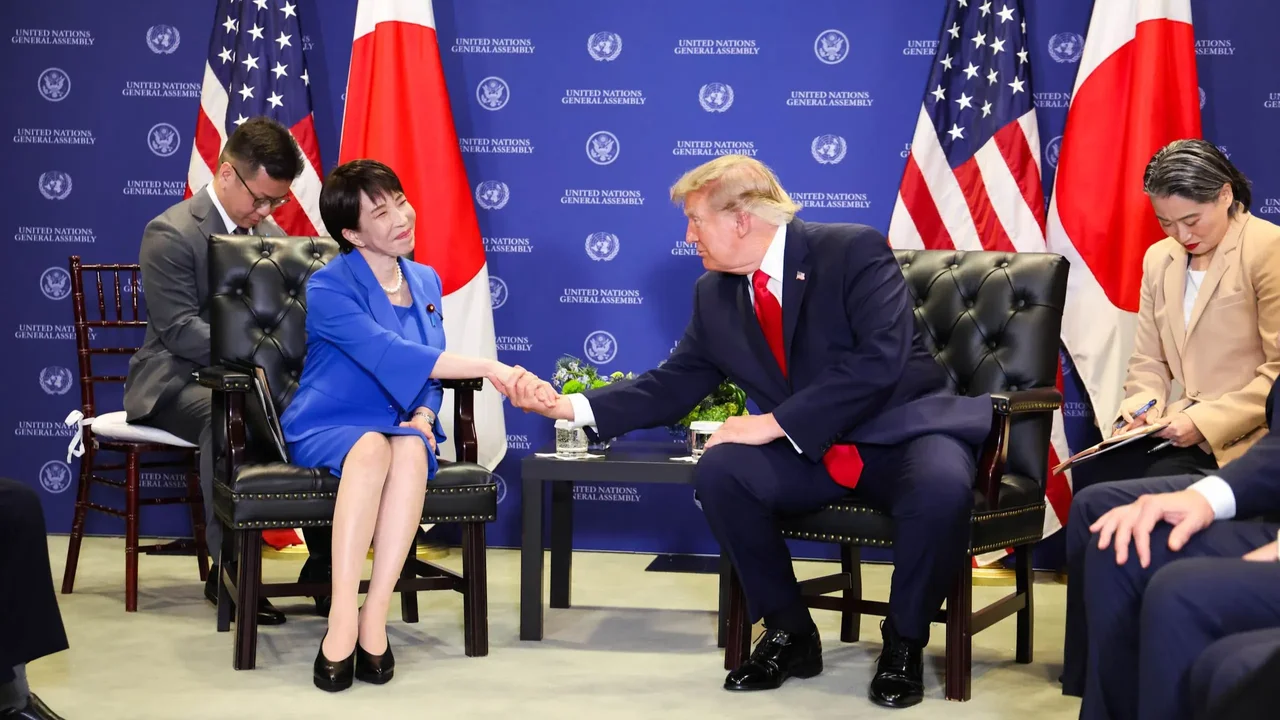
1月30日,中國外交部發言人郭嘉昆在記者會上表示,中國堅決反對任何剝奪古巴人民生存和發展權利的行為和不人道做法。他的這番言論是回應美國威脅對向古巴出售石油的國家加徵關稅的行政命令。
為應對美國對古巴的制裁,中國於2026年1月和2月宣布向古巴運送9萬噸大米並提供緊急財政援助。首批大米於2026年1月20日抵達古巴。顯然,在美國與古巴之間的地緣政治博弈中,中國對古巴伸出了援手。
在特朗普簽署行政命令之前,中國和俄羅斯似乎都預料到美國將對古巴實施更嚴厲且迫在眉睫的制裁。 1月21日,俄羅斯內政部長弗拉基米爾(Vladimir Kolokoltsev)率領俄羅斯代表團前往哈瓦那,與古巴總統迪亞斯-卡內爾會談。古巴位處拉美和加勒比海地區,是名副其實的美國後花園,但俄羅斯和中國都熱衷於在經濟和實際層面支持古巴,這體現了地緣政治博弈在拉丁美洲的演變。
今年2月初,古巴外交部長帕里利亞對北京的訪問具有重要的政治和外交意義。這次訪問距離美國發布針對古巴的行政命令僅一周之隔。帕里利亞對中國支持古巴反對外部封鎖和制裁表示感謝,並感謝北京向哈瓦那出口大米和提供財政援助。
中古兩國牢固的社會主義紐帶在習近平主席2025年9月兩國慶祝建交65周年時的演講中可見一斑。習近平主席強調,中國歷來高度重視同古巴的關係。此外,習近平指出,兩國應深化傳統友誼,增進政治互信,促進各領域全面戰略合作。他也用「中古命運共同體」來指稱兩國關係,這一表述體現了兩國在社會主義兄弟情誼思想下的緊密聯繫。

中方在古巴設情報網絡引發美擔憂
就地緣政治競爭而言,美國對中國計劃最早於2023年在古巴設立四個情報收集站表示擔憂。此外,華為等中國公司參與建設古巴電訊網路也令美國感到震驚,據報道,古巴當局利用這些網絡干擾部分古巴抗議者和異議人士的內部通訊。
最重要的是古巴位於佛羅里達州以南不到100英里的地點,地理位置優越,便於監控美國軍事設施。因此美國一直密切關注中國在古巴的行動。
另一方面,儘管中國一直在向古巴提供援助,但古巴欠中國的債務數額龐大,難以輕易償還。由於古巴財政狀況不穩定,其不斷增長的國債意味着中國將面臨長期的償債難題。
古巴債務黑洞也可能意味着,古巴或許不得不嘗試中國式的市場改革,以改善其經濟狀況。因此,中國對古巴的經濟援助最好能同時輔以建設性的建議,幫助古巴當局以更有效率、更有生產力和更有效的方式改革其過度集權的經濟體制。
然而,古巴經濟改革的政治意願最終源自於其領導階層。據報道迪亞斯-卡內爾總統自2018年以來已加快市場改革步伐,使中小企業合法化並促進外國投資。儘管如此,龐大的官僚體系、財政限制和美國制裁仍然成為古巴經濟改革的絆腳石。

政權更迭是美國對拉美政策關鍵目標
無論如何,政權更迭是美國對拉丁美洲外交政策中的關鍵地緣政治目標,就像委內瑞拉總統馬杜羅的命運一樣。馬杜羅被美軍逮捕,其古巴安保人員在2026年1月3日的美軍襲擊中幾乎全數喪生。
鑑於古巴位於美國的地緣政治和軍事勢力範圍之內,加之中國對古巴的經濟影響力以及莫斯科與哈瓦那的外交關係,美國對古巴的制裁自然引發了中國和俄羅斯的迅速外交回應。美中俄三國在古巴的政治經濟影響力之爭仍有待觀察。
古巴面臨的挑戰在於如何加速並深化其市場改革,效法中國模式,同時增強經濟自給自足能力,而不是過度依賴區域和全球大國,無論是過去的蘇聯和委內瑞拉,還是現在的中國和俄羅斯。
1961年4月豬灣入侵的時代已經一去不復返了,當時美國未能推翻卡斯特羅的政權。目前美國正試圖透過比以往任何時期都更嚴厲的經濟制裁來推動古巴政權更迭。美國尋求古巴政權更迭的政治舉措,以及北京向哈瓦那提供意識形態和經濟援助的回應,都表明美、中兩國在古巴問題上的競爭日益加劇,這是繼委內瑞拉馬杜羅政權垮台之後,古巴已成為大國博弈的新戰場。
China’s Relations with Cuba under the US Sphere of Influence
Recent US sanctions on Cuba following the removal of Nicolás Maduro have intensified Havana’s economic crisis and reshaped regional geopolitics.
China has responded swiftly with food aid, financial assistance and diplomatic backing, reinforcing the ideological and strategic bond between Beijing and Havana.
Recent developments in Sino-Cuban relations have indicated that both countries have been enhancing their bilateral ties shortly after the removal of the former Venezuelan President Nicolás Maduro and immediately after the US decision to stop the shipment of oil from Venezuela to Cuba, where the economy and society have been deeply affected by overdependence on Venezuela. The ongoing development of closer relations between Cuba and China shows that while Cuba has been seeking China’s economic and political support, Beijing has regarded Havana as its socialist brother whose economic needs and livelihood should be tackled at once.
After the removal of Venezuelan President Maduro by the US military on 3 January, Washington shut off the export of oil from Venezuela to Cuba, trying to force the socialist regime to implement economic and political reforms. The immediate impact on Cuba has been to undermine the livelihood of ten million citizens, many of whom have been affected by shortages of energy, fuel and electricity (CNN, 18 February 2026). Tourism in Cuba has been undermined. The UK and Canada have warned their citizens to avoid unnecessary travel to Cuba. The centralised economy of Cuba was heavily dependent on subsidies from the former Soviet Union and the former Venezuelan government under the leadership of Hugo Chávez and later Nicolás Maduro. Daily power outages have brought about a crisis of livelihood and governance in Cuba, whose President Miguel Díaz-Canel has appealed to citizens to adopt a wartime mentality to resist the difficulties in a “creative” way. However, the reality is that many ordinary people complain about their basic needs and the difficulties of bringing vegetables and other food from the countryside to urban cities.
On 29 January, US President Donald Trump issued an executive order that not only declared a national emergency due to an alleged Cuban “threat” to American national security, but also imposed tariffs on countries such as Venezuela and Mexico that sell or supply oil to Cuba.
Escalating sanctions and diplomatic responses
Prior to the issuance of the executive order, several Venezuelan oil tankers bound for Cuba were seized and stopped by US forces in the Caribbean Sea (Peoples Dispatch, 23 January 2026). Such moves clearly sent a warning message to the Cuban government.
On 30 January, Guo Jiakun, a spokesman for the Chinese Foreign Ministry, told reporters at a press conference that China “resolutely opposes any actions and inhuman practices that deprive the Cuban people of their rights to subsistence and development” (Global Times, 30 January 2026). His comments were made in response to the US executive order that threatened to impose tariffs on countries that sold oil to Cuba.
Compounding the problem of the US economic blockade was a move by Mexico’s state oil company Pemex, which “backtracked” on plans to export oil to Cuba in January 2026. Although Mexican President Claudia Sheinbaum denied that Pemex’s move was a concession to US pressure and argued that the decision was a “sovereign” one, the Mexican company’s action coincidentally exacerbated Cuba’s energy crisis.
On 10 February, the Chinese Foreign Ministry said that there were no reports of Chinese citizens being stranded in Cuba due to airlines lacking fuel and suspending their flights after the US blockade of oil shipments from Venezuela to Cuba (Reuters, 10 February 2026).
Lin Jian, another spokesman for the Chinese Foreign Ministry, said that China firmly supported Cuba in protecting its national sovereignty and security and opposing any foreign interference. He added that China would help the Cuban side “to the best of our ability” (Reuters, 10 February 2026).
In response to the US sanctions on Cuba, China in January and February 2026 announced shipments of 90,000 tons of rice to Cuba and the provision of emergency financial assistance. The first batch of rice arrived in Cuba on 20 January 2026. Clearly, China has come to the rescue of Cuba amid the geopolitical struggle between Washington and Havana. After the arrival of Chinese rice in Cuba in late January, Cuban Deputy Prime Minister Oscar Perez-Oliva said: “We deeply appreciate and are grateful for this aid at a difficult time, when levels of aggression are rising, and the US economic, commercial and financial blockade against the Cuban people is intensifying in an unprecedented manner” (Peoples Dispatch, 23 January 2026). At the same time, the Chinese Ambassador to Cuba, Hua Xin, remarked that the Chinese aid represented the “deep bonds of special friendship” between China and Cuba — a comment pointing to the persistent ideology of socialist brotherhood.
Strategic solidarity and ideological brotherhood
In fact, the Chinese side sent six shipments of food by air to Cuba prior to the last week of January 2026. In 2026, the PRC supplied Cuba with solar lamps, roofing materials and mattresses, while President Xi Jinping approved financial aid amounting to US$80 million.
Both China and Russia had seemingly predicted tougher and imminent US sanctions on Cuba prior to the issuance of Trump’s executive order. On 21 January, the Russian Interior Minister, Vladimir Alexandrovich Kolokoltsev, went to Havana to hold talks with President Díaz-Canel with a Russian delegation. If Cuba is located in the backyard of the US, both Russia and China are keen to support Cuba economically and practically — an illustration of how geopolitical struggles have been playing out in Latin America.
In early February, Chinese Foreign Minister Wang Yi and Politburo Standing Committee member Wang Huning held separate meetings with Bruno Rodríguez Parrilla, the special envoy and foreign minister of the Cuban government and the Cuban Communist Party (China Daily, 6 February 2026). Wang Yi said that Cuba had already earned widespread respect from the international community due to its spirit of resisting power politics and that China’s foreign policy principle was to uphold fairness and justice by providing support and assistance to Cuba. He also added that China attaches immense importance to enhancing the solidarity of the Global South and safeguarding regional and world peace. Indeed, Cuba is an important socialist country in the minds of China because it was the first country in the Western Hemisphere to establish diplomatic relations with the PRC in September 1960. On the other hand, China remains the second-largest trading partner of Cuba, which in turn is the former’s fifth-largest trading partner in the Caribbean region.
The visit of Bruno Rodríguez Parrilla to Beijing in early February was politically and diplomatically significant. It came just one week after the issuance of the US executive order against Cuba. Parrilla expressed his gratitude for China’s support of Cuba in opposing the external blockade and sanctions, and for Beijing’s rice exports and financial aid to Havana.
The firm socialist bonding between China and Cuba could be seen in the remarks of President Xi Jinping in September 2025, when both countries celebrated the 65th anniversary of their diplomatic relations. President Xi stressed that China attached immense importance to its relations with Cuba historically. Moreover, both countries, according to Xi, should enhance traditional friendship, increase mutual political trust, and propel forward all aspects of comprehensive and strategic cooperation (Ming Pao, 28 September 2025). He also used the term “Sino-Cuban common destiny entity” to refer to the bilateral relations between the two countries — a term reflective of strong bonding under the ideology of socialist brotherhood.
Geopolitical rivalry and economic constraints
The strong ideological and historical relations could also be detected in December 2024, when Cuba was affected by an electric blackout that terminated the operations of schools and workplaces. In response to the blackout, China supplied electricity facilities to Cuba in early 2025. In September 2025, both countries signed a memorandum of understanding on cooperation in basic infrastructure development, information exchange and sharing, the standardisation of measurement, and quality control of facilities. In late October 2025, when Cuba was attacked by Hurricane Melissa, which damaged many homes and crops, China provided immediate relief, including food, solar lamps, furniture and construction materials through air and sea routes (Hong Kong China News Agency, 17 November 2026).
In terms of geopolitical rivalry, the US was reportedly concerned about China’s attempt to set up four intelligence-gathering stations in Cuba as early as 2023 (TVBS News, 9 January 2026). Moreover, the US was alarmed by the actions of Chinese companies, such as Huawei, in building up Cuba’s telecommunications networks, which were reportedly used by the Cuban authorities to disrupt communications among some Cuban protestors and dissidents internally (TVBS News, 9 January 2026). Above all, Cuba is situated less than one hundred miles south of Florida and is well positioned to conduct surveillance on US military facilities (CSIS, 6 December 2024). As such, Chinese operations in Cuba have been watched by the US with alarm.
On the other hand, although China has been providing aid to Cuba, the latter’s debt owed to the former is substantial and cannot be easily repaid (RFA, 30 October 2024). Because of the instability of Cuba’s financial situation, its increasing national debt means a chronic repayment problem for China. The “fathomless” nature of Cuban debt may also mean that Cuba will likely have to experiment with Chinese-style market reforms so that its economy takes a turn for the better. As such, Chinese economic aid to Cuba should ideally be accompanied by constructive Chinese advice to the Cuban authorities on how the over-centralised Cuban economy might be reformed in a more efficient, productive and effective way. In fact, the Joint Declaration signed by Cuba and China in September 2025 provides for cooperation in economic, social and political areas, implying that Havana can seek Beijing’s help in reforming its over-centralised economy.
Prospects for reform and regime change
However, the political will to reform the Cuban economy ultimately stems from its leadership. It is reported that President Díaz-Canel has already accelerated market reforms since 2018, legalising small and medium enterprises and boosting foreign investment. Still, the large bureaucracy, financial constraints and US sanctions have become stumbling blocks to Cuba’s economic reforms.
Most importantly, the US is keen to change the Cuban regime. US Secretary of State Marco Rubio, a Cuban American who migrated from Cuba to Miami in 1971 and remains interested in Cuban politics, reportedly held secret dialogue with 41-year-old Raul Guillermo Rodriguez Castro, the grandson of Cuban leader Raul Castro (Axios, 18 February 2026). The young Castro is seen as more business-minded than other members of the Castro family. It remains to be seen how the Cuban leadership will evolve. In any case, regime change is a key US geopolitical objective in its foreign policy towards Latin America, just like the fate of Maduro in Venezuela, who was arrested by the US military and whose Cuban security guards died during the American attack on 3 January.
Under circumstances in which Cuba is located within the US sphere of geopolitical and military influence, and in view of Chinese economic influence on Cuba and Moscow’s diplomatic relations with Havana, US sanctions on Cuba have naturally led to immediate diplomatic responses from China and Russia. The struggle among the US, China and Russia for politico-economic influence in Cuba remains to be observed.
In conclusion, the recently enhanced US sanctions on Cuba have already prompted knee-jerk reactions from both China and Russia, especially as Beijing has quickly provided financial and logistical aid to Havana. China and Cuba remain friendly socialist brothers and, as such, the former’s staunch support for the latter is natural and understandable. The challenge is for Cuba to accelerate and deepen its market reforms along the Chinese path, while becoming more economically self-sufficient rather than over-relying on regional and global powers, whether the former Soviet Union and Venezuela in the past or China and Russia at present.For the sake of protecting and advancing its geopolitical and military interests, the US is naturally seeking regime change in Cuba — a consistent US foreign policy that is, however, undermining the national security of the Cuban regime. In response, Cuba must seek further politico-economic and diplomatic support from China and Russia. Gone are the days of the Bay of Pigs invasion in April 1961 when the US failed to change the Fidel Castro regime. At present, the US seeks to promote regime change through much stronger economic sanctions than ever before. The politics of seeking regime change in Cuba by the US and the reactive politics of ideological-economic aid from Beijing to Havana signal intensifying US-China rivalries over Cuba — another battleground after the collapse of the Maduro regime in Venezuela.
原刊於澳門新聞通訊社(MNA)網站,本社獲作者授權轉載。(原文按此)